
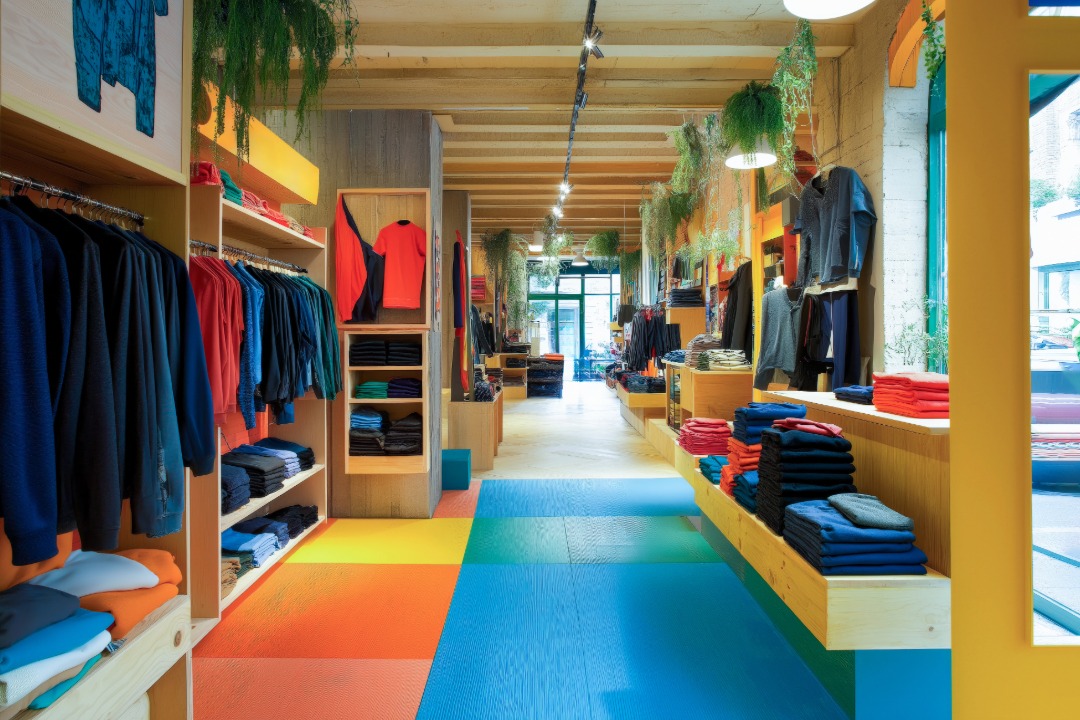
A product sitting on a shelf is just inventory. The same product placed at eye level, lit from above with warm accent lighting, surrounded by complementary items, and framed by a backdrop that tells a story becomes something a customer wants to own. That transformation is the work of visual merchandising.
Visual merchandising is the practice of presenting products in a way that captures attention, communicates value, and motivates purchase decisions. It goes beyond decoration. It is a strategic discipline that influences how customers move through a store, what they notice first, how long they stay, and how much they spend.
For Indian retailers operating in competitive markets with high foot traffic and compact store sizes, visual merchandising is not optional. It is the difference between a store that customers walk past and one they walk into. This guide explains why visual merchandising matters so deeply in retail design, what its core elements are, and how the right fixtures and store environment turn browsing into buying.
What Visual Merchandising Actually Does
At its core, visual merchandising serves three business functions. First, it attracts customers into the store. A well-designed window display or a visible product arrangement at the entrance pulls foot traffic off the street or from a mall corridor. Research consistently shows that 73 percent of consumers make purchasing decisions based on visual elements they encounter in-store.
Second, it guides movement and attention once the customer is inside. Strategic product placement, focal point displays, and signage direct shoppers toward specific products or zones. Without this guidance, customers in larger stores often miss entire sections. In smaller stores, they may feel overwhelmed if everything competes for attention equally.
Third, it increases average transaction value. When related products are displayed together, when impulse items sit near the billing counter, and when featured products are highlighted with lighting and positioning, customers naturally add more to their purchase. Studies indicate that effective visual merchandising can increase impulse purchases by up to 20 percent.
Window Displays: Your Store’s First Sales Pitch
The window display is the first touchpoint between your store and a potential customer. It needs to communicate three things instantly: what you sell, who you sell to, and why someone should step inside.
A strong window display tells a visual story. It might showcase a seasonal collection arranged on tiered risers with themed props and focused lighting. It might highlight a single hero product against a clean, bold-colored background. Whatever the approach, the display should create curiosity and a desire to see more.
In Indian high streets and shopping complexes, window space is often limited. A 4-foot by 6-foot window needs to work harder than a 12-foot storefront. This is where custom retail fixtures designed for your exact window dimensions make a measurable difference. A display platform built to fit your window perfectly uses every inch of visibility, while a generic stand may leave awkward gaps or block sightlines into the store.
Refresh your window displays every four to six weeks. Customers who pass your store daily stop noticing a window that has not changed in two months. Seasonal themes, new arrivals, and promotional campaigns should all drive the rotation cycle.
In-Store Layout and Product Zoning
Visual merchandising works hand in hand with retail space planning. The layout of your store determines the path customers take, and the zones they encounter along that path determine what they consider buying.
The decompression zone, the first five to ten feet inside the door, should remain open and uncluttered. Customers rarely engage with products here because they are still transitioning from outside. Just beyond this zone is your power area, the most visible real estate in the store. Place your newest arrivals, bestsellers, or highest-margin items in this spot.
Group products by story, not just by category. A clothing retailer that displays a complete outfit, shirt, trousers, belt, and shoes together, encourages the customer to buy the ensemble rather than a single item. A cosmetics store that places skincare, primer, and foundation in a sequenced display mirrors the customer’s usage routine and makes the purchase feel logical.
Traffic flow should feel natural. Customers should encounter products in a sequence that builds interest. Lead with aspirational items, transition to everyday essentials, and place impulse products near the checkout. This progression mirrors how buying intent develops during a store visit.
The Role of Lighting in Visual Merchandising
Lighting determines how products look, how colors appear, and how the entire store feels. It is one of the most impactful tools in retail store interior design, yet it is consistently underinvested in Indian retail.
Ambient lighting sets the overall brightness and mood. A luxury jewellery store uses lower ambient lighting with focused spotlights on display cases to create drama and draw the eye to individual pieces. A fast-fashion outlet uses bright, even ambient lighting to create energy and encourage quick browsing.
Accent lighting is where visual merchandising comes alive. Track-mounted spotlights directed at product displays, illuminated shelving panels, and backlit feature walls elevate specific products above the surrounding environment. When a customer’s eye is drawn to a product by light, the decision to pick it up and examine it happens almost reflexively.
LED systems with adjustable color temperature let you fine-tune the mood for different zones. Warm tones between 2700K and 3000K suit apparel, home decor, and food retail. Cooler tones around 4000K to 5000K work better for electronics, optical stores, and mobile showrooms. The right color temperature makes products look their most appealing without distorting their actual appearance.
Fixtures: The Physical Foundation of Every Display
Every visual merchandising strategy ultimately depends on the fixtures that hold and present the products. A brilliant display concept fails if the fixture wobbles, looks cheap, or does not fit the product dimensions.
Retail showroom design starts with fixture planning. The height, depth, material, and finish of each fixture influences how the product is perceived. Low tables invite customers to touch and explore. Tall wall units create visual impact and maximize vertical space. Glass cases protect premium items while keeping them visible. Slat-wall systems offer flexibility for accessories and smaller products.
Custom retail fixtures built in a factory environment offer precision that off-the-shelf units cannot match. When a display shelf is cut to the exact width of three folded shirts with 10mm spacing between them, the result is a clean, organized presentation. When a jewellery display tray is angled at precisely 15 degrees and lined with the right fabric, the stones catch light exactly as intended. These details are only achievable through CNC machining and controlled factory production.
Modular fixture systems add another layer of value. When individual components can be rearranged, restacked, or recombined, your visual merchandising team can create entirely new display configurations without ordering new units. This flexibility supports seasonal rotations, promotional campaigns, and evolving product lines.
Signage and Visual Communication
Signage is the voice of visual merchandising. It tells the customer what they are looking at, why it matters, and what to do next. Effective signage is clear, brief, and strategically placed.
Category signage helps customers navigate the store and find what they need. Product signage communicates features, pricing, or promotional offers. Lifestyle signage, such as large-format images of the product in use, creates emotional context and helps the customer imagine owning it.
In Indian retail, where multilingual audiences are common, signage should prioritize clarity over cleverness. Short text, readable fonts, and clean backgrounds work better than elaborate designs that sacrifice legibility. Digital signage is gaining traction in premium showroom interior design, allowing content to rotate based on time of day, product availability, or promotional cycles.
Sensory Elements Beyond the Visual
Although visual merchandising leads with the eyes, the best implementations engage multiple senses. Background music at the right tempo and volume creates atmosphere. Research shows that slower music encourages customers to spend more time browsing, while faster music increases pace in high-volume settings.
Scent is another underused tool in Indian retail. A subtle fragrance at the entrance creates an immediate emotional impression. Bakeries and coffee shops benefit naturally, but apparel and lifestyle brands can use light woody or floral diffusers to reinforce a specific mood.
Texture matters at the product level. Displays that encourage touching, holding, or trying products generate higher engagement. Where possible, position sample items at accessible heights with clear signage inviting interaction. A customer who picks up a product is significantly more likely to buy it than one who only looks.
Why Manufacturing Quality Shapes Visual Merchandising Success
Visual merchandising is only as strong as the physical infrastructure supporting it. Displays built on flimsy fixtures, shelves that sag under product weight, and surfaces that chip or fade within months undermine every merchandising effort.
This is why the source of your fixtures matters. Holzbox manufactures custom retail fixtures and showroom interiors in its own factory using CNC machines, automated finishing lines, and precision hardware. Every unit is built to exact specifications, ensuring that display surfaces are level, finishes are consistent across dozens of matching units, and structural integrity holds up under daily commercial use. When the manufacturing is controlled end to end, what you design is what you get on the shop floor.
Frequently Asked Questions
Q1. What is visual merchandising and why is it important in retail?
Visual merchandising is the practice of arranging and displaying products in a way that attracts customers, guides their attention, and encourages purchases. It includes window displays, in-store product placement, lighting, signage, and fixture design. It is important because around 73 percent of purchase decisions are influenced by visual elements encountered in-store. A well-merchandised store increases foot traffic, dwell time, and average transaction value compared to a poorly presented one.
Q2. How does visual merchandising increase sales?
It works by guiding customer movement toward high-margin products, creating focal points that capture attention, grouping complementary products to encourage multi-item purchases, and placing impulse items near the checkout counter. Strategic lighting and display angles make products look more appealing. Studies show that effective visual merchandising can lift impulse purchases by up to 20 percent and increase overall conversion rates significantly.
Q3. What role do retail fixtures play in visual merchandising?
Fixtures are the physical foundation of every display. They hold, frame, and present products at the right height, angle, and context. Custom fixtures manufactured to exact product dimensions create cleaner, more professional presentations than generic shelving. Modular fixture systems allow merchandising teams to reconfigure displays for new campaigns, seasonal changes, and product launches without purchasing entirely new units.
Q4. How often should a retail store update its visual merchandising?
Window displays should change every four to six weeks to maintain interest for repeat visitors. In-store feature displays and promotional zones should rotate every two to four weeks. The overall store layout and primary fixture arrangement typically stays stable for 12 to 24 months, with seasonal adjustments handled through display reconfiguration rather than full renovation.
Q5. What does visual merchandising cost for a small retail store in India?
For a 300 to 800 square foot store, a basic visual merchandising setup covering custom display fixtures, lighting upgrades, and signage typically costs between Rs 1.5 lakh and Rs 5 lakh. Premium setups with branded feature walls, illuminated display cases, and modular fixture systems can go higher. The investment usually pays for itself within three to six months through improved conversion rates and higher average transaction values.