
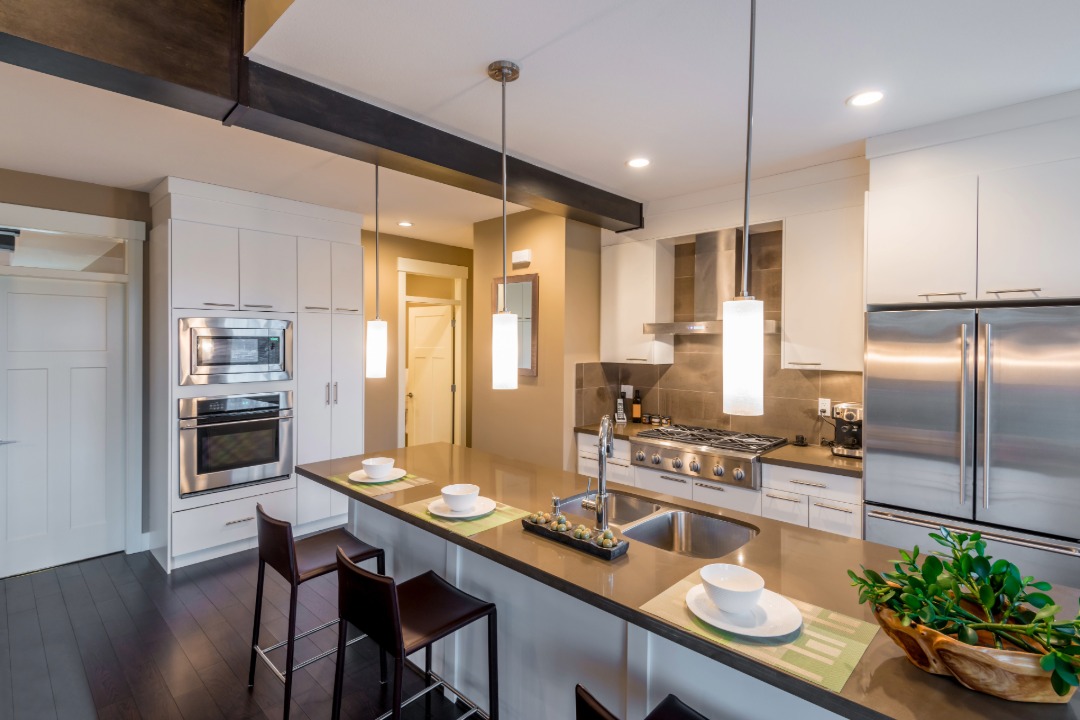
Ten years ago, the question barely existed. You built a home, you called a carpenter, and they worked on site for weeks until your kitchen, wardrobes, and shelving were ready. That was the default. Today, the default is shifting. Modular interiors now account for a growing share of residential and commercial interior projects across Indian cities. And for good reason.
The shift from traditional interiors to modular interiors is not about trend or fashion. It is about a fundamental difference in how furniture and fittings are designed, produced, and installed. One approach relies on manual skill at a construction site. The other relies on precision engineering inside a factory. The results are measurably different in finish quality, speed, durability, and long-term value.
This guide breaks down the real, practical differences between modular and traditional interiors. It covers kitchens, wardrobes, office furniture, and retail fixtures so you can make an informed choice regardless of your project type.
What Are Modular Interiors and Traditional Interiors?
Modular interiors are built using pre-engineered components manufactured in a factory. Each panel, cabinet, shelf, and drawer unit is designed digitally, cut on CNC machines, edge-banded on automated lines, drilled with precision, and finished under controlled conditions. The completed modules are then transported to the site and assembled. On-site work is limited to fitting and alignment.
Traditional interiors are built entirely on site by carpenters. Raw materials like plywood, timber, and hardware are brought to the location. Everything from measurement and cutting to assembly and finishing happens manually at the construction site. The quality depends almost entirely on the individual carpenter’s skill, tools, and working conditions.
The distinction is not just about where the work happens. It is about the level of control, consistency, and repeatability that each method allows.
Precision and Finish Quality
This is where the gap between modular interiors and traditional interiors is most visible. A CNC machine cuts panels to tolerances of 0.1 millimetres. It drills hinge holes at exactly the right depth and spacing every single time. Automated edge-banding machines seal all four edges of every panel, preventing moisture from entering the core material. The result is a product where doors align perfectly, drawers slide smoothly, and surfaces are uniformly finished.
On-site carpentry cannot match this level of precision consistently. Hand-held tools and manual measurement introduce small variations that add up. Edges are often left unsealed or poorly finished. Hinge placement varies from cabinet to cabinet. Drawer runners may be slightly misaligned, causing stiffness or wobble over time. None of this is necessarily the carpenter’s fault. It is a limitation of the method itself.
For a modular kitchen handling daily oil, steam, and water exposure, or for modular wardrobes storing clothes through humid monsoon months, that edge-banding and finish consistency is not cosmetic. It is structural protection.
Installation Speed and Convenience
A full modular kitchen typically takes 25 to 45 days from design approval to completed installation. Wardrobes follow a similar timeline. A complete home interior covering kitchen, bedrooms, and living areas can be done in 45 to 60 days, with most of the manufacturing running in parallel.
Traditional interiors take significantly longer. A carpenter-built kitchen alone can take 4 to 8 weeks of on-site work, and that timeline stretches further for wardrobes, TV units, and other rooms. During this period, your home is a construction zone. There is dust, noise, material storage, and daily supervision required.
With factory-manufactured furniture, all the messy, time-consuming work happens off-site. When the modules arrive, installation takes 1 to 3 days per room. There is minimal dust, no raw material clutter, and far less disruption to your daily routine. For office and retail projects where downtime means lost revenue, this speed advantage becomes even more critical.
Space Optimization
Indian apartments are getting smaller. A typical 2BHK in a metro city offers 800 to 1,000 square feet of carpet area. Every inch matters. Modular interiors are designed specifically for this challenge.
Floor-to-ceiling wardrobes eliminate the dust-collecting gap above traditional almirahs. Corner carousel units in modular kitchens make deep corners usable. Pull-out pantry units use narrow gaps that would otherwise be dead space. Under-bed storage drawers, wall-mounted shoe racks, and concealed study desks are all standard options in modular home interior design.
Traditional interiors can be customised, but they rarely achieve the same storage density. Carpenters typically build standard-depth cabinets without internal accessories like soft-close drawer organisers, cutlery inserts, or pull-out waste bins. These accessories are engineered into modular systems from the design stage itself, not added as afterthoughts.
Material Quality and Durability
The durability of any interior depends on two things: the quality of raw materials and how well they are processed. Modular furniture manufacturers use BWP (Boiling Water Proof) plywood, HDHMR boards, or marine-grade plywood as standard carcass materials. These resist moisture swelling and warping far better than the commercial-grade plywood commonly used in traditional carpentry.
Hardware is another major difference. Factory-manufactured modular furniture comes fitted with soft-close hinges and telescopic drawer channels from brands like Hettich and Blum. These components are rated for tens of thousands of open-close cycles. In traditional setups, carpenters often use unbranded or basic hardware to keep costs down. The difference shows up within 2 to 3 years when hinges start sagging and drawers lose their smooth action.
In humid climates like Hyderabad, Mumbai, Chennai, and Kolkata, the sealed edges and moisture-resistant cores used in modular interiors provide a measurable longevity advantage over site-built furniture where edge sealing is often incomplete.
Cost Transparency and Budget Control
One of the biggest misconceptions about modular interiors is that they are always more expensive than traditional interiors. The reality is more nuanced. Modular projects give you an itemised quotation before production begins. You know exactly what you are paying for: carcass material grade, shutter finish, hardware brand, internal accessories, countertop, installation, and delivery. There are no surprises.
Traditional carpentry starts with an estimate and evolves into a moving target. Material costs fluctuate depending on what the carpenter sources. Labour charges extend as timelines stretch. Additional work requested mid-project gets added without formal change tracking. By the time the project ends, the actual cost often exceeds the original estimate by 15 to 30 percent.
On a per-unit basis, factory production also benefits from efficiency. CNC cutting optimises material usage, reducing waste. Bulk procurement of hardware and boards brings down per-unit material costs. These savings are passed on to the customer, especially in larger projects covering full homes or entire office floors.
Scalability and Adaptability
Modular furniture is designed to be reconfigured. If you move to a new apartment, modular kitchen cabinets and wardrobe units can be disassembled, transported, and reinstalled. Internal configurations can be changed. A hanging section in a wardrobe can be converted to shelves. A kitchen base unit can be swapped for a different accessory.
Traditional interiors are fixed in place. Carpenter-built cabinets are screwed and glued to walls. They cannot be removed without damage and cannot be repurposed in a new space. For renters, young professionals who relocate frequently, and businesses that outgrow their office space, this lack of portability is a real disadvantage.
In office environments, modular office furniture and workstation systems can be reconfigured as teams grow or reorganise. Partitions can be moved. Desks can be rearranged. Storage units can be added without replacing the entire setup. This scalability makes modular the default choice for growing businesses.
Sustainability and Waste Reduction
Factory production generates significantly less waste than on-site carpentry. CNC machines optimise cutting patterns to extract maximum usable panels from each sheet of plywood or board. Offcuts are tracked and reused wherever possible. Sawdust and shavings are collected centrally rather than scattered across a construction site.
Traditional carpentry generates waste on site that is difficult to manage. Manual cutting inevitably produces more offcuts. Edge material is often discarded rather than recycled. And the dust and debris created during weeks of on-site work affects indoor air quality in the very space where you will eventually live or work.
For projects that prioritise sustainability, modular interiors offer a clear advantage. HDHMR boards used in modular systems are manufactured from recycled wood fibre. Low-emission adhesives reduce formaldehyde off-gassing. And the controlled factory environment ensures that environmental protocols are followed consistently.
When Traditional Interiors Still Make Sense
It would not be fair to claim that modular is always the right choice. Traditional carpentry still holds value in specific situations. If you need ornate hand-carved woodwork, traditional panelling, or heritage-style mouldings for a period home or a boutique hotel, skilled carpenters deliver results that factory production cannot replicate.
For very small, one-off custom pieces like an irregularly shaped shelf in a niche or a bespoke piece of standalone furniture, manual craftsmanship can be more practical than setting up a factory production run. The key is understanding which approach fits which requirement. For kitchens, wardrobes, office workstations, retail fixtures, and storage systems, modular wins on every measurable parameter. For artisanal one-offs and hand-carved decorative elements, traditional carpentry retains its place.
Frequently Asked Questions
Are modular interiors more expensive than carpenter-made interiors?
Not necessarily. The upfront cost of modular interiors can be comparable to or slightly higher than traditional interiors for the same material grade. However, modular projects come with fixed pricing, no cost overruns, and better long-term durability. When you factor in the reduced waste, faster installation, consistent hardware quality, and lower maintenance costs over 10 to 15 years, modular typically offers better total value. Traditional carpentry may appear cheaper initially, but hidden costs from timeline extensions, material wastage, and early hardware failure often close the gap.
Can modular kitchens handle heavy Indian cooking with oil, steam, and spices?
Yes, and in most cases they handle it better than carpenter-built kitchens. A well-specified modular kitchen uses BWP-grade plywood or HDHMR as the carcass, both of which resist moisture swelling. Shutter finishes like acrylic, PU coating, and high-pressure laminate are designed to withstand oil splashes, steam exposure, and daily cleaning. Machine-sealed edges on every panel prevent moisture from entering the core. In contrast, carpenter-built kitchens often leave edges partially unsealed, making them more vulnerable to swelling and delamination in humid Indian kitchens.
How long do modular interiors last compared to traditional interiors?
With proper material selection and care, modular furniture lasts 15 to 20 years or more. The branded hardware used in modular systems (Hettich, Blum) is rated for over 50,000 open-close cycles. Sealed panels resist termite damage and moisture better than unsealed site-built furniture. Traditional interiors can also last long if high-quality materials are used and the carpenter’s workmanship is excellent. But the consistency of quality is harder to guarantee with manual methods, and unbranded hardware tends to degrade faster.
Can I relocate modular furniture if I move to a new home?
Yes, this is one of the practical advantages of modular interiors over traditional interiors. Modular cabinets, wardrobes, and kitchen units are assembled using screws and cam-lock fittings, not permanent adhesives. They can be carefully disassembled, transported, and reinstalled in a new space. Some adjustments may be needed if room dimensions differ, but the core modules remain reusable. Carpenter-built furniture is typically fixed to walls with screws, adhesive, and sometimes cement, making removal destructive and reinstallation impractical.
Is modular furniture suitable for offices and retail stores, or only for homes?
Modular systems are used extensively across homes, offices, and retail environments. Modular office furniture includes workstation desks, storage cabinets, conference tables, and partition systems that can be reconfigured as teams change. Retail stores use modular display fixtures, shelving systems, and custom counters that can be updated seasonally without replacing the entire setup. The factory-manufactured approach works across all three segments because the core advantages of precision, speed, and consistency apply regardless of the space type.
Final Thoughts
The choice between modular interiors and traditional interiors comes down to what you value most. If you want precision engineering, faster installation, transparent pricing, and furniture that lasts through years of daily use, modular is the clear answer. If you need hand-crafted decorative woodwork for a very specific aesthetic, traditional carpentry still has its place.
For the vast majority of residential, office, and retail projects in India today, modular is the smarter, more efficient, and more reliable choice. Holzbox operates its own factory in Hyderabad with CNC machinery and automated finishing lines, manufacturing modular kitchens, wardrobes, office furniture, and retail fixtures for clients across India.