
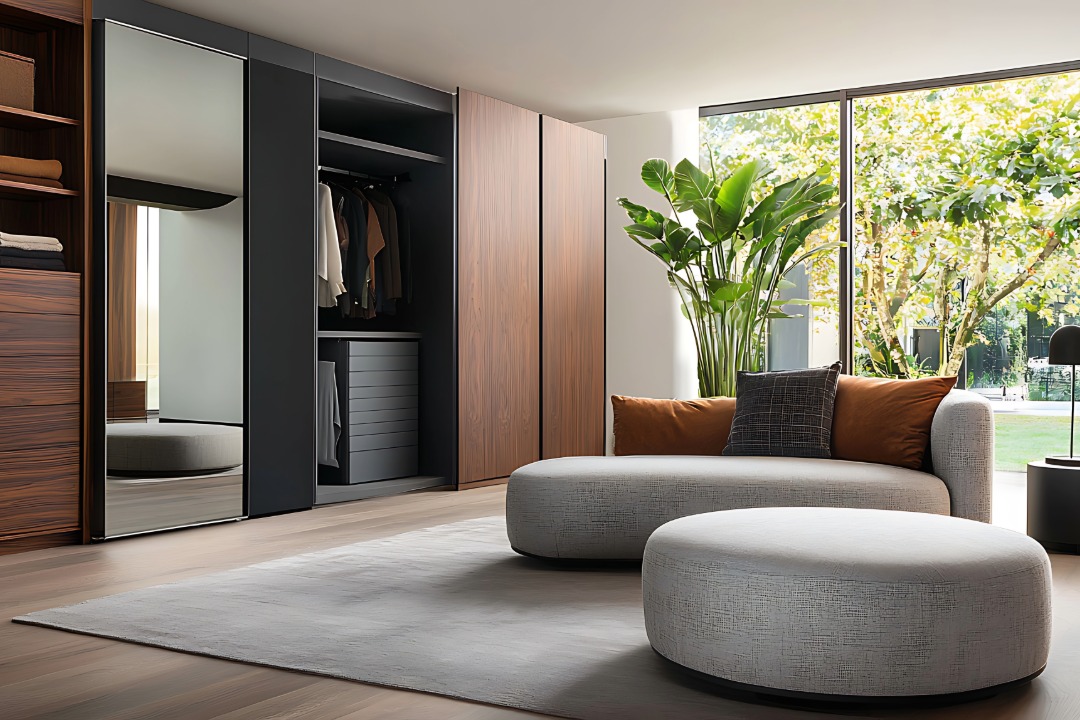
A traditional almirah wastes space in ways you never notice. The gap between the top and the ceiling collects dust instead of storing blankets. The corners sit empty because fixed shelves cannot reach into the depth. The drawers are too shallow to hold winter sweaters. The hanging rod is at one height, so long kurtas bunch up at the bottom while shirts leave half the vertical space empty.
You accept these limitations because they seem built into the furniture itself. But they are not. They are the result of a one-size-fits-all design that ignores how you actually store clothes.
A modular wardrobe eliminates these limitations by engineering the internal layout to recover every inch of wasted space. The gains are not marginal. A well-designed modular wardrobe delivers 30 to 40 percent more usable storage than a traditional almirah of the same external dimensions.
This guide explains exactly where that extra space comes from.
Recovering Vertical Space: Floor to Ceiling
The single biggest storage gain comes from using the full height of the wall. A standard freestanding almirah is 6 to 6.5 feet tall. In a room with a 9-foot ceiling, that leaves 2.5 to 3 feet of unused wall space above the wardrobe. That gap collects dust, cobwebs, and nothing useful.
A modular wardrobe is built floor to ceiling. An 8 to 9 foot tall unit occupies the entire wall height. The top section, called the loft, stores items you use infrequently. Suitcases. Seasonal blankets. Festival clothing. Out-of-season jackets. These items take up prime shelf space in a regular almirah. Moving them to the loft frees the main wardrobe zone for everyday clothing.
The loft alone adds 15 to 20 percent more storage capacity without increasing the wardrobe’s width or depth. It is the easiest and most impactful space recovery technique in wardrobe design.
A modular wardrobe manufacturer with in-house production builds loft units to the exact ceiling height of your room. If your ceiling is 9 feet 4 inches, the unit is built to 9 feet 4 inches. There is no gap. No dust trap. No wasted vertical space.
Eliminating Dead Corners
If your wardrobe runs into a corner where two walls meet, the last 12 to 18 inches of depth become a dead zone. A standard shelf does not help because you cannot see or reach items pushed into the corner.
Modular wardrobes solve this with engineered corner accessories. A rotating corner carousel brings items to the front when you pull the shelf outward. A pull-out rod lets you slide hangers sideways to access garments stored deep in the corner.
In an L-shaped wardrobe configuration, corner recovery accessories add 6 to 8 square feet of usable storage. That is the equivalent of an entire extra shelf section that a traditional design simply wastes.
These accessories require precise cabinet dimensions to function correctly. A corner carousel that does not match the internal width jams. A pull-out rod that is too long hits the adjacent panel. Factory-built modular units are dimensioned to fit the accessory specifications exactly, which is why they work smoothly from day one.
Splitting Hanging Zones by Garment Length
A traditional wardrobe has one hanging rod at a fixed height. Every garment hangs from the same rod regardless of length. Short shirts leave 18 to 24 inches of empty space below them. Long kurtas and sarees crowd the bottom and create wrinkles.
A modular wardrobe splits the hanging zone into sections by garment length. A double-hang section uses two rods, one above the other, to store shirts and blouses on top and trousers or folded items below. This setup doubles the hanging capacity in the same vertical space.
A single long-hang section accommodates kurtas, dresses, sarees on hangers, and formal suits that need full-length draping. This section uses the complete height from rod to base without a second rod.
The combination of double-hang and single-hang zones within the same wardrobe matches how Indian households actually store clothing. Everyday items go into the double-hang section for quick access. Occasion wear and ethnic garments go into the long-hang section.
This simple split increases hanging storage capacity by 40 to 50 percent compared to a single-rod setup.
Using Depth with Pull-Out Accessories
The standard internal depth of a wardrobe is 22 to 24 inches. Fixed shelves use this depth for stacking folded clothes. But items at the back of the shelf are invisible and inaccessible. You pull out the front items to reach the back. The folded stack collapses. The shelf becomes messy within a week.
Pull-out trays and drawers solve this by bringing the full depth to you. A pull-out drawer on ball-bearing runners extends completely, revealing everything inside. You see the entire tray from front to back without disturbing the contents.
Trouser pull-outs hang trousers on individual bars that slide out from the wardrobe. Each trouser is visible and accessible without removing others. The same principle applies to tie and belt organisers that pull out vertically, displaying every item in a single view.
These accessories multiply the usable depth of every section they occupy. A fixed shelf uses roughly 60 percent of its depth effectively. A pull-out tray uses 95 percent. Over the full height of the wardrobe, that difference adds up to a substantial storage gain.
Dedicated Zones for Non-Clothing Items
Indian wardrobes store more than just clothes. Shoes. Bags. Jewellery. Watches. Belts. Scarves. Bedsheets. Towels. Photo albums. Important documents. All of these end up inside the wardrobe because there is nowhere else to put them in a compact Indian bedroom.
A modular wardrobe creates dedicated zones for each category. A shoe shelf at the base, angled for visibility and air circulation. A felt-lined jewellery tray with compartments for rings, earrings, and chains. A pull-out laundry hamper that hides dirty clothes behind the shutter instead of piling them on a chair.
These dedicated zones prevent the mixing and stacking that makes traditional almirahs feel cluttered. When every item has a designated place, the wardrobe stays organised with minimal effort. You do not need periodic reorganisation marathons. The system maintains itself because the layout was designed around your actual inventory.
Adjustable Shelves for Changing Needs
Fixed shelves are the norm in carpenter-built wardrobes. Once installed, they cannot be moved without dismantling the carcass. If your clothing inventory changes, the shelf heights no longer match. Tall stacks overflow. Short stacks waste space.
Modular wardrobes use adjustable shelf systems. Shelves rest on removable pins inserted into pre-drilled rows along the side panels. You can reposition any shelf in minutes by moving the pins to a different height.
This flexibility matters more than most people realise. A couple’s wardrobe needs may change significantly over five years. A baby’s arrival adds children’s clothing. A career change shifts the balance from formal to casual wear. Seasonal weight changes affect the proportion of heavy versus light garments.
Adjustable shelves adapt to all of these changes without any structural modification. The wardrobe evolves with your life instead of becoming a rigid box that no longer fits your needs.
Behind-the-Door Storage on Hinged Wardrobes
The inside surface of a hinged door is usable storage space that most people ignore. Hooks mounted on the door hold scarves, belts, bags, and stoles. A slim mirror panel eliminates the need for a separate dressing mirror in the room. A pocket organiser stores accessories, sunglasses, and small electronics.
This behind-the-door space adds no width, no depth, and no height to the wardrobe. It is entirely found space. And in a compact bedroom interior design where every inch matters, it can hold 15 to 20 items that would otherwise clutter shelves or countertops.
Sliding wardrobes cannot offer this because the panels overlap when opened. If behind-the-door storage is important to you, hinged doors deliver a practical advantage that sliding doors do not.
The Factory Precision That Makes It All Work
Every storage technique described above depends on one thing. Dimensional accuracy. A corner carousel that does not fit jams. A pull-out tray that is 2 millimetres too wide sticks. An adjustable shelf that wobbles on its pins falls when loaded. A loft that does not reach the ceiling leaves a gap that defeats its purpose.
Factory-built modular wardrobes are manufactured on CNC machines with sub-millimetre tolerances. Every panel is cut to the exact dimension specified in the design. Every shelf pin hole is drilled at the exact interval. Every accessory fits its module because both were dimensioned from the same production data.
Holzbox builds modular wardrobes in its own factory. That means every component, from the loft panel to the corner carousel bracket, is produced, tested, and quality-checked under one roof. This integrated approach is what turns a collection of smart storage ideas into a wardrobe that actually works as a complete system.
A carpenter working on site cannot achieve this consistency. Hand-cut panels vary by 1 to 2 millimetres. That variation makes accessories unreliable. The storage techniques that recover space in a factory-built wardrobe become sources of frustration in a hand-built one.
The storage gains are real. But only when the manufacturing precision behind them is real too.
Frequently Asked Questions
How much extra storage does a modular wardrobe provide compared to a traditional almirah?
A well-designed modular wardrobe provides 30 to 40 percent more usable storage than a traditional almirah of the same external dimensions. The gains come from floor-to-ceiling height utilisation, corner recovery accessories, double-hang configurations, pull-out trays, and dedicated zones for non-clothing items. Each technique recovers space that a traditional home interior design setup simply wastes.
Is a floor-to-ceiling wardrobe practical for everyday use?
Yes. The upper loft section stores items you use infrequently, like seasonal blankets, suitcases, and festival clothing. The main wardrobe zone from waist to eye level stores everyday items for quick access. The base section holds shoes and heavy items. This three-zone approach keeps daily-use items within comfortable reach while using the full wall height for less frequent storage.
What are the most effective internal accessories for maximising storage?
Pull-out trouser racks, double-hang rod configurations, felt-lined jewellery trays, shoe shelves, and adjustable shelving. Among these, the double-hang configuration and adjustable shelves deliver the highest storage gain for the lowest cost. Pull-out drawers on full-extension ball-bearing runners are also highly effective because they make the full depth of the shelf accessible instead of just the front 60 percent.
Can I add storage accessories to an existing modular wardrobe later?
In most cases, yes. Modular wardrobes built with standard module dimensions support retrofit accessories. Pull-out trays, additional shelves, and organisers can be added without dismantling the carcass, provided the internal dimensions match the accessory specifications. A manufacturer with in-house manufacturing can supply matching accessories for wardrobes they have previously built because the dimensional data is on file.
Does a modular wardrobe work for very small bedrooms?
Absolutely. Small bedrooms benefit the most from modular wardrobe design because every inch of recovered space matters more. A floor-to-ceiling sliding wardrobe spanning just 5 feet of wall width can store the full clothing inventory of a couple when the internal layout is optimised with double-hang zones, pull-out trays, and a loft section. The key is custom module sizing from a factory that builds to your exact dimensions.