
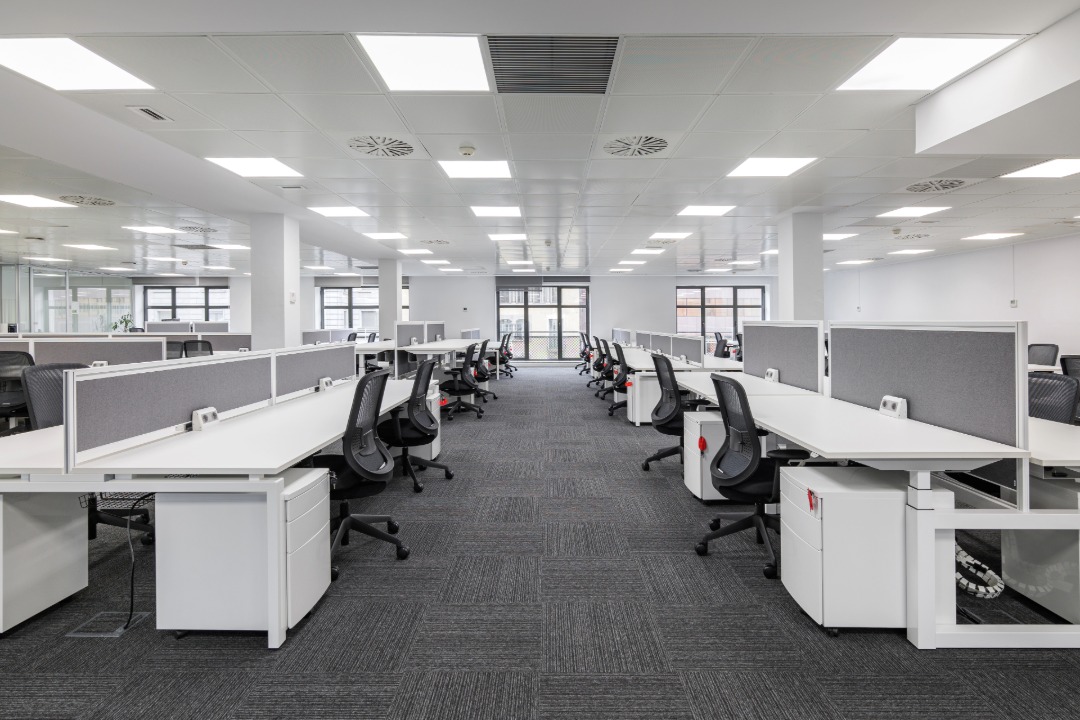
Most companies invest in hiring the right people, training them, and giving them the right tools. But they overlook the one thing those people interact with physically for eight hours every day. The desk. The chair. The storage unit. The meeting table.
Office furniture is not a background element. It is the physical environment that shapes how an employee sits, moves, focuses, collaborates, and recovers throughout the workday. When the furniture supports the body and the workflow, performance improves. When it does not, performance degrades quietly but consistently.
This guide explains the specific connections between office furniture and employee performance. Not in generic terms. In measurable ways that show why furniture is a strategic investment, not a procurement checkbox.
The Chair and Sustained Focus
An employee spends more time in their office chair than in any other piece of furniture they own. Six to eight hours a day, five days a week, fifty weeks a year. That is roughly 2,000 hours of sitting annually.
A chair without proper lumbar support forces the lower back into an unnatural curve. Within two hours, the discomfort becomes noticeable. By hour four, the employee is shifting positions every few minutes. By hour six, they are distracted by pain rather than focused on work.
An ergonomic task chair with adjustable lumbar support, seat depth, armrest height, and tilt tension keeps the spine in its natural alignment. The body stays comfortable longer. The mind stays focused longer. The window of sustained concentration extends from two hours to four or five hours before the first break is needed.
This is not theory. Companies that have upgraded from basic seating to ergonomic chairs consistently report fewer complaints about back pain and noticeably longer uninterrupted work sessions. The productivity gain is difficult to measure in isolation, but the reduction in physical distraction is unmistakable.
The Desk and Work Organisation
A cluttered desk leads to a cluttered workflow. When files, cables, notebooks, and coffee cups compete for surface space, the employee spends mental energy managing the chaos instead of focusing on the task.
A well-designed office desk integrates cable management channels that route wires below the surface. It provides built-in drawers for files and stationery. It includes a monitor arm mount that lifts the screen to eye level and frees the area beneath it.
Height-adjustable desks take this further. They let the employee alternate between sitting and standing throughout the day. Standing for 20 to 30 minutes after lunch counters the post-meal energy dip that reduces afternoon productivity in almost every office. The transition between sitting and standing also activates different muscle groups and improves blood circulation.
The desk is not just a surface. It is the primary work platform. When it is organised, the work is organised. When it adapts to the body, the body stays energised.
Storage Furniture and Retrieval Time
The time employees spend searching for documents, supplies, and personal items is rarely measured. But it adds up. Studies suggest that an average office worker spends 30 to 60 minutes per day looking for things. Over a year, that is 130 to 260 hours of lost productive time per employee.
Storage furniture that is logically designed and properly placed reduces this waste dramatically. Pedestal drawers under the desk hold daily-use items within arm’s reach. Overhead shelves store reference materials at eye level. Lockable personal storage units keep valuables secure without requiring a trip to a separate room.
For shared spaces, modular storage systems with labelled compartments ensure that common supplies have a designated place. When everyone knows where the stapler, the printer paper, and the project files live, nobody wastes time hunting.
A manufacturer with in-house production builds storage units to the exact dimensions of the office layout. Off-the-shelf units often leave awkward gaps between the cabinet and the wall or protrude into walkways. Custom-built modular office furniture fits the space precisely and integrates with the desk system as a unified workstation.
The Meeting Table and Collaboration Quality
Meeting tables shape how people interact. A rectangular table with a head position creates a hierarchical dynamic. The person at the head controls the conversation. Others defer. Ideas flow in one direction.
A round or oval table eliminates the head position. Everyone sits at equal distance from the centre. Conversations become more balanced. Contributions from quieter team members increase because the seating arrangement does not assign status.
The size of the table matters too. A table that is too large for the room makes participants feel isolated. A table that is too small forces people to crowd together with notebooks and laptops competing for space. The right table size leaves enough personal space for comfort while keeping everyone close enough for natural conversation.
Cable ports integrated into the table surface let participants charge devices and connect to the central display without tangling cords across the surface. This small detail keeps the table clean and the meeting focused.
For hybrid teams, the meeting table should accommodate a camera and microphone setup that includes remote participants seamlessly. A table designed with technology integration from the start performs better than one retrofitted with clamps and cable extensions.
Partition Systems and Noise Control
Open offices without any partitions expose every employee to every conversation, phone call, and keyboard click in the room. The resulting noise reduces concentration and increases error rates on tasks that require sustained attention.
Acoustic partition panels between workstations absorb sound and reduce cross-talk. They do not need to be floor-to-ceiling walls. A 48-inch-high fabric-covered panel blocks direct sound transmission while preserving the open, connected feel of the office.
The partition material matters. Hard surfaces like glass and metal reflect sound. Fabric-wrapped foam panels absorb it. The density and thickness of the acoustic core determine how much noise the panel captures.
Modular partition systems that connect to desk frames offer the most flexibility. They can be added, removed, or repositioned as team configurations change. A team that needs open collaboration this month may need focused individual work next month. The partitions adapt without requiring construction.
An office interior design company that understands acoustics will specify partition height, material, and placement based on the noise profile of the team. A sales team generates more phone traffic than a design team. Their partition requirements are different. Generic partition placement ignores this and solves nothing.
Breakout Furniture and Recovery
Continuous work without breaks does not increase output. It decreases it. After 90 minutes of sustained focus, cognitive performance drops. Errors increase. Decision quality declines. The mind needs a change of environment to reset.
Breakout furniture creates the physical space for this reset. A comfortable lounge chair in a quiet corner. A cafe-style high table near the pantry. A bench with soft cushions in a corridor nook. These are not luxuries. They are functional recovery stations.
The furniture in breakout zones should feel distinctly different from workstation furniture. Softer materials. Lower seating. Warmer colours. This sensory contrast signals to the brain that the work environment has changed. The mental reset happens faster when the physical environment shifts noticeably.
Indian offices are increasingly adopting breakout zones in cities like Hyderabad, Bangalore, Mumbai, and Delhi. The correlation between short recovery breaks and improved afternoon office productivity is well documented. Good workspace design includes these recovery stations as standard, not as afterthoughts. The furniture makes the break effective by creating a space that genuinely feels different from the desk.
The Connection Between Furniture Quality and Employee Retention
Employees notice the quality of their workspace. A wobbly desk, a squeaky chair, a drawer that jams, and a table with chipped edges send a message. The message is that the company did not invest in the environment where people spend most of their waking hours.
High-quality, well-maintained office furniture sends the opposite message. It says the company values the employee’s comfort and takes the physical workspace seriously. This perception affects engagement, loyalty, and the willingness to stay long-term.
Retention is expensive when it fails. Replacing an employee costs six to nine months of their salary in recruitment, onboarding, and lost productivity. Investing in better home interior design standards for the workspace is a fraction of that cost and directly reduces turnover triggers.
The Manufacturing Quality That Supports All of It
Every performance benefit described above depends on furniture that is built to last and built to fit. An ergonomic chair that squeaks after three months undermines the comfort it was supposed to deliver. A modular desk system that wobbles at the joints undermines the organisation it was supposed to create.
Holzbox manufactures office furniture in its own factory. Every desk, partition, storage unit, and meeting table is designed, produced, and quality-checked under one roof. CNC-cut panels ensure dimensional accuracy. Factory-tested hardware ensures long-term reliability. Custom module sizing ensures the furniture fits the specific office layout without gaps or compromises.
When the furniture works as intended, the employees who use it work as intended. The connection between the two is direct, daily, and measurable.
Frequently Asked Questions
How does ergonomic furniture improve employee productivity?
Ergonomic furniture maintains the body in a neutral, supported posture that reduces physical discomfort during long work sessions. An adjustable chair with lumbar support prevents lower back strain. A height-adjustable desk allows standing intervals that improve circulation and energy. Together, these reduce fatigue and extend the duration of sustained focus, which directly translates to higher output per hour.
Is it worth investing in height-adjustable desks for every employee?
For most office environments, yes. Height-adjustable desks reduce afternoon fatigue by allowing employees to alternate between sitting and standing. They are especially effective after lunch when the post-meal energy dip is strongest. The cost of a sit-stand desk ranges from 8,000 to 25,000 rupees per unit depending on the mechanism and build quality. The performance gain over a year typically justifies the investment.
How does office furniture affect collaboration between teams?
Furniture layout determines how easily people can communicate. Open desk clusters encourage spontaneous conversation. Meeting tables without a head position create balanced discussions. Modular systems that can be reconfigured into different team sizes support changing project needs. Conversely, rigid furniture layouts with fixed desks and high walls isolate employees and reduce the natural exchange of ideas.
What role does storage furniture play in employee performance?
Storage furniture reduces the time spent searching for documents, supplies, and personal items. Well-placed pedestal drawers, overhead shelves, and labelled shared storage units can save 30 to 60 minutes per employee per day. That recovered time goes directly into productive work. A manufacturer with in-house manufacturing builds storage units to the exact office dimensions, eliminating wasted space and integrating storage into the workstation system.
How often should office furniture be replaced or upgraded?
Quality office furniture built with BWR plywood carcass and branded hardware lasts 10 to 15 years with proper maintenance. Chairs and task seating should be inspected annually for wear on casters, gas lifts, and armrest padding. Desks and storage units last longer but should be checked for structural integrity and surface condition every two to three years. Upgrading proactively before furniture degrades visibly prevents the negative impact that worn-out furniture has on employee morale and performance.