
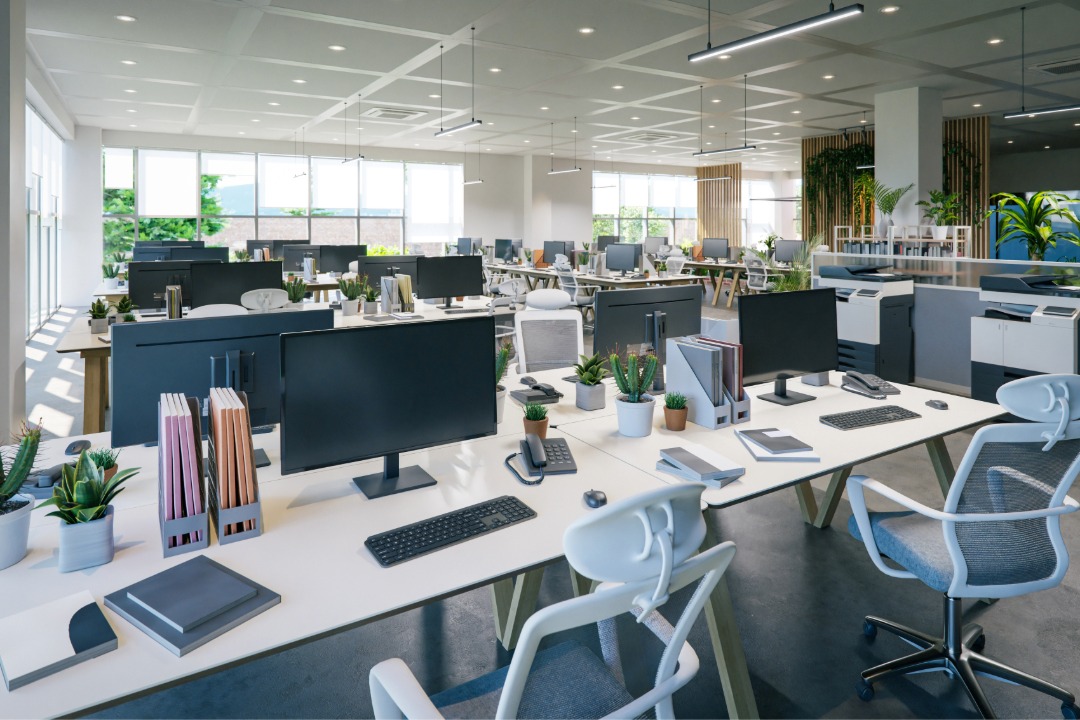
Office furniture is not a one-time purchase you make and forget. It shapes how your team works every day. It affects posture, focus, collaboration, and the overall impression your office makes on clients and visitors. And unlike residential furniture that serves one family, office furniture must work for dozens or hundreds of people simultaneously, handle heavy daily use, and adapt as teams grow and reorganise.
Choosing the wrong manufacturer means furniture that wobbles within months, finishes that chip under normal use, and workstations that cannot be reconfigured when the team size changes. Choosing the right manufacturer means a workspace that performs reliably for a decade and supports your business through multiple growth phases.
This guide covers the key factors to evaluate before you commit to an office furniture manufacturer. Not brand rankings. Not showroom appearances. The practical checks that determine whether the furniture will hold up after year three.
Manufacturer vs Dealer vs Assembler
This distinction is the most important starting point. Many companies that call themselves office furniture manufacturers are actually dealers or assemblers. They take your order, source components from multiple vendors, and coordinate assembly at your site.
A genuine manufacturer operates a factory. They cut panels on their own CNC machines. They apply edge banding on their own production lines. They build, test, and inspect every piece before dispatch. They control the raw material quality, the production process, and the final output.
The difference shows up in three places. First, consistency. When one factory builds 50 workstations, every unit is identical. When components come from five different vendors, variations in dimension, colour, and finish are inevitable. Second, accountability. When something fails, a manufacturer fixes it because they built it. A dealer passes blame between the fabricator and the installer. Third, pricing. A manufacturer sells factory-direct. A dealer adds a margin without adding value.
Production Capacity and Scalability
An office project is not like a single wardrobe order. A mid-sized office may need 30 to 50 workstations, 10 meeting tables, 100 chairs, storage units for every employee, and a reception counter. All delivered, installed, and ready within a fixed timeline.
Ask the manufacturer about their production capacity. How many workstations can they produce per week? What is their typical lead time for a 50-seat office? Do they have the floor space and machinery to handle your order without subcontracting?
Scalability matters even more. If your company grows from 50 to 80 employees next year, can the manufacturer supply matching workstations that integrate with the existing ones? A manufacturer with in-house production maintains dimensional records and material specifications for every past order. They can produce identical units months or years later. A dealer sourcing from rotating vendors cannot guarantee this match.
Material Quality and Durability Standards
Office furniture endures harder use than residential furniture. Chairs are sat in for eight hours daily. Desk surfaces bear laptop weight, coffee spills, and constant arm friction. Drawer runners open and close dozens of times a day across the entire floor.
Ask specifically about the carcass material. BWR plywood handles the load and moisture resistance needed in high-traffic commercial environments. HDHMR is a lighter alternative for overhead storage and partitions. Particle board and standard MDF are not suitable for office furniture that must last a decade.
Ask about the surface finish. High-pressure laminate is the most practical option for office desks. It resists scratches, stains, and heat from laptop bases. Acrylic and PU finishes look premium but require more maintenance in a commercial setting.
Ask about the hardware. Drawer runners should be full-extension, ball-bearing type rated for 25 kilograms or more. Chair gas lifts should carry certification for the rated weight capacity. Hinge mechanisms on storage cabinets should include soft-close action to prevent slamming in a shared environment.
Ergonomic Design Capability
Ergonomic furniture is no longer optional in a modern office. It directly affects employee comfort, health, and output. A manufacturer who simply produces desks and chairs without understanding ergonomic principles is building furniture, not workstations.
Ask whether the manufacturer designs height-adjustable desks. Do they offer monitor arm integration? Do their chair designs include adjustable lumbar support, seat depth, armrest height, and tilt tension? Can they specify desk heights based on the average user profile of your team?
An office interior design company that understands ergonomics will recommend specific chair-to-desk height ratios. They will position monitor mounts at eye level. They will ensure keyboard trays sit at the correct angle to prevent wrist strain.
If the manufacturer cannot discuss ergonomics in practical terms, they are selling furniture. Not designing an office workstation for human performance.
Customisation for Your Specific Layout
Every office has a different floor plan. Column positions, electrical outlet locations, window placements, and fire exit routes all affect where furniture can be placed. Off-the-shelf furniture rarely fits perfectly.
A manufacturer with in-house production builds modular office furniture to the exact dimensions your office requires. Desks can be custom-width to fit between columns. Storage units can be built to non-standard heights to sit below windowsills. Meeting tables can be shaped to match irregular room proportions.
This dimensional flexibility is impossible from a company that sells only fixed-size catalogue products. Ask to see past projects where the manufacturer adapted furniture to unusual floor plans. If they have experience handling column obstructions, uneven walls, and non-standard ceiling heights, they can handle your space.
Project Timeline and Installation Capability
Office furniture installation is not like home furniture delivery. It must be completed within a tight window. Often over a weekend. Sometimes overnight. The office cannot shut down for two weeks while desks are being assembled.
Ask the manufacturer about their installation process. Do they have a dedicated installation team? How many workstations can they install in a single day? Do they handle electrical and networking integration or coordinate with your IT team?
A factory-built modular system arrives pre-assembled. The installation team positions units, connects power modules, and mounts partitions. A well-coordinated installation team finishes a 50-seat office in two to three days.
A company that builds on-site brings raw materials to your office. Cutting, assembling, and finishing happen on your floor. The dust, noise, and timeline stretch into weeks. This approach is impractical for a functioning office.
Warranty and After-Sales Service
Office furniture gets harder use than home furniture. Chairs are shared between shifts. Desks accumulate minor damage from daily operations. Storage units carry heavier loads. The warranty and service policy must reflect this reality.
Ask for the warranty terms in writing. What is covered? For how long? Does the warranty cover the carcass, surface, and hardware separately? What is the response time for a service call?
A manufacturer who builds in their own factory can stock replacement parts. A broken drawer runner or a damaged panel can be produced and dispatched within days. A dealer sourcing from external vendors may take weeks to procure a matching replacement.
Holzbox manufactures office furniture in its own factory. That means every workstation, partition, storage unit, and meeting table is designed, produced, and quality-checked under one roof. When a replacement part is needed three years later, the dimensional data is on file and the part can be reproduced exactly.
Sustainability and Material Sourcing
Sustainability is a growing priority for Indian businesses. Clients notice. Employees notice. Investors notice. The furniture in your office is a visible indicator of your company’s environmental values.
Ask the manufacturer about their material sourcing. Do they use FSC-certified plywood? Are their laminates low-VOC? Do they minimise waste in their cutting process through nesting software? Do they use water-based adhesives instead of solvent-based ones?
A manufacturer with their own factory controls every input. They can verify the origin of every board, the emission level of every finish, and the waste percentage of every production run. A dealer has no visibility into these details because they do not control the production process.
Sustainable home interior design principles apply equally to commercial spaces. The same commitment to responsible material sourcing that makes a home healthier makes an office healthier.
References and Track Record
Ask the manufacturer for references from offices they have furnished at least two years ago. Speak to the facilities manager or the office administrator. Ask how the furniture has held up. Ask whether any service calls were needed. Ask how quickly issues were resolved.
A two-year-old office tells you more than a showroom display. Day-one photographs look good regardless of quality. Year-two performance reveals the truth about material durability, hardware reliability, and the manufacturer’s service commitment.
Also ask for the manufacturer’s portfolio of completed commercial projects. Look for diversity. Startups, mid-sized companies, and large corporates have different requirements. A manufacturer who has served all three understands how to scale their production and adapt their design approach to different business types.
Price Transparency
Ask for an itemised quotation. The per-workstation cost should break down into carcass material, surface finish, hardware, cable management, partition panels, and installation charges. Without this breakdown, you cannot compare two quotations meaningfully.
A manufacturer confident in their product welcomes detailed pricing questions. They explain what each component costs and why. They show you where the premium goes and where cost savings are possible without compromising quality.
A company that provides only a lump-sum figure is either hiding lower-grade materials or inflating margins on components you cannot verify.
Frequently Asked Questions
How do I verify if a company is a genuine office furniture manufacturer?
Ask to visit the factory. A genuine manufacturer will show you CNC machines, edge banding lines, assembly stations, and quality inspection checkpoints. Look at how raw materials are stored and tested. Check whether the company has the capacity to handle your order size without subcontracting. If the company declines a factory visit or redirects you to a showroom, they are a dealer, not a manufacturer.
What is the ideal material for office furniture in Indian conditions?
BWR plywood is the most reliable carcass material for commercial furniture. It handles the heavier loads and higher usage frequency of an office environment. High-pressure laminate is the best surface finish for desks because it resists scratches, stains, and heat. For partitions and overhead storage, HDHMR offers a good balance of strength and weight. Particle board and standard MDF are not recommended for office furniture expected to last ten years.
How much does office furniture cost per workstation in India?
A basic workstation with a desk, pedestal, and partition costs 8,000 to 15,000 rupees. A mid-range ergonomic workstation with cable management, monitor arm provision, and soft-close storage costs 15,000 to 30,000 rupees. A premium workstation with height-adjustable desk, branded hardware, and integrated power modules costs 30,000 to 60,000 rupees. Always compare itemised quotations to understand what each price includes.
Should I choose modular or fixed office furniture?
Modular office furniture is the better choice for most businesses. It can be reconfigured as teams grow or reorganise. Individual modules can be replaced without affecting the rest of the system. And modular units can be relocated if the company moves offices. Fixed furniture locks you into a single layout and requires expensive renovation whenever the office needs change.
How important is after-sales service for office furniture?
Very important. Office furniture is used harder than residential furniture and may need occasional adjustments, hardware tightening, or panel replacement over its lifespan. A manufacturer with in-house manufacturing can produce replacement parts that match the original specifications exactly. A dealer may struggle to source matching components from vendors they used years earlier. Always confirm the warranty duration, coverage scope, and service response time before placing an order.