
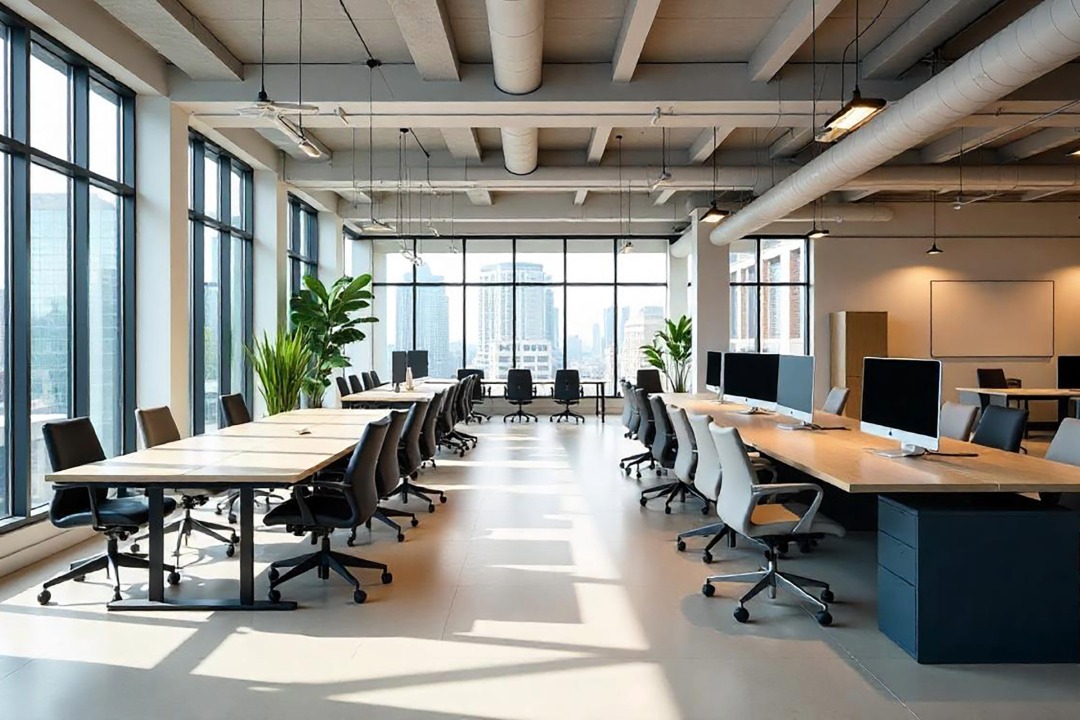
Your office tells a story before you ever say a word. When a client walks in, when a new hire shows up on their first day, the space speaks. For small businesses, this reality hits harder because every square foot carries weight. A cramped, poorly planned office drains energy, slows decisions, and quietly pushes good people away. A well-designed one does the opposite.
The good news? You do not need a massive budget or a sprawling floor plan to build a workspace that works. What you need is clarity about what your team actually does every day, and design choices that support those activities. This guide walks you through practical, tested modern office design ideas that small businesses across India and beyond are using right now to get more from less space.
Why Office Design Matters More for Small Businesses
Large corporations can absorb the cost of bad design. They have floors to spare. Small businesses do not get that luxury. When you operate with 10 to 30 people in 500 to 2,000 square feet, every design decision either adds value or creates friction.
Research consistently shows that thoughtful workspace design improves employee focus, reduces fatigue, and even lowers absenteeism. A study referenced by several industry sources found that offices with natural elements and ergonomic setups reported up to a 15 percent increase in productivity. For a small team, that kind of lift translates directly into revenue.
Beyond productivity, your office interior design shapes how clients perceive your brand. A startup pitching enterprise deals from a chaotic, cluttered room sends the wrong signal. A clean, well-organized space with intentional design signals professionalism and stability without a single word being spoken.
1. Start with Layout, Not Furniture
The most common mistake small businesses make is buying furniture first and figuring out the layout later. This approach almost always leads to wasted corners, awkward traffic flow, and rooms that feel smaller than they are.
Before you purchase a single desk, map out your work modes. How many people need focused, quiet work? How often do teams huddle for discussions? Do you host client meetings weekly or monthly? These answers determine your layout.
For most small business office design projects, an open layout with designated zones works best. Instead of walling off every function, use modular partitions, storage units, or even plants to create visual boundaries. This keeps the space feeling open while still offering distinct areas for different tasks.
L-shaped and U-shaped desk configurations work well in compact offices because they maximize corner space that would otherwise go unused. A simple rearrangement of existing furniture along walls can free up the center for a small collaboration area or a standing meeting spot.
2. Choose Modular Office Furniture Over Fixed Pieces
This is where smart spending separates itself from wasteful spending. Traditional carpenter-built furniture is rigid. Once a wooden cabin or fixed desk is installed, it stays. If your team grows from 8 to 15 people, you are looking at demolition and rebuilding.
Modular office furniture solves this problem entirely. Factory-manufactured modular pieces are built with precision, using CNC machines and controlled processes. They arrive ready to assemble, fit together cleanly, and can be reconfigured as your team or your needs change. Need to convert a two-person bay into a four-person cluster? Swap panels and add extensions. No carpenter, no dust, no downtime.
Look for modular workstations with integrated cable management, adjustable heights, and interchangeable finishes. These features might sound like extras, but in a small office, exposed cables and fixed-height desks create visual clutter and physical discomfort that compound over time.
Manufacturers with in-house factory setups offer a clear advantage here. When a company designs, produces, and installs from its own facility, quality stays consistent and timelines stay short. You avoid the markup of middlemen and the inconsistency of outsourced production.
3. Use Light Strategically
Lighting is one of the most underrated elements in office design ideas for small spaces. Poor lighting causes eye strain, headaches, and that sluggish mid-afternoon feeling that kills output.
Natural light should be your first priority. Position workstations near windows wherever possible. If your office has limited window access, avoid heavy curtains or partitions that block whatever light you do get. Glass partitions, for example, allow light to pass through while still providing acoustic and visual separation.
For artificial lighting, move away from harsh overhead fluorescents. Layer your lighting instead. Use warm, diffused ambient lights for general illumination. Add task lights at individual desks for focused work. Consider accent lighting near reception areas or meeting zones to add warmth and character.
LED panel lights with adjustable color temperatures are now affordable and widely available in India. They let you shift from cool daylight tones during work hours to warmer tones in the evening, which supports natural energy cycles and reduces eye fatigue.
4. Bring Nature Inside with Biophilic Design
Biophilic design is not a passing trend. It is rooted in decades of research showing that humans perform better, feel calmer, and recover from stress faster when surrounded by natural elements.
For small office interiors, this does not mean installing a vertical garden wall (though that is an option). Start simple. Place potted plants at workstations, in corners, and near entryways. Snake plants, pothos, and peace lilies are low maintenance and thrive in indoor conditions common across Indian cities.
Beyond plants, introduce natural materials into your office interior design. Wood-finished desks, stone-textured wall panels, and linen or cotton upholstery bring warmth that plastic and metal alone cannot provide. Even small touches like a bamboo pen holder or a jute rug under a meeting table make a noticeable difference in how a space feels.
Natural textures also photograph well, which matters if your team uses the office as a backdrop for video calls, social media, or client presentations.
5. Design for Hybrid and Flexible Work
The way people work has changed permanently. Many small businesses now operate with team members splitting time between home and office. Your workspace design needs to reflect this reality.
Instead of assigning a permanent desk to every employee, consider hot-desking for roles that are in the office only two or three days a week. This frees up valuable floor space. Use the recovered area for a proper meeting room, a phone booth for private calls, or a relaxation corner.
Invest in a few well-equipped video conferencing setups rather than many basic ones. A single room with a good camera, a large screen, and decent acoustics will handle most hybrid meetings better than five rooms with laptop speakers and poor lighting.
Modular furniture shines here as well. Foldable tables, nesting chairs, and wheeled storage units let you reconfigure the office in minutes. Monday might be a full-team day requiring every desk. Wednesday might be half-capacity, and you can push tables together for a workshop-style layout.
6. Make Storage Invisible
Clutter is the enemy of small spaces. And in most small business offices, storage is an afterthought. Files pile up on desks, supplies get shoved into corners, and personal items spill over into shared areas.
The fix is vertical and integrated storage. Wall-mounted shelves, overhead cabinets, and under-desk pedestals keep essentials close without eating into floor space. Closed storage with clean fronts looks tidier than open shelving, which tends to accumulate visual noise over time.
For shared areas, a single well-organized storage wall beats multiple scattered shelves. Label everything. Keep daily-use items at arm level and archive materials higher up. If your business is still paper-heavy, a dedicated filing zone near the printer prevents paper from migrating across the office.
Modular storage systems built in a factory setting fit precisely into available spaces, including awkward corners, under staircases, or above doorframes. Custom-measured units eliminate gaps that collect dust and waste space.
7. Use Color with Intention
Color is not decoration. It is a tool. The right palette makes a small office feel larger, calmer, or more energetic, depending on what you need.
For small spaces, light neutrals like soft white, warm grey, and beige work as base colors. They reflect light, open up the room visually, and provide a clean backdrop for branded accents or artwork.
Use color strategically in zones. A deep blue or forest green accent wall in a meeting room creates focus. A warm mustard or terracotta tone in a break area feels inviting and informal. Avoid painting every wall a different color, which fragments the space and makes it feel smaller.
Your office furniture interiors should complement the wall palette, not compete with it. Lighter wood finishes or matte laminates in neutral tones create a cohesive look. Reserve bold colors for small elements like chair upholstery, cushions, or desk accessories.
8. Invest in Ergonomics
Ergonomic furniture is not a luxury for large companies. It is a necessity for anyone who sits at a desk for extended hours. Back pain, neck stiffness, and wrist strain are real problems that reduce productivity and increase sick days.
At minimum, every workstation should have a chair with lumbar support, adjustable height, and a breathable backrest. Pair it with a desk at the correct height for the user. If budget allows, sit-stand desks give employees the option to alternate between sitting and standing throughout the day.
Monitor arms are an inexpensive upgrade that make a big difference. They free up desk space, allow screen height adjustment to eye level, and reduce neck strain. In a small office, where desks tend to be compact, this extra surface area is valuable.
Ergonomic keyboards, wrist rests, and proper mouse positioning are minor investments with major long-term returns.
9. Reflect Your Brand Identity
Your workspace design should feel like your company, not a generic coworking space. Small businesses often skip branding in the office, thinking it is only for large corporations. That is a missed opportunity.
Brand expression does not require expensive signage or custom wallpaper. A simple logo at the reception area, a company timeline on a feature wall, or your brand colors woven into the furniture and decor create a sense of identity. Employees feel more connected to a space that reflects the company they chose to work for.
For client-facing areas, brand consistency builds trust. If your website and marketing materials use specific colors and a certain visual language, your office should echo that. The physical space becomes an extension of your brand story.
10. Plan for Growth from Day One
Small businesses rarely stay the same size for long. The office you design today should accommodate the team you will have in 18 to 24 months. This does not mean over-investing now. It means making choices that scale.
Modular workstations, movable walls, and furniture with interchangeable components allow your space to grow without a complete overhaul. Plan electrical and data points with extra capacity. Leave at least one zone flexible so it can shift from storage to workspace or from meeting room to team bay as needs change.
Factory-built modular interiors, like those offered by Holzbox, are designed with exactly this kind of scalability in mind. When the furniture is manufactured in-house with precision engineering, adding matching units later is straightforward. The finishes match, the dimensions align, and the quality stays consistent because everything comes from the same production line.
Frequently Asked Questions
Q1. What is the best layout for a small business office?
An open layout with distinct zones for focused work, collaboration, and meetings works best for most small businesses. Avoid fully enclosed cabins, as they consume disproportionate space. Use modular partitions or furniture arrangements to create visual boundaries while keeping the floor plan flexible. L-shaped desk setups along walls maximize corner space and free up the center of the room for movement and shared activities.
Q2. How much does office interior design cost for a small office in India?
Costs vary based on size, materials, and design complexity. For a basic small business office design covering 500 to 1,000 square feet, budgets typically range from Rs 3 lakh to Rs 8 lakh. This covers modular office furniture, lighting, flooring, and basic branding elements. Premium setups with custom finishes, ergonomic chairs, and integrated technology can go higher, but factory-manufactured modular furniture generally offers better value than carpenter-built alternatives due to precision manufacturing and faster installation.
Q3. How can I make a small office look bigger without renovation?
Light wall colors, especially whites and soft greys, reflect more light and create a sense of openness. Remove unnecessary partitions and replace solid walls with glass wherever possible. Use vertical storage to keep the floor clear. Mirrors on one wall can visually double the perception of space. Consistent flooring throughout the office, rather than different materials in each room, also makes the area feel more expansive and unified.
Q4. Is modular office furniture better than traditional carpenter-built furniture?
For small businesses that expect to grow or change their layout over time, modular furniture is the stronger choice. It is manufactured in controlled factory environments with CNC precision, which means consistent quality and exact dimensions. It arrives ready to assemble, installs quickly with minimal disruption, and can be reconfigured or expanded later without replacing entire units. Traditional furniture is rigid and typically cannot adapt when your team size or office layout changes.
Q5. What are the top office design trends for small businesses in 2026?
The most relevant trends for small businesses include biophilic design with indoor plants and natural materials, hybrid-ready workspaces with hot-desking options, ergonomic furniture as standard, smart lighting with adjustable color temperatures, and modular furniture systems that scale with growth. Activity-based working, where employees choose from different zones based on their current task, is also gaining traction even in compact offices.