
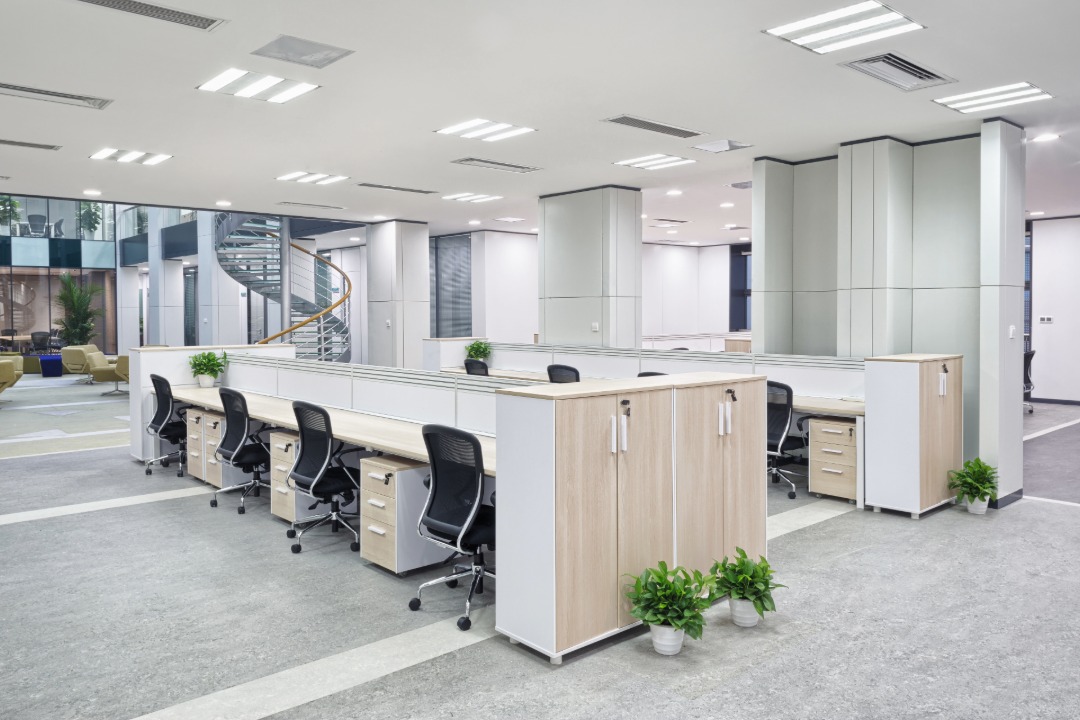
Most people spend between 7 and 10 hours sitting at their desks every working day. That adds up to roughly 2,000 hours a year in the same chair, at the same desk, in the same posture. When the furniture is poorly designed, those hours take a measurable toll. Back pain, neck stiffness, wrist strain, and chronic fatigue are not random complaints. They are direct outcomes of workstations that do not fit the people using them.
Ergonomic office furniture is designed to support the natural alignment of the human body during extended periods of seated work. It adjusts to the individual rather than forcing the individual to adjust to it. And while the concept sounds simple, the impact on both employee health and business performance is anything but small.
This guide explains what ergonomic office furniture actually includes, why it matters beyond comfort, what to look for when selecting it, and how the right choices pay for themselves over time. Whether you are outfitting a 10-person startup or a 200-seat corporate office, the principles remain the same.
What Makes Furniture Ergonomic?
The word ergonomic gets used loosely in marketing. Not every chair with padding or every desk with a lever qualifies. True ergonomic design is built around adjustability, support, and fit.
An ergonomic chair, for example, should offer adjustable seat height so feet rest flat on the floor. It should have lumbar support that follows the natural curve of the lower spine. The seat depth should allow the user to sit with their back fully against the backrest without pressure behind the knees. Armrests should be adjustable in height and width to support the forearms without forcing the shoulders upward.
An ergonomic desk should position the work surface at a height where elbows form a 90-degree angle when typing. Sit-stand desks go further by allowing users to alternate between sitting and standing throughout the day, which reduces the strain caused by holding any single posture for too long.
Beyond chairs and desks, ergonomic office furniture includes monitor arms that bring screens to eye level, keyboard trays that maintain a neutral wrist position, cable management systems that keep workstations clean, and footrests for users whose feet do not reach the floor comfortably. Each of these elements works together to create a workstation that fits the body instead of fighting it.
The Real Cost of Ignoring Ergonomics
The consequences of non-ergonomic furniture are not dramatic. They are slow and cumulative. An employee does not collapse on day one of using a bad chair. Instead, minor discomfort builds over weeks and months until it becomes chronic pain, reduced concentration, and eventually missed workdays.
Musculoskeletal disorders are among the leading causes of workplace absenteeism in India and globally. Lower back pain alone accounts for millions of lost productivity hours each year across industries. According to occupational health research, ergonomic interventions in the workplace can reduce absenteeism related to musculoskeletal issues by as much as 60 to 67 percent. That is not a marginal improvement. It is a shift in how reliably your team shows up and performs.
There is also a retention angle. Employees who experience daily physical discomfort at work are more likely to seek opportunities elsewhere. In a competitive hiring market, especially in Indian tech hubs like Hyderabad, Bangalore, and Pune, the quality of your workspace design plays a quiet but real role in keeping talent.
Eye strain from improperly positioned monitors, wrist pain from flat keyboards on high desks, and shoulder tension from armrests that sit too low or too high may seem like minor issues individually. But across a team of 20 or 50 people, these small problems compound into significant productivity loss and healthcare costs.
How Ergonomic Furniture Improves Productivity
Comfort and productivity are not separate concerns. They are directly connected. When an employee is physically comfortable, they can focus for longer stretches without the mental interruption of shifting, stretching, or rubbing a sore neck. Their cognitive energy goes toward the work, not toward managing discomfort.
Studies referenced across multiple occupational health sources indicate that workplaces with proper ergonomic setups report productivity gains of 10 to 15 percent. In one frequently cited analysis, every rupee spent on ergonomic improvements returned three to six times its value in reduced absenteeism, lower healthcare claims, and improved output quality.
Sit-stand desks contribute to this effect by encouraging movement. When employees can stand for portions of the day, blood circulation improves, energy levels stay more consistent, and the post-lunch slump that affects nearly every office is reduced. The goal is not to stand all day. It is to break the monotony of static sitting with periodic posture changes.
In open office environments where distractions are already a challenge, ergonomic furniture provides a layer of personal control. An employee who can adjust their chair, screen height, and desk position to their exact preference feels a sense of ownership over their workspace. That psychological comfort translates into better focus and engagement.
Key Components of an Ergonomic Workstation
The Chair
This is the single most important piece of ergonomic office furniture. A good ergonomic chair should have adjustable seat height with a pneumatic lever, adjustable lumbar support that matches the curve of the lower back, seat depth adjustment for different leg lengths, breathable mesh or high-density foam seating, and armrests that move vertically and horizontally. Budget at least Rs 5,000 to Rs 15,000 per chair for a quality option that will last three to five years of daily commercial use.
The Desk
Fixed-height desks work if they are specified at the right height for the user. But in shared offices or environments where people of different heights use the same workstation, adjustable desks are the better choice. Sit-stand desks with manual crank or electric lift mechanisms allow the work surface to move from seated to standing height in seconds. For offices that are not ready for sit-stand desks, simple additions like monitor risers and keyboard trays can improve ergonomics significantly without replacing the entire desk.
Monitor Positioning
The top of the screen should sit at or just below eye level, roughly an arm’s length away from the user. Monitor arms are the most flexible solution because they allow height, depth, and tilt adjustments. Dual-monitor setups, which are common in IT, finance, and design roles, benefit especially from articulated arms that position both screens at the correct angle without occupying desk space.
Accessories
Footrests help shorter users maintain proper leg positioning. Keyboard trays bring the typing surface to the correct height when the desk itself is too high. Wrist rests reduce pressure on the carpal tunnel during extended typing. Cable management channels keep wiring organized and prevent the kind of desk clutter that creates both safety hazards and visual stress. These accessories are small investments with outsized returns in daily comfort.
What to Look for When Buying Ergonomic Office Furniture
Not all furniture marketed as ergonomic delivers on the promise. Here are the things that actually matter when evaluating options for your office interior design.
Adjustability is non-negotiable. If a chair has no seat height adjustment or a desk offers no way to modify its height, it is not ergonomic regardless of what the product listing says. The more adjustment points a piece of furniture offers, the wider the range of body types it can accommodate.
Build quality matters because ergonomic furniture is a long-term investment. Cheap gas lifts that sink after six months, armrests that wobble, and mesh backrests that sag defeat the purpose entirely. Look for steel or aluminum frames, high-density foam or engineered mesh, and mechanisms rated for 50,000 or more cycles.
Consistency across the office is also important. When you outfit 20 or 50 workstations, every chair and desk should meet the same ergonomic standard. This is where working with a manufacturer that produces modular office furniture in its own factory gives you an advantage. Factory-produced furniture is built to exact specifications using CNC machines and automated quality checks. Every unit that leaves the production line matches the last one in dimensions, finish, and performance.
A manufacturer with an in-house factory also offers faster lead times and better pricing than a trader who sources from multiple suppliers. There are no middlemen adding margin, no inconsistency between batches, and no guesswork about material quality.
Ergonomic Furniture and Office Interior Design
Ergonomics should not be treated as a separate line item from your overall office design. It should be woven into the office interior design from the start. When workspace design integrates ergonomic principles at the planning stage, the result is a space that looks cohesive while functioning in a way that supports the people using it.
This means selecting office furniture interiors that balance aesthetics with adjustability. Chairs that look professional and offer lumbar support. Desks that complement the room’s design language while providing the right work surface height. Storage units that reduce bending and reaching. Reception areas where even visitors sit in chairs that do not cause discomfort during a 20-minute wait.
In compact Indian offices where office space planning is tight, ergonomic furniture can actually help. Slim-profile ergonomic chairs take up less visual space than oversized executive seats. Modular workstations with integrated monitor arms free up desk real estate. Cable management channels clean up the visual noise that makes small offices feel cluttered.
Holzbox manufactures modular office furniture and interiors with ergonomic principles built into the design. From workstation heights to chair specifications and integrated accessories, every piece is engineered at the factory level to support both comfort and productivity, delivered with the consistency that only in-house manufacturing can guarantee.
Frequently Asked Questions
Q1. What is ergonomic office furniture and why does it matter?
Ergonomic office furniture is designed to support the natural posture and movement of the human body during extended work hours. It includes adjustable chairs with lumbar support, height-adjustable desks, monitor arms, keyboard trays, and footrests. It matters because poorly designed furniture causes chronic pain, fatigue, and reduced concentration over time. Investing in ergonomic furniture reduces absenteeism, improves productivity, and helps retain employees who might otherwise leave due to daily physical discomfort.
Q2. How much does ergonomic office furniture cost in India?
A quality ergonomic chair in India costs between Rs 5,000 and Rs 15,000 for commercial-grade options. Sit-stand desks range from Rs 12,000 to Rs 35,000 depending on the mechanism and build quality. Monitor arms cost Rs 1,500 to Rs 5,000. For a full ergonomic workstation setup including desk, chair, monitor arm, and accessories, budget between Rs 20,000 and Rs 55,000 per employee. Factory-manufactured modular options typically offer better value than retail or trader-sourced alternatives.
Q3. Can ergonomic furniture really improve employee productivity?
Yes. Multiple studies across occupational health research confirm that ergonomic workstation setups improve productivity by 10 to 15 percent. The improvement comes from reduced physical discomfort, fewer breaks for stretching or pain management, and better sustained focus. One widely cited analysis found that every rupee invested in ergonomic improvements returned three to six times its value through reduced healthcare claims and lower absenteeism.
Q4. What is the most important piece of ergonomic furniture in an office?
The chair. It supports the body for more hours than any other piece of furniture in the workspace. A good ergonomic chair should have adjustable seat height, lumbar support, seat depth control, breathable material, and adjustable armrests. If your budget limits you to upgrading only one item, always start with the chair. A proper ergonomic chair paired with even a basic desk will outperform a premium desk paired with a poor chair.
Q5. Should small businesses invest in ergonomic office furniture?
Absolutely. Small businesses often have tighter teams where every employee’s output matters more. Losing even one person to chronic back pain or having team members operate at 80 percent capacity due to discomfort directly impacts revenue. Ergonomic furniture does not have to be expensive. Factory-manufactured modular chairs and desks offer commercial-grade ergonomics at prices that fit small business budgets, especially when sourced directly from a manufacturer rather than through retail channels.