
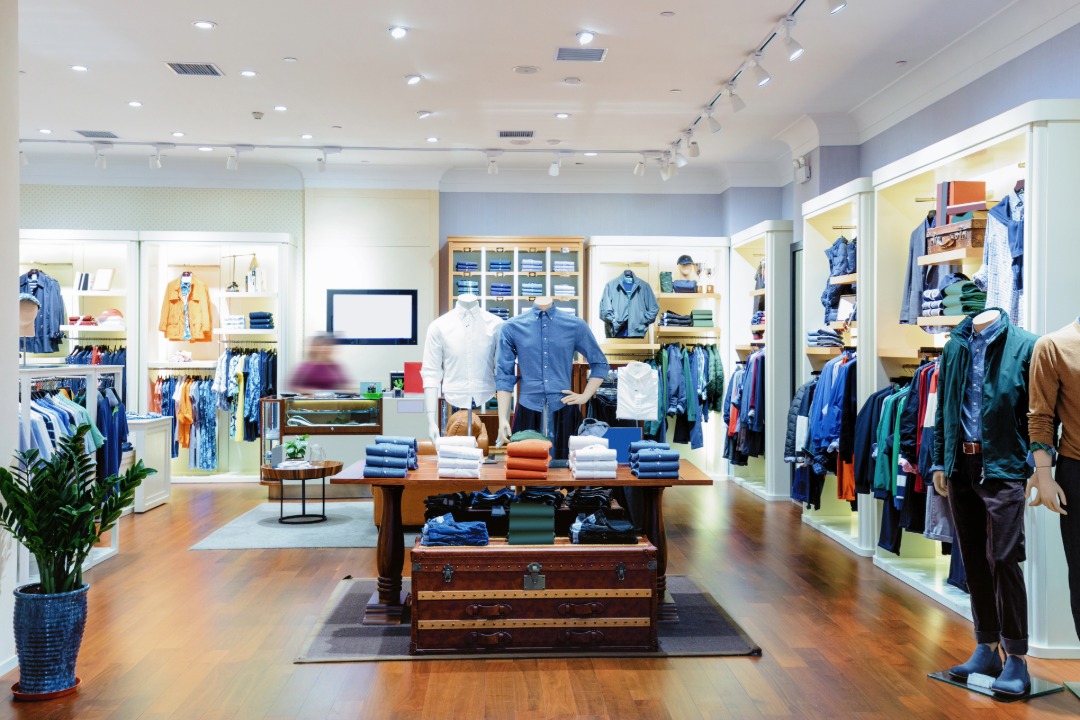
A customer decides within the first 10 seconds of entering your store whether they want to stay and browse or turn around and leave. That decision is not about your products. It is about the space. The lighting, the layout, the visual clarity, and the overall feeling your store creates in that brief moment determine whether you get a chance to sell at all.
Retail store interior design is not decoration. It is a sales strategy built into walls, floors, fixtures, and lighting. Every element either draws customers deeper into the store or pushes them toward the exit. The most successful retail spaces are designed with this understanding from the ground up.
This guide covers practical, tested retail store interior design ideas that directly influence customer behavior and buying decisions. Whether you run a clothing boutique, an electronics showroom, a jewellery store, or a multi-brand retail outlet, these principles apply across formats and product categories.
1. Design Your Store Layout Around Customer Movement
The layout is the single biggest driver of how customers experience your store. A strong layout guides shoppers through your space naturally, exposing them to more products without making them feel directed or overwhelmed.
Most customers turn right when they enter a store. This is consistent across cultures and has been documented extensively in retail research. The area immediately to the right of your entrance is your highest-value real estate. Place your newest arrivals, best-selling categories, or highest-margin products in this zone.
The most common layouts for Indian retail stores are grid, loop, and free-flow. Grid layouts with parallel aisles work well for grocery stores, pharmacies, and electronics retailers where customers want to find specific items quickly. Loop layouts create a defined walking path that takes customers through every section, which is ideal for fashion, lifestyle, and home decor stores. Free-flow layouts give customers freedom to wander, which works for boutiques, gift shops, and premium showrooms.
Regardless of layout type, keep the entrance area uncluttered. Retail experts call this the decompression zone. It is the first five to ten feet inside your door where customers transition from outside to inside. Placing products or displays here is usually wasted effort because shoppers are still adjusting and rarely notice what is in this zone.
2. Use Lighting to Sell Products, Not Just Illuminate Them
Lighting is the most underestimated tool in retail store interior design. Research shows that customers in well-lit stores are significantly more likely to make a purchase than those in poorly lit environments. The right lighting makes products look better, colors appear more vibrant, and textures more inviting.
Use a three-layer lighting approach. Ambient lighting provides the overall brightness of the store. It should be even and comfortable, not harsh or dim. Task lighting illuminates specific work areas like the billing counter and trial rooms. Accent lighting is where the selling happens. Focused spotlights on product displays, shelving, and feature walls draw the eye exactly where you want it.
For apparel and jewellery stores, warm white lighting between 2700K and 3000K creates a flattering, luxurious feel. For electronics and mobile accessories, cooler tones between 4000K and 5000K highlight product details and create a modern, tech-forward atmosphere.
Track lights and adjustable spotlights are worth the investment because they let you redirect attention whenever you change displays or rearrange products. LED systems are standard in Indian retail now, offering energy efficiency and long life while delivering the kind of color rendering that makes products look their best.
3. Build Custom Fixtures That Match Your Merchandise
Off-the-shelf display racks and generic shelving units are the fastest way to make your store look like every other store on the street. Custom retail fixtures designed specifically for your product type, brand identity, and floor space create a differentiated shopping experience that generic alternatives cannot deliver.
A clothing store needs hanging rods at the right height, shelving depths that fit folded garments without overhang, and display tables at a height that invites touch. A mobile phone showroom needs secure display pads with cable management, demo units at an ergonomic viewing angle, and lockable storage underneath. A jewellery store needs illuminated glass cases with anti-reflective coating and felt-lined drawers with precise compartments.
When these fixtures are manufactured in a factory with CNC precision and automated finishing, every unit arrives dimensionally accurate and visually consistent. There are no gaps between panels, no misaligned shelves, and no uneven paint. This level of consistency matters because in retail, details are noticed. A customer may not consciously register that a shelf is slightly crooked, but it subtly undermines their perception of your brand.
Factory-manufactured custom retail fixtures also allow for modular design. A fixture system built with interchangeable components can be rearranged to accommodate new product lines, seasonal displays, or layout changes without ordering entirely new units.
4. Create Visual Focal Points That Guide Attention
Customers do not scan a store evenly. They look at whatever stands out first and then decide where to go next. Focal points are the design elements that capture attention and pull shoppers toward specific products or zones.
A focal point can be a feature wall with a bold color or textured panel behind a curated product display. It can be an illuminated display case at the center of the store. It can be a large-format image or a branded installation that tells your story. The key is that each focal point should serve a commercial purpose, not just an aesthetic one. It should drive the customer toward a product, a category, or a call to action.
Place one strong focal point at the back of the store. This draws customers past other products on their way there, increasing the chance of impulse picks along the route. Place secondary focal points at the end of aisles or at the transition between zones to keep the journey engaging.
Change your focal displays regularly. A store that looks the same every time a returning customer visits loses its ability to surprise. Rotating window displays every four to six weeks and interior focal points every two to three weeks keeps the space feeling fresh and gives customers a reason to look around even if they have been in before.
5. Choose Materials and Finishes That Reinforce Your Brand
Every surface in your store communicates something about your brand. Raw wood and exposed brick suggest authenticity and craft. Polished metal and glass suggest modernity and precision. Warm fabric and soft textures suggest comfort and accessibility. The materials you use in your showroom interior design should align with what your brand stands for and what your customers expect.
For premium and luxury stores, marble or stone-effect flooring, PVD-coated metal fixtures, and backlit display panels create a high-end atmosphere. For value-oriented or youth-focused stores, industrial concrete floors, painted metal racks, and bold signage create energy and approachability.
Durability matters as much as appearance. Retail floors take heavy foot traffic. Fixtures get bumped, leaned on, and loaded with merchandise daily. Choosing materials that look good on day one but degrade within a year is a waste of investment. Factory-finished laminates, powder-coated metals, and commercial-grade tiles maintain their appearance under the kind of daily wear that retail environments demand.
6. Design the Checkout Area to Drive Last-Minute Sales
The billing counter is more than a transaction point. It is the last section of your store that every paying customer interacts with. A well-designed checkout zone can increase average transaction value by encouraging impulse purchases during the wait.
Place small, low-cost, high-margin items near the billing counter. Accessories, travel-sized products, gift items, and seasonal novelties work well in this zone. Use compact display units that keep these products visible without creating clutter.
The counter itself should be clean, well-lit, and branded. A cluttered billing area with stacked papers, tangled cables, and mismatched displays leaves a poor last impression regardless of how polished the rest of the store looks. Integrated cable management, a POS screen at the right angle for both staff and customer, and a small branded panel behind the counter tie the experience together.
7. Make Small Stores Feel Bigger Through Smart Design
Many Indian retail stores operate in 200 to 600 square foot spaces. In these environments, retail space planning becomes critical. Every square foot must earn its place.
Use light wall colors and reflective surfaces to open up the space visually. Mirrors on side walls can double the perceived depth of a narrow store. Glass shelving and open-frame fixtures feel lighter than solid wood units.
Go vertical. Wall-mounted displays, overhead storage, and tall shelving units maximize product capacity without eating into floor space. Keep the center of the store as open as possible to maintain walkability and prevent that cramped feeling that pushes customers out.
Holzbox manufactures custom retail fixtures and modular showroom interiors entirely in-house, which means every unit can be built to exact dimensions for your specific store layout. When a fixture is manufactured to fit a 22-inch gap between two columns, it fits perfectly. No wasted space, no awkward gaps, and no compromise between what you designed and what gets installed.
8. Use Sensory Design to Create a Memorable Experience
Retail is not just visual. Sound, scent, and touch all influence how long a customer stays and how much they spend. A carefully chosen background playlist at the right volume creates atmosphere without becoming a distraction. Research suggests that slower-tempo music encourages customers to browse longer.
Scent is powerful but underused in Indian retail. A subtle signature fragrance at the entrance creates an immediate sensory impression. Bakeries and cafes benefit naturally from this, but fashion and lifestyle stores can use diffusers with light woody or floral notes to create warmth.
Touch matters for products. Displays that invite customers to pick up, feel, and try products generate higher engagement than sealed or untouchable setups. Where possible, position sample units at accessible heights with clear signage encouraging interaction.
Frequently Asked Questions
Q1. How does retail store interior design affect sales?
Store design directly influences customer behavior. The layout determines how much of your store a customer sees. Lighting affects how products are perceived. Fixtures and displays guide attention to specific items. Color and materials shape the emotional tone of the shopping experience. Studies have shown that a well-designed retail space can increase sales by up to 40 percent compared to a poorly planned one.
Q2. What is the best store layout for a small retail shop in India?
For small stores between 200 and 600 square feet, a loop layout or free-flow layout works best. Loop layouts guide customers through the entire store along a defined path, maximizing product exposure. Free-flow layouts give customers freedom to browse, which suits boutiques and lifestyle stores. In both cases, keep the center open, use vertical displays, and place high-margin products near the entrance and billing counter.
Q3. How much does retail showroom interior design cost in India?
Costs range from Rs 800 to Rs 2,000 per square foot for standard retail fitouts and Rs 2,000 to Rs 4,500 per square foot for premium showroom interiors. This includes flooring, ceiling, lighting, custom fixtures, display units, and branding elements. Factory-manufactured modular fixtures typically cost 20 to 30 percent less than fully custom on-site carpentry while offering better finish consistency and faster installation.
Q4. Why are custom retail fixtures better than off-the-shelf options?
Custom retail fixtures are designed to fit your exact product dimensions, store layout, and brand aesthetic. They use space more efficiently, display merchandise more effectively, and create a cohesive visual identity that generic alternatives cannot match. When manufactured in a factory using CNC machines and automated finishing, custom fixtures also deliver tighter tolerances, better durability, and consistent quality across every unit.
Q5. How often should a retail store refresh its interior design?
Window displays should be updated every four to six weeks. Interior focal point displays and feature zones should rotate every two to three months. A complete interior refresh or renovation is typically needed every five to seven years, depending on wear and evolving brand requirements. Modular fixture systems make partial refreshes easier and more affordable because individual components can be swapped without replacing the entire setup.