
Modular Kitchen Design for 10x10 Kitchen
100 square feet is all you need. Precision-built layouts, smart storage, and factory-finished modules for the most common Indian kitchen size.
WHAT WE OFFER
The 10×10 kitchen is the most common kitchen footprint in Indian apartments. At 100 square feet, it is neither cramped nor oversized. It is the exact size where smart design creates the biggest impact. The right modular kitchen design for a 10×10 kitchen turns this space into a fully equipped cooking zone with room for storage, prep, and comfortable movement. Every layout decision matters here. A misplaced module wastes inches. A well-planned one adds an entire shelf.
L-shaped, U-shaped, and parallel configurations all work within this footprint when engineered to precise dimensions. Factory manufacturing makes this precision possible. Each module is CNC-cut to your kitchen’s exact measurements. Edge banding, drilling, and finish application happen under controlled conditions. The result is a kitchen where every door closes flush and every drawer slides true. Holzbox builds these kitchens in-house from our Hyderabad factory and delivers across India. Start with a free site measurement and see how 100 square feet can hold everything your cooking routine demands.
Why Choose US
Precision matters most when space is fixed
Millimetre-Perfect Fit
CNC-cut modules match your exact kitchen dimensions. No filler strips, no forced gaps. Every unit sits flush against walls and adjacent modules.
Layout Engineered for 100 Sq Ft
Each design is planned specifically for 10×10 proportions. Work triangle distances, counter depths, and walkway widths are optimized for this footprint.
Vertical Storage Solutions
Tall units, loft cabinets, and full-height pantries use ceiling height to the maximum. Floor space stays open for movement and cooking.
Moisture-Resistant Build
BWR plywood and HDHMR boards resist humidity and water exposure. Edges are machine-sealed to prevent swelling from steam and sink splashes.
Efficient Work Triangle
Stove, sink, and refrigerator are positioned within optimal reach. Movement stays tight and natural. No unnecessary steps during meal prep.
Factory-Ready in 25 Days
Pre-built modules ship from the factory floor directly to your home. On-site installation takes 3 to 5 days with minimal noise and disruption.
Our Services
Services We Offer
The L-shaped configuration runs cabinets along two adjoining walls and leaves the remaining two sides open. In a 10×10 kitchen, this creates roughly 20 running feet of cabinetry. The open floor area allows comfortable movement for one or two people cooking at the same time. The work triangle forms naturally with the stove on one arm and the sink on the other. A refrigerator fits at the far end of either wall.
This layout offers the strongest balance of counter space, storage, and walkway clearance within 100 square feet. Corner space is utilized through carousel units or corner pullout mechanisms. Wall cabinets on both arms provide overhead storage. A tall unit at one end adds pantry-level capacity without reducing counter area. For most Indian 2BHK and 3BHK apartments, the L-shaped layout is the default recommendation because it adapts to standard room configurations without structural changes.
A U-shaped kitchen fills three walls with cabinets and counters. In a 10×10 room, this delivers approximately 30 running feet of storage and workspace. Every wall serves a function. One handles cooking. One handles washing and prep. The third holds storage, a microwave unit, or additional counter area. The walkway down the centre needs a minimum clearance of 3.5 to 4 feet for doors and drawers to open freely.
This layout maximizes storage capacity and suits families who cook multiple meals daily. In 100 square feet, it is achievable without the room feeling closed in. The trick is keeping upper cabinets open or light-coloured on the shorter wall to maintain visual depth. A window on one wall is common in Indian kitchens and the design accounts for it by placing base cabinets beneath the sill and skipping wall cabinets on that section. Factory-built modules ensure every angle and measurement is exact.
The parallel or galley layout places two rows of cabinets on opposite walls with a corridor between them. In a 10×10 kitchen, each row measures roughly 10 feet and the central walkway sits at about 4 feet wide. This creates two distinct zones. One side handles cooking and the other handles washing, storage, and prep. The separation is efficient and keeps wet and dry activities on different counters.
Parallel layouts suit rectangular rooms and kitchens where the entry door is on one of the shorter walls. Two people can work simultaneously without blocking each other if the aisle width is maintained at 4 feet or more. Base pullouts, tall pantry units, and overhead lofts add storage on both runs. This layout is popular in Hyderabad apartments where kitchen rooms are slightly longer than they are wide. Precise factory manufacturing ensures both cabinet rows align evenly and gaps are eliminated entirely.
Adding a compact island to an L-shaped layout gives the kitchen a secondary prep surface and additional base storage. In a 10×10 room, the island is typically 4 feet long and 2 feet deep. It sits parallel to the shorter arm of the L and maintains a 3-foot clearance on all sides. The island does not include a cooktop or sink. It serves as a chopping station, plating surface, or breakfast counter.
This configuration works in 10×10 kitchens that have an open plan or connect to a dining area. The island acts as a visual divider without blocking sight lines. Under-counter shelves or closed cabinets beneath the island surface add storage for less-used items like baking trays or large serving bowls. Factory production ensures the island module aligns perfectly with the L-shaped cabinets in finish colour, countertop material, and hardware style.
A storage-optimized design prioritizes maximum capacity within the 100 square foot footprint. This typically uses an L-shaped or U-shaped base layout and layers on vertical storage elements. Tall units from floor to ceiling hold pantry items, brooms, and large vessels. Loft cabinets above the standard wall units use the last 18 to 24 inches of ceiling height for rarely accessed items like festive crockery or bulk supplies.
Internal accessories define this configuration. Every base cabinet includes pullout trays or wire baskets instead of fixed shelves. Corner cabinets use magic corner mechanisms or lazy susan trays. A dedicated spice pullout sits next to the hob. Under-sink organizers keep cleaning supplies sorted. Plate holders, cutlery inserts, and bottle pullouts occupy every drawer. The goal is zero dead space. In a 10×10 kitchen, disciplined internal organization turns 100 square feet into a space that stores as much as rooms twice its size.
How We Work
Your Vision. Our Process. One Seamless Journey.
01
CONSULTATION & PLANNING
We visit your kitchen, take precise laser measurements of all four walls, and note window positions, plumbing points, and electrical outlets. Your cooking habits and storage needs guide the layout.
02
DESIGN & MATERIAL SELECTION
A detailed 3D layout is created to your 10×10 dimensions. You select shutter finishes, countertop material, hardware brands, and internal accessories from physical samples.
03
QUOTATION & APPROVAL
Every component is listed separately in the quotation. Carcass material, shutter finish, hardware, countertop, accessories, and installation each have their own line item. No bundled pricing.
04
MANUFACTURING & QUALITY CONTROL
Modules are CNC-cut to your exact wall measurements. Edge banding, hinge drilling, and shutter finishing happen under factory conditions. Each unit is inspected before dispatch.
05
Delivery & Installation
Pre-built modules arrive on-site and are installed in 3 to 5 days. The team handles fitting, levelling, plumbing connections, hardware adjustments, and a complete client walkthrough.
THE BLOG
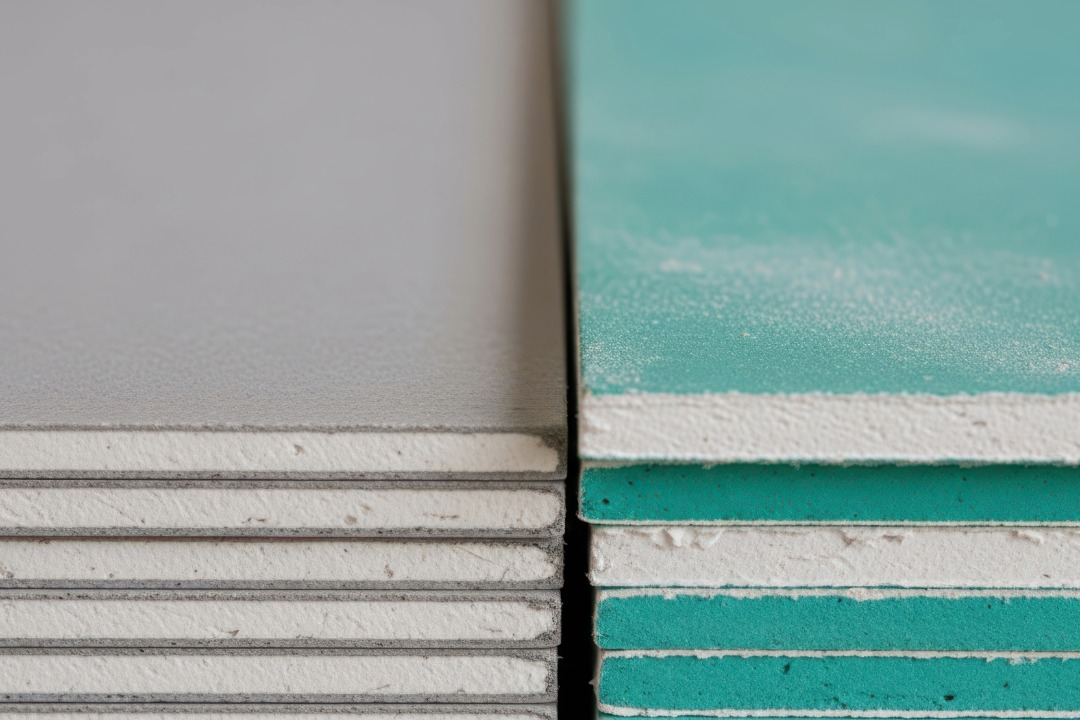
What Is HDHMR Board and Why Is It Replacing Plywood in Kitchens?
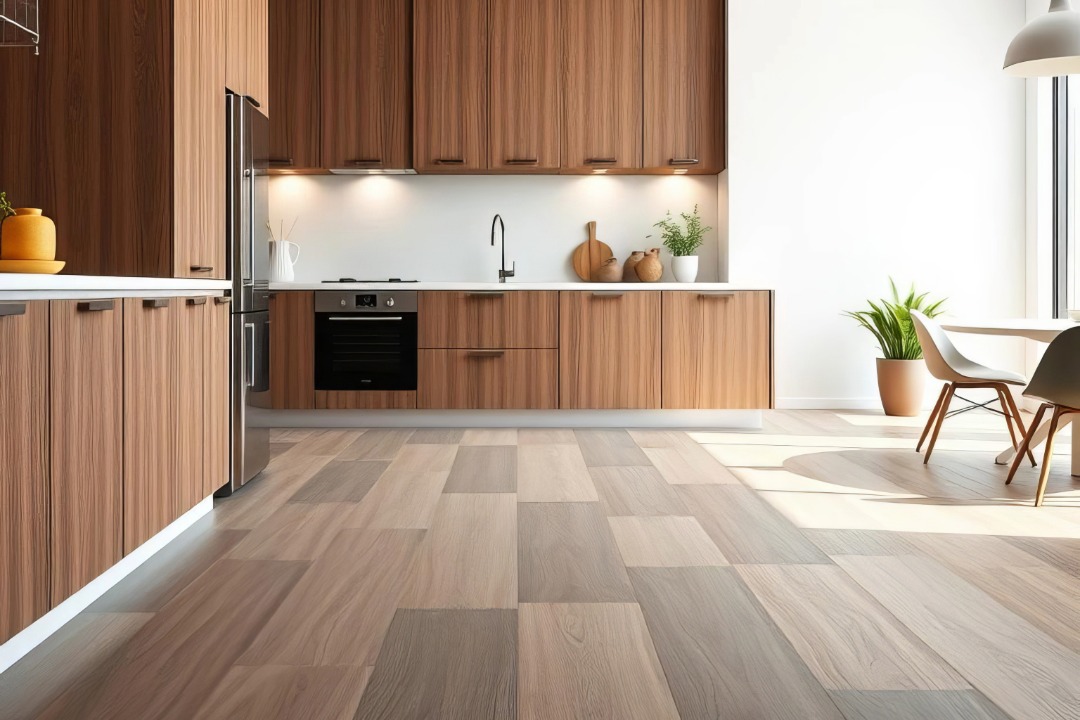
Waterproof and Humidity-Resistant Kitchen Materials for Coastal and Humid Cities
Testimonials
“The 3D design matched our installed kitchen exactly. Every cabinet, every countertop edge, every hardware piece was in the right spot. In a 10x10 room there is no margin for error. If a module is even half an inch off, you feel it immediately. Factory cutting delivered the precision we needed.”
“We went with a U-shaped layout and everyone said it would make the kitchen feel boxed in. It did the opposite. Because the modules are slim and the counters run along three walls, everything is within arm’s reach. I cook faster now because I am not walking back and forth across the room.”
“Storage was our main problem. Two adults and two kids meant a lot of vessels, groceries, and school lunch supplies sharing one kitchen. The tall pantry unit and the loft cabinets above the wall units gave us nearly double the storage. The kitchen looks cleaner because everything has a designated shelf.”
“The parallel layout works perfectly in our rectangular kitchen. One side has the stove and chimney. The other has the sink and prep area. My husband and I cook together every evening and we do not bump into each other anymore. The 4-foot walkway between the two counters makes all the difference.”
“Installation was done in four days. The crew arrived each morning with the modules already built. They just fitted, levelled, and secured each one. By the fourth evening, we had a fully working kitchen. The old carpenter setup had taken three weeks and still had alignment problems.”
“We added a small island to our L-shaped kitchen and use it as a breakfast counter every morning. It has open shelves underneath where we keep frequently used bowls and cutting boards. The whole setup cost less than what a branded showroom quoted for just the L-shape portion without the island.”
FAQ's
A 10×10 kitchen measures 10 feet by 10 feet, giving you 100 square feet of total floor area. This is the most common kitchen size in Indian 2BHK and 3BHK apartments built over the last two decades. Builders in cities like Hyderabad, Bangalore, Pune, and Mumbai frequently allocate this footprint for the kitchen in standard apartment layouts. It is large enough to fit a full modular kitchen with L-shaped, U-shaped, or parallel configurations. The 10×10 dimension has also become an industry benchmark that manufacturers and designers use to estimate cabinetry volume, material requirements, and project costs. When you request a quote for a 10×10 kitchen, both you and the manufacturer start with a common reference point for planning.
The L-shaped layout is the most versatile choice for a 10×10 kitchen. It runs along two walls and leaves the floor area open for comfortable movement. The work triangle between stove, sink, and fridge forms naturally. If you need maximum storage and cook heavy meals daily, a U-shaped layout wraps three walls and gives you the most cabinetry within the same 100 square feet. A parallel layout suits a 10×10 kitchen when the room shape is slightly rectangular or when you want dedicated zones for cooking and washing on separate sides. Each layout works well at this size. The right one depends on your door and window positions, your cooking routine, and how many people use the kitchen at the same time.
A modular kitchen for a 10×10 space in India typically costs between 1.8 lakh and 5.5 lakh depending on the layout, materials, and hardware you choose. A basic L-shaped kitchen with laminate shutters, HDHMR carcass, and standard hardware falls in the 1.8 to 2.5 lakh range. A mid-range version with BWR plywood, acrylic shutters, branded soft-close hardware, and a granite countertop costs 3 to 4.5 lakh. Premium setups with PU-coated shutters, quartz countertop, Blum hardware, and full accessory sets go beyond 5 lakh. The cost also varies by city. Factory-direct purchasing from a manufacturer cuts 15 to 25 percent compared to branded showroom pricing for equivalent specifications.
The work triangle connects your stove, sink, and refrigerator. In a 10×10 kitchen, the ideal distance between each point of the triangle is 4 to 7 feet. The total perimeter of the triangle should stay between 13 and 22 feet. In an L-shaped layout, the stove sits on one arm and the sink on the other, with the fridge at one end. In a U-shaped setup, each appliance occupies its own wall. Avoid placing the stove and sink on the same arm with less than 2 feet of counter between them. Also avoid placing the fridge at the far end of a long counter run where it blocks the natural flow. Your designer should position these three elements before planning any cabinetry around them.
A well-designed 10×10 kitchen provides substantial storage. An L-shaped layout with 20 running feet of cabinetry typically includes 8 to 12 base cabinets, 6 to 8 wall cabinets, and loft storage above. A U-shaped layout adds another 10 running feet to that count. Internal accessories like pullout baskets, tall pantry units, carousel corner mechanisms, and drawer organizers significantly increase usable capacity. Vertical storage is the biggest lever. Extending wall cabinets to the ceiling and adding a loft tier above them captures 18 to 24 inches of otherwise wasted space. A 100 square foot kitchen with disciplined internal organization can store as much as a 150 square foot kitchen that relies only on fixed shelves.
Yes, but the island must be compact. In a 10×10 kitchen, a freestanding island measuring 4 feet long by 2 feet deep works when paired with an L-shaped layout. You need at least 3 feet of clearance on all accessible sides for comfortable movement and door clearance. The island should not include a cooktop or sink at this size. It functions as a prep surface, serving station, or casual breakfast counter. Open shelves or closed cabinets beneath the island top add extra storage. If the 3-foot clearance is not achievable on all sides, a pull-out extension counter attached to the base cabinet is a smarter alternative. It tucks away when not in use and keeps the walkway clear.
For the carcass, BWR plywood or HDHMR board is recommended. Both resist moisture from cooking steam and sink splashes. In a 100 square foot kitchen, humidity builds up faster than in larger rooms, so moisture resistance is not optional. Laminate shutters are the most cost-effective choice and come in hundreds of colours and textures. Acrylic shutters add visual depth and make the kitchen feel more open through light reflection. Light-coloured finishes are particularly effective in a 10×10 room because they prevent the space from feeling closed in. Granite countertops handle daily Indian cooking heat. Quartz is a premium alternative that resists staining better. Hardware should be soft-close across all cabinets. Factory-sealed edges protect every exposed surface.
Factory manufacturing takes 20 to 28 days from design approval. On-site installation takes 3 to 5 days for a standard 10×10 kitchen. The total timeline from final approval to a usable kitchen is approximately 25 to 35 days. Installation speed is one of the biggest advantages of modular construction. Modules arrive pre-built with all drilling, edge banding, and hardware mounting completed at the factory. The on-site team fits each unit against the wall, levels it, secures it, and connects plumbing at the sink point. A full client walkthrough on the final day covers cabinet operation, hardware adjustment, and maintenance tips. Carpenter-built kitchens in the same space typically take 3 to 6 weeks of continuous on-site work.
Not at all. Most Indian kitchens have a window on one wall. The modular design accounts for it by placing base cabinets beneath the window sill and omitting wall cabinets on that wall section. The window provides natural light and ventilation, both of which benefit daily cooking. Counter space below the window is often used as a washing zone since the sink can sit directly beneath it. Wall cabinets continue on the adjacent walls above and alongside the window. In some layouts, open shelving or a narrow spice rack is placed on either side of the window frame. The key is to take precise window measurements during the site visit so every module is manufactured to fit around it cleanly.
Yes. Most 10×10 kitchen layouts include a dedicated refrigerator position at one end of the cabinet run. A standard 250 to 350 litre fridge fits within a 2.5 to 3 foot wide space. The design leaves an open slot in the cabinet line for the fridge to sit flush with the adjacent modules. Wall cabinets are extended above the fridge slot to capture overhead storage. For larger side-by-side refrigerators, the slot width increases to 3 to 3.5 feet and the layout is adjusted accordingly. The important rule is to place the fridge away from the stove. Heat from the burner makes the compressor work harder and increases energy consumption. A 4 to 6 foot gap between stove and fridge is the recommended minimum.
Three design decisions make the biggest difference. First, use light-coloured shutters. Whites, creams, light greys, and pastels reflect light and expand the visual perception of space. Second, extend cabinets to the ceiling. Continuous vertical lines draw the eye upward and make the room feel taller. Third, reduce visual clutter on the counter. Pullout organizers, wall-mounted spice racks, and concealed storage keep surfaces clean. Additional strategies include using a glass or glossy tile backsplash that reflects task lighting. Under-cabinet LED strips brighten the counter without overhead fixtures. Handle-less shutter profiles create unbroken surfaces that read as spacious. Avoid dark coloured wall cabinets at eye level. These small choices compound into a kitchen that feels significantly larger than its actual dimensions.
A wall-mounted 60 cm chimney suits most 10×10 kitchens where the hob is placed against a wall. If the hob is on a counter below the window, an inclined or downdraft chimney is used instead. The chimney should be installed 24 to 30 inches above the hob surface for effective suction. In a 10×10 room, a suction capacity of 1000 to 1200 cubic metres per hour is sufficient for heavy Indian cooking including frying and tadka preparation. The hob is typically a 3 or 4 burner unit placed on the longer arm of an L-shaped layout. Wall cabinets on either side of the chimney provide overhead storage. Chimney ducting is routed through the wall or ceiling and should be planned during the design stage before modules are manufactured.
Yes. Renovation projects in existing 10×10 kitchens are common. The process starts with a site inspection to assess wall conditions, plumbing locations, electrical points, and flooring. If the existing countertop and tiling are in good condition, new modular cabinets can be designed around them. If a complete overhaul is needed, the old setup is dismantled and the new modules are installed from scratch. Civil work like plumbing repositioning, electrical point relocation, and wall preparation may add 15,000 to 40,000 rupees depending on the scope. The modular kitchen cost is separate. The advantage over site-built carpentry is speed and consistency. Factory modules arrive ready to install and the renovation is complete in days, not weeks.
Warranty terms cover the carcass structure, hardware, and shutter finish separately. The carcass typically carries a 5 to 10 year warranty against manufacturing defects. Branded hardware from Hettich or equivalent includes its own warranty on hinges and drawer systems rated for 80,000 to 100,000 cycles. Shutter finishes are covered for 1 to 5 years depending on material type. Countertop warranties vary by material. Get all terms documented before placing the order. Confirm what constitutes a valid claim versus normal wear. A manufacturer that handles design, production, and installation in-house will resolve warranty issues faster than a company that outsources any of these stages to third parties.
Yes. Modules manufactured in the Hyderabad factory are shipped pan-India. Flat-pack or fully assembled shipping is available depending on the delivery route. Transportation cost is quoted separately and transparently alongside the kitchen module price. Installation is handled by trained teams who either travel from the factory location or coordinate with certified local partners. The product quality does not change based on delivery destination. The same CNC machinery, edge banding lines, and quality inspection processes apply whether the kitchen is installed locally or in another city. Post-installation support and warranty claims are managed centrally through a single service channel regardless of your location.
Start Your Custom Project Today
BOOK A FREE CONSULTATION
“Our 10x10 kitchen felt cramped with the old carpenter setup. The new L-shaped modular layout opened up the entire centre of the room. We can actually stand side by side while cooking now. The wall cabinets go right to the ceiling and the corner carousel solved a dead zone that had been useless for years.”