
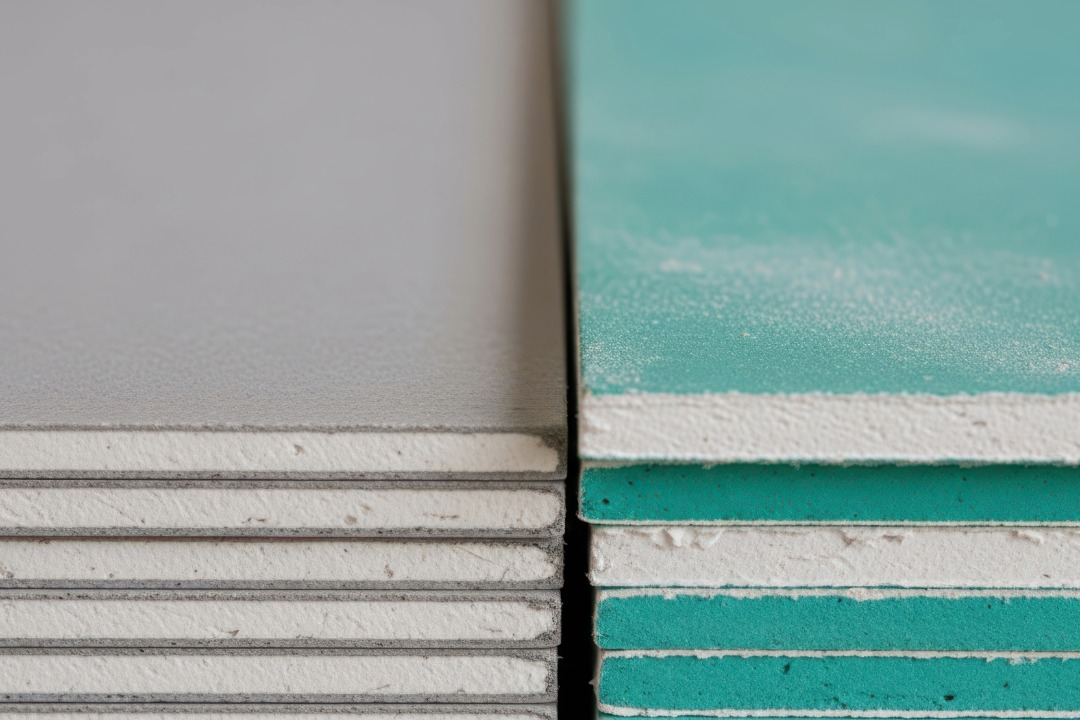
Walk into any modular kitchen factory in India today and you will notice a shift. The stacks of plywood sheets that once dominated production floors are being joined, and in many cases replaced, by dense, smooth, uniformly coloured boards. These are HDHMR boards, and they are quickly becoming the preferred carcass material for factory-built modular kitchens across the country.
The shift is not driven by marketing. It is driven by manufacturing logic. HDHMR boards cut cleaner on CNC machines, take edge banding better, resist moisture more uniformly, and deliver a consistency that natural plywood simply cannot guarantee sheet after sheet. For homeowners, this translates into kitchen cabinets that hold up longer in humid conditions, look more polished, and cost less than equivalent BWP plywood setups.
This guide explains what HDHMR board actually is, how it compares to plywood across every factor that matters in a kitchen, where each material works best, and why the industry is moving in this direction.
What Exactly Is HDHMR Board?
HDHMR stands for High Density High Moisture Resistant. It is an engineered wood board made by compressing wood fibres with moisture-resistant melamine formaldehyde resins under high temperature and pressure. The result is a dense, homogenous panel with a smooth surface on both faces, no internal voids, and consistent density from edge to edge.
The density of HDHMR typically ranges from 800 to 900 kg per cubic metre. This is significantly higher than standard MDF (600 to 700 kg/m3) and comparable to the densest layers in high-grade plywood. The moisture-resistant resins embedded throughout the board give it the ability to withstand humidity exposure without swelling the way untreated wood products do.
HDHMR is not waterproof. No wood-based board truly is. But it is engineered to resist moisture absorption far better than standard MDF, particle board, or commercial-grade plywood. For kitchen environments where steam, splashes, and humidity are daily realities, this moisture resistant kitchen board performs reliably when properly sealed at the edges.
Why HDHMR Is Replacing Plywood in Modular Kitchen Factories
The shift from plywood to HDHMR in modular kitchens is primarily a manufacturing-driven change. Here is why factories prefer it:
CNC Machining Compatibility
HDHMR boards have a uniform density throughout. There are no knots, grain variations, or internal voids that natural wood contains. When a CNC router cuts an HDHMR panel, the cut is perfectly clean on every pass. Drill holes for hinges and hardware come out precise and consistent. Plywood, even high-grade BWP plywood, has natural inconsistencies between veneer layers. These inconsistencies cause tear-out on CNC cuts, uneven drill depths, and occasional chipping. For a modular kitchen factory producing hundreds of panels daily, HDHMR delivers the precision that mass production demands.
Edge Banding Quality
The smooth, void-free edge of an HDHMR panel bonds perfectly with edge tape applied by automated edge banding machines. PUR adhesive creates a tight, waterproof seal along the entire edge. Plywood edges are layered and uneven because each veneer sheet has a different grain direction. Edge banding on plywood requires more adhesive, more pressure, and still produces a slightly rougher result. In a kitchen, the edge is where moisture enters the panel. A cleaner edge bond means better long-term protection for HDHMR kitchen cabinets.
Consistent Thickness
Plywood thickness can vary by 1 to 2mm between sheets from the same batch. An 18mm plywood sheet might actually measure 16.5mm or 19mm depending on the manufacturer. This variation creates fitment problems when assembling modular cabinets where hardware, shelves, and panels must align precisely. HDHMR boards hold their stated thickness within a much tighter tolerance because the manufacturing process is more controlled. This consistency saves assembly time and reduces on-site adjustments.
Cost Efficiency
HDHMR board price is typically 20 to 30 percent lower than equivalent BWP plywood for an 18mm, 8×4 sheet. This cost advantage, combined with less material waste during CNC cutting and faster edge banding, makes HDHMR more economical for large-scale kitchen production. The savings are passed on to homeowners as lower kitchen costs without sacrificing moisture resistance or durability. For a full cost picture of modular kitchen components, read this cost breakdown of modular kitchens in India.
HDHMR vs Plywood: A Detailed Comparison for Kitchen Use
Moisture Resistance
HDHMR absorbs less moisture than standard MDF and commercial-grade plywood. Its melamine resin infusion provides uniform moisture resistance throughout the board, not just on the surface. BWP plywood resists water better during direct immersion tests because of its phenol formaldehyde resin. However, in typical kitchen conditions where the threat is sustained humidity rather than submersion, HDHMR performs reliably for wall cabinets, overhead units, and base cabinets that are properly sealed.
The critical difference is edge protection. HDHMR must have sealed edges to perform well. An exposed cut edge absorbs moisture rapidly. With proper PUR adhesive edge banding, HDHMR panels hold up for years in humid Indian kitchens. Without edge sealing, they fail. Plywood is more forgiving on exposed edges because the cross-laminated veneer structure slows moisture penetration even when unsealed.
Screw Holding Strength
This is where plywood vs HDHMR kitchen comparison gets nuanced. Plywood has excellent screw-holding strength on both faces and edges because the cross-grained veneer layers grip screws from multiple directions. HDHMR holds screws well on flat faces but is weaker on edges. Screws driven into the edge of an HDHMR panel can pull out under load if not reinforced.
In modular kitchen design, this is managed by using dowel joints, cam-and-bolt fittings, and pre-drilled mounting blocks for hardware rather than relying on edge screws. Factory-produced kitchens engineer around this limitation by design. Carpenter-made kitchens that rely on traditional screw joinery may find HDHMR challenging in areas where heavy doors or drawer runners need edge-mounted hardware.
Weight and Handling
HDHMR is heavier than equivalent plywood. An 18mm, 8×4 HDHMR sheet weighs approximately 38 to 42 kg, compared to 28 to 35 kg for the same size in BWP plywood. This extra weight adds structural density but makes handling more demanding during installation. For wall-mounted overhead cabinets, the mounting hardware must account for the heavier panel weight.
Surface Finish
HDHMR offers a smoother, more uniform surface than plywood. Laminate, acrylic, PU coating, and membrane finishes all bond more evenly to HDHMR because there are no grain patterns or veneer undulations showing through. For high-gloss finishes where even the slightest surface irregularity becomes visible, HDHMR provides a better base panel.
Where to Use HDHMR and Where to Stick with Plywood
The smartest approach is not choosing one material for the entire kitchen. It is placing each material where it performs best.
Use HDHMR board for modular kitchen wall cabinets, overhead units, loft storage, tall pantry interiors, and shutter panels. These areas face humidity but not direct water contact. HDHMR’s smooth surface, CNC compatibility, and moisture resistance make it ideal for these applications.
Use BWP plywood for base cabinets near the floor, sink cabinets, and any area where direct water exposure is possible. The cross-laminated structure of plywood handles direct moisture and heavy loads better at these critical stress points. A hybrid approach using BWP plywood for the bottom two shelves and HDHMR for the rest of the kitchen is a practical strategy that balances cost and performance.
Avoid using standard MDF or particle board in any kitchen zone. Neither has the moisture resistance or structural strength to survive Indian cooking conditions. Even for loft storage and overhead cabinets where moisture exposure is moderate, standard MDF swells during monsoon humidity. For any wood-based kitchen carcass in India, HDHMR and BWP plywood are the only two materials worth considering. For a broader view of carcass material options, read this guide on best materials for modular kitchen cabinets.
Why Factory-Built Kitchens Get More from HDHMR
HDHMR’s advantages are most pronounced in factory production environments. CNC routers cut HDHMR panels with zero tear-out. Automated edge banding machines seal every edge with PUR adhesive at consistent temperature and pressure. Dowel boring machines drill precise holes for cam-and-bolt joinery that compensates for HDHMR’s weaker edge screw holding.
A manufacturer with their own factory, like Holzbox, calibrates machinery to HDHMR’s specific density and cutting characteristics. Feed rates, router bit speeds, and adhesive temperatures are all optimised for HDHMR. This is why HDHMR kitchen cabinets produced in a proper factory last significantly longer than those cut and assembled on-site, where hand tools and generic adhesives cannot deliver the same precision.
On-site carpenters working with hand tools and manual edge tape often get better results with plywood because plywood is more forgiving of imprecise cuts and exposed edges. The material choice should match the manufacturing method. HDHMR belongs in a factory. Plywood works in both factory and on-site settings. For more on the difference between factory-built and carpenter-made kitchens, read this comparison of modular kitchen vs carpenter-made kitchen.
Frequently Asked Questions
Is HDHMR board waterproof?
HDHMR is highly moisture resistant but not waterproof. It can handle sustained humidity, cooking steam, and occasional splashes without swelling, provided the edges are properly sealed with PUR adhesive edge banding. Direct, prolonged water contact, such as a leaking pipe sitting against the panel for days, can still cause damage. For sink cabinets where direct water exposure is likely, BWP plywood remains the safer choice. For wall cabinets, overhead units, and tall units, HDHMR performs reliably in Indian kitchen conditions.
Is HDHMR better than plywood for modular kitchens?
For factory-produced modular kitchens, HDHMR is better for most cabinet components because it machines cleaner on CNC routers, takes edge banding more evenly, and offers consistent thickness and density across every sheet. For base cabinets near the floor and sink cabinets, BWP plywood is still preferred for its superior screw-holding on edges and better direct-water resistance. The best modular kitchens use a combination of both materials, placing each where it performs best.
What is the typical HDHMR board price in India?
An 18mm, 8×4 feet HDHMR sheet typically costs between 1,200 and 1,800 rupees in India, depending on brand, density grade, and location. Equivalent BWP plywood in the same size costs between 1,800 and 2,800 rupees. The 20 to 30 percent cost advantage of HDHMR, combined with less CNC waste and faster processing, makes it significantly more cost-efficient for large modular kitchen projects. Premium brands from established manufacturers sit at the higher end of the HDHMR range.
Can HDHMR be used by carpenters for on-site kitchen work?
HDHMR can be used on-site, but it performs best in factory conditions. Carpenters using hand tools may find it harder to cut without chipping and harder to edge-band without automated machines. The edge screw weakness also creates challenges with traditional joinery methods. If an on-site carpenter is building your kitchen, BWP plywood is generally the easier and more reliable material to work with. For factory-manufactured kitchens using CNC machines and automated assembly, HDHMR is the preferred material.
Does HDHMR resist termites?
Yes. HDHMR boards are treated with resins and additives during manufacturing that make them resistant to termite and borer attack. The high-density compression and chemical treatment leave no natural wood grain pathways for termites to enter. In contrast, untreated plywood and commercial-grade plywood are vulnerable to termite damage, especially in ground-floor apartments and homes in tropical regions. BWP plywood with ISI certification typically includes anti-termite treatment, but standard plywood often does not.