
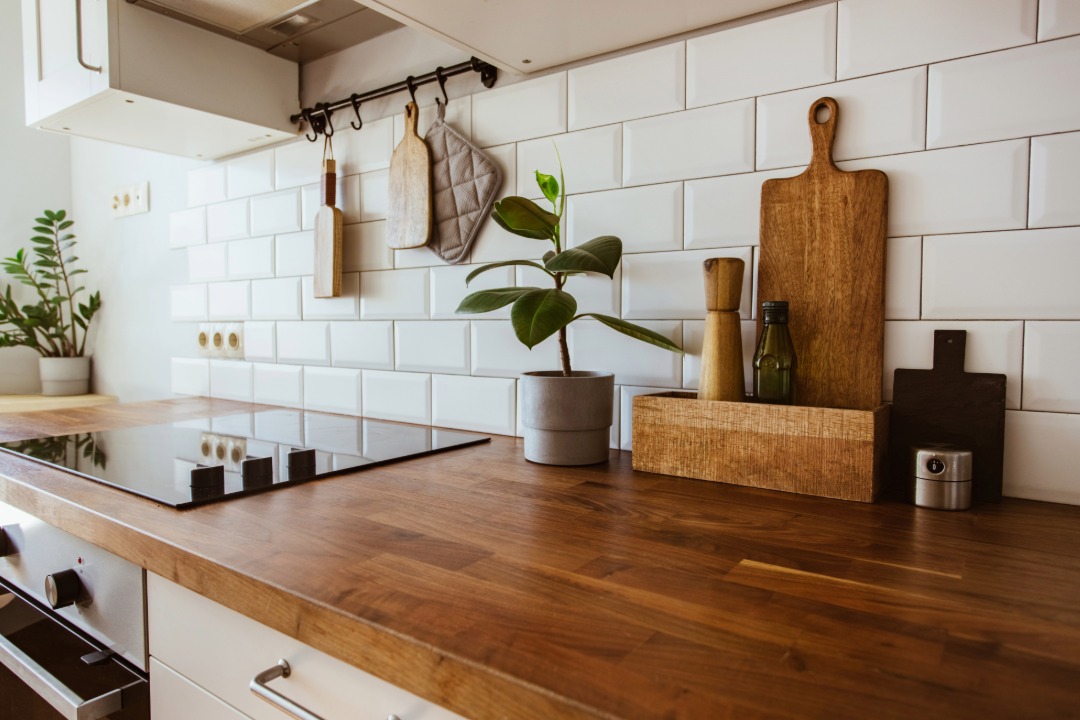
The countertop is the hardest working surface in any Indian kitchen. It takes the heat of a pressure cooker straight off the flame. It absorbs turmeric spills, oil splatters, and lemon juice on a daily basis. It supports the weight of stone grinders, heavy steel vessels, and everything else that Indian cooking demands.
Choosing the wrong kitchen countertop material shows up fast. Stains that do not come off. Cracks near the hob. Edges that chip when a heavy kadhai slips. These are not cosmetic problems. They are functional failures that affect how you cook every day.
This guide covers the most widely used countertop materials for Indian kitchens. Not just what they look like, but how they perform under real cooking conditions. By the end, you will know which material fits your cooking habits, your maintenance comfort level, and your budget.
Why Countertop Selection Matters More in Indian Kitchens
Indian cooking is fundamentally different from light cooking. Deep frying in oil. Tempering spices at high heat. Rolling rotis with force on the surface. Using pressure cookers multiple times a day. These activities put a countertop through stress that most Western kitchens never experience.
Beyond cooking intensity, Indian kitchens face specific staining agents. Turmeric leaves a deep yellow mark on porous surfaces. Red chilli powder stains light stone. Tamarind and lemon juice etch polished marble within minutes. Climate also plays a role. In cities like Hyderabad, Chennai, and Mumbai, humidity stays high for months. A porous countertop absorbs moisture, leading to bacterial growth and surface degradation. The right kitchen platform material needs to handle all of this.
Granite: The Proven Workhorse for Indian Cooking
Granite has been the default choice for a granite kitchen countertop in Indian homes for decades. It is a natural stone quarried from the earth, cut into slabs, and polished. India is one of the largest granite producers in the world, which keeps pricing accessible.
Granite is naturally heat resistant. You can place a hot tawa, pressure cooker, or kadhai directly on the surface without damage. It is also extremely hard, resisting scratches from knives, steel utensils, and the rough handling that busy kitchens demand. Dark varieties like Absolute Black, Black Galaxy, and Steel Grey hide stains effectively. Lighter granites like Kashmir White show spills more easily and need regular sealing.
The limitation is porosity. Without periodic sealing every one to two years, granite absorbs liquids over time. Oil, turmeric, and coloured sauces can penetrate unsealed granite and leave permanent marks. Every slab is also unique, so colour matching across multiple pieces can be challenging.
Quartz: Engineered Consistency and Low Maintenance
Quartz countertops are engineered surfaces made from 90 to 95 percent crushed natural quartz crystals bound with polymer resins. Unlike granite, quartz is manufactured in a factory, giving it uniform colour, consistent pattern, and predictable performance.
The biggest advantage of a quartz countertop India homeowners notice is that it is non-porous. Turmeric, oil, lemon juice, and tomato sauce sit on the surface without absorbing. A simple wipe with soapy water removes most stains. No sealing is needed. For modular kitchen countertop setups where a seamless, modern aesthetic matters, quartz delivers consistently. It is also scratch-resistant and available in marble-look patterns that give a luxury feel without the maintenance burden.
The limitation is heat. The resin binders in quartz can discolour or crack under extreme heat. Placing a hot pan directly from the flame onto quartz without a trivet can leave a permanent scorch mark. For Indian kitchens where putting hot vessels directly on the counter is second nature, trivets are mandatory with quartz. It also costs more than granite in most Indian markets.
Marble: Beautiful but High Maintenance
Marble is the stone most people picture when they imagine a luxury kitchen. Its natural veining, soft lustre, and cool surface make it visually striking. Many premium homes use marble as a statement material for kitchen islands and display zones.
The problem is that marble is soft and porous. It scratches more easily than granite or quartz. Lemon juice, vinegar, tamarind, and tomato paste etch the polished surface almost instantly, leaving dull spots. Turmeric stains marble deeply. Even with prompt cleaning, the yellow pigment can penetrate. For a kitchen used heavily, marble demands more care than most families are willing to give.
Where marble can work is in lighter cooking setups, display kitchens, or as a separate rolling surface for dough because it stays naturally cool. Some homeowners use marble on a prep zone while keeping granite or quartz near the cooktop and sink. This zone-based approach lets you enjoy marble’s beauty without exposing it to the toughest conditions.
Solid Surface (Corian): Seamless and Repairable
Solid surface countertops, commonly known by the brand name Corian, are made from acrylic or polyester resins mixed with mineral fillers. They can be thermoformed into curves, joined without visible seams, and integrated directly with sinks for a flush, continuous surface.
The seamless joint is the biggest selling point of a solid surface countertop. Where granite and quartz show visible seam lines, solid surface pieces are bonded and sanded to create invisible connections. This eliminates crevices where water and bacteria collect. It is also repairable. Shallow scratches and minor burns can be sanded out, restoring the surface to its original condition. It works well in modular kitchen countertop setups where the sink and countertop are moulded as one piece.
The limitation is that solid surface is not heat resistant. Placing a hot pan on it causes permanent damage. It also scratches more easily than granite or quartz under heavy use. For kitchens with intense Indian cooking, solid surface needs careful handling and suits lighter cooking households or secondary prep zones better.
The Zone-Based Approach: Mixing Materials for Best Results
One of the smartest strategies for choosing the best countertop for Indian cooking is to stop thinking of the kitchen as a single surface. Instead, divide it into cooking zones and assign materials based on what each zone actually handles.
The hot zone near the cooktop needs maximum heat resistance. Granite performs best here. It handles direct contact with hot vessels without damage and does not discolour from flame proximity.
The wet zone around the sink needs stain resistance and non-porosity. Quartz or solid surface works well here because water, soap, and food residue wipe off without absorption.
The prep zone used for cutting, rolling, and plating can use any material based on your aesthetic preference. Marble works beautifully as a dough-rolling surface in this zone because it stays cool.
This zone-based method lets you use each material where it performs best, instead of forcing one material to handle every kind of stress. It also helps control costs by limiting premium materials to smaller, targeted areas. For a deeper understanding of how different materials work across kitchen zones, read this detailed guide on best materials for modular kitchen cabinets.
What to Check Before Finalizing Your Countertop
Start with your cooking frequency and intensity. Three meals daily with heavy Indian cooking demands heat resistance and stain resistance as top priorities. Granite and quartz lead here. Light cooking with frequent ordering out makes aesthetic options like marble or solid surface viable.
Consider maintenance willingness. Granite needs periodic sealing. Marble needs constant care. Quartz and solid surface need almost none. Be realistic about how much time you will spend on upkeep. The best countertop for Indian cooking is one that matches your actual lifestyle.
Check edge profiles too. Bullnose edges are rounded and safe for homes with children. Square edges look modern but chip more easily. A manufacturer with their own factory setup can cut and finish edges with CNC precision, ensuring clean profiles across the entire kitchen. Finally, consider your kitchen layout. L-shaped or U-shaped modular kitchens with corner joints need a countertop material that can be cut precisely and joined cleanly.
Cost Comparison Across Countertop Materials
Granite starts at the most accessible price point among natural stones in India. Standard varieties cost significantly less per square foot than quartz or marble. Premium granites with rare patterns cost more, but the baseline remains budget-friendly. This makes granite the most common kitchen platform material in mid-range modular kitchens.
Quartz costs moderately more than standard granite. The engineering process, resin content, and consistent finish add to the price. However, the zero-maintenance nature of quartz means you save on sealing products and repolishing costs over the lifetime of the kitchen.
Marble ranges widely. Indian marble varieties can be affordable, but imported Italian or Turkish marble costs significantly more. Given the high maintenance needs, the total cost of ownership for marble often exceeds quartz.
Solid surface sits in the mid-to-premium range, depending on brand and thickness. The seamless sink integration and repairability add value that the price reflects. For a complete cost picture of modular kitchen components including countertops, cabinets, and hardware, read this detailed cost breakdown of modular kitchens in India [interlink 2].
Why Countertop Selection Should Happen During Kitchen Design, Not After
Many homeowners pick their countertop material after the modular kitchen cabinets are already installed. This creates problems. The cabinet height, sink cutout, and support structure all depend on the countertop material’s thickness and weight. Granite is heavy and needs reinforced base cabinets beneath it. Solid surface is lighter and can be mounted differently.
When the countertop decision is part of the initial design and manufacturing process, the factory can pre-engineer supports, cutouts, and edge treatments. At Holzbox, countertop coordination happens during the design phase so that cabinet dimensions, plumbing positioning, and surface load calculations are all aligned before production begins. This prevents the costly on-site modifications that happen when countertop and cabinet decisions are made separately.
If you are planning a new kitchen, treat countertop selection as a day-one decision, not an afterthought. It shapes everything from cabinet depth to sink placement to the overall look of your finished kitchen.
Frequently Asked Questions
Which countertop material is best for heavy Indian cooking with oil and spices?
For daily Indian cooking involving oil, turmeric, chilli powder, and high-heat tempering, granite and quartz are the most practical choices. Granite handles heat directly without damage and dark varieties hide stains well. Quartz resists stains completely because it is non-porous, but it requires trivets under hot vessels. If your cooking involves placing hot pans directly on the counter, granite is the safer option. If stain resistance matters more and you are willing to use trivets, quartz is the better pick.
Does quartz stain from turmeric in Indian kitchens?
Quartz is non-porous, so turmeric does not penetrate the surface the way it does with granite or marble. However, if a turmeric spill is left sitting for several hours on a light-coloured quartz surface, it can leave a faint discolouration on the resin. The solution is simple: wipe turmeric spills promptly with soapy water. On darker quartz shades, this is rarely even visible. For Indian kitchens with frequent spice use, medium to dark quartz tones offer the most worry-free experience.
Is marble a good choice for Indian kitchens?
Marble is beautiful but demanding. It stains from turmeric, etches from lemon and tamarind, and scratches from rough utensils. For a kitchen used primarily for light cooking or entertaining, marble can work with careful maintenance. For a kitchen where three meals are cooked daily with traditional Indian methods, marble is not the most practical choice. A good compromise is using marble on a separate prep island or display counter while keeping granite or quartz on the main cooking surface.
How do I maintain a granite kitchen countertop to prevent staining?
Seal the granite surface after installation and reseal every 12 to 18 months. Use a granite-specific sealant, not a general stone sealer. For daily cleaning, use a pH-neutral cleaner or mild dish soap with water. Avoid acidic cleaners like vinegar or lemon-based products as they can damage the sealant. Wipe up oil and coloured spills as quickly as possible. Dark granites need less frequent sealing than light ones. Proper sealing and prompt spill cleanup keep a granite countertop looking fresh for years.
Can I use different countertop materials in different zones of the same kitchen?
Yes, and it is one of the smartest approaches for Indian kitchens. Use granite near the cooktop for heat resistance. Use quartz or solid surface near the sink for stain resistance and easy cleaning. Use marble on a separate rolling or prep zone where it stays cool for dough work. This zone-based method gives you the best performance from each material without forcing one surface to handle every kind of stress. A factory-built modular kitchen makes this easier because each section can be engineered separately to support the right countertop type.