
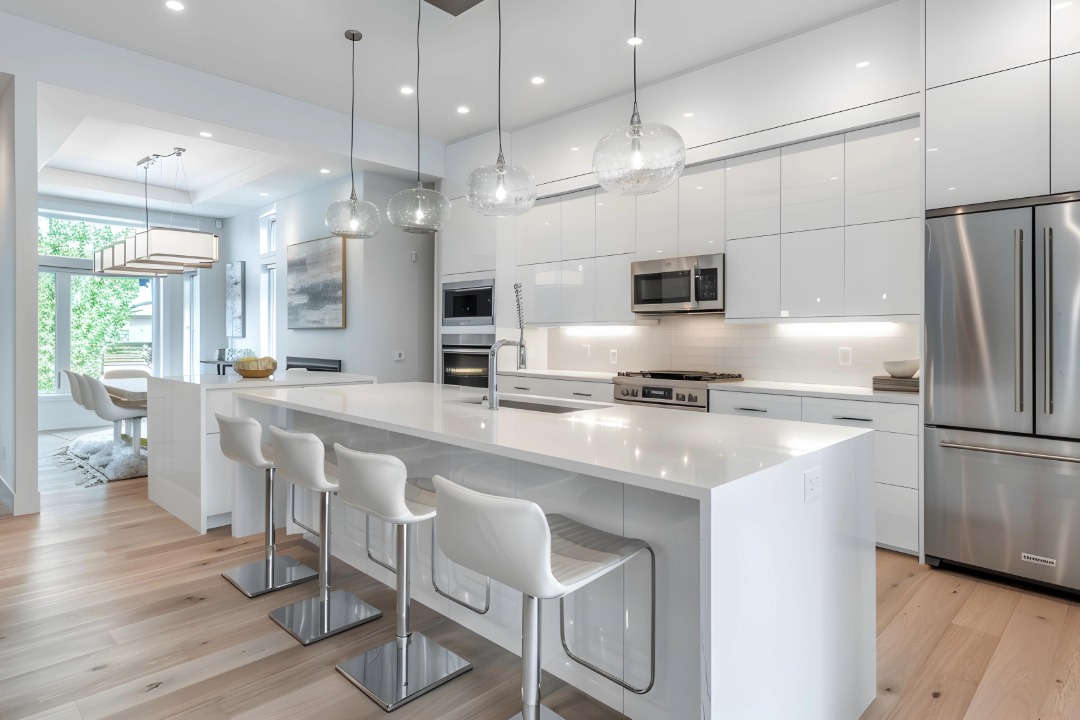
The shutter finish on your modular kitchen cabinets is the first thing people notice when they walk in. It sets the visual tone of the entire space. But beyond looks, your choice of kitchen cabinet finish India homeowners make affects how well the surface holds up against oil, moisture, heat, scratches, and daily wear over the years.
Three finishes dominate the Indian modular kitchen market today: acrylic, PU (polyurethane), and membrane. Each one is made differently, applied differently, and performs differently under real kitchen conditions. Choosing between them is not just about colour or gloss level. It is about understanding how each finish behaves in an Indian kitchen where heavy cooking, humidity, and constant use are everyday realities.
This guide compares all three modular kitchen shutter finishes across appearance, durability, heat resistance, maintenance, cost, and suitability for Indian homes. By the end, you will know exactly which finish fits your kitchen and why.
What is a Kitchen Shutter Finish and Why Does It Matter?
A modular kitchen cabinet has two main parts. The carcass is the structural box that holds weight and anchors hardware. The shutter is the visible door or drawer front that you see and touch every day. The finish on the shutter protects the underlying panel from moisture, heat, oil, and scratches. It also defines the visual character of the kitchen.
A poor-quality finish peels near the stove within a year. A good finish holds its colour, resists staining, and looks the same after five years of daily use. The finish is not cosmetic. It is the first line of defence for the panel underneath. That is why choosing the right kitchen shutter material matters as much as choosing the right carcass board. For a deeper understanding of carcass materials, read this guide on best materials for modular kitchen cabinets.
Acrylic Finish: High Gloss and Mirror-Like Shine
An acrylic kitchen finish is a 1mm thick sheet of PMMA (polymethyl methacrylate) bonded to an MDF or plywood shutter panel using adhesive. The result is a smooth, reflective, mirror-like surface with a depth of colour that no other finish matches. In a well-lit kitchen, acrylic shutters create a visual impact that immediately feels premium.
Acrylic is scratch-resistant, UV-stable, and non-toxic. Oil splatters, turmeric stains, and sauce spills sit on the surface and come off with a damp cloth and mild soap. However, it shows fingerprints easily, especially in darker shades. The high-gloss surface amplifies dust and grease, so regular wiping is necessary. The acrylic finish modular kitchen delivers a look that laminate and membrane cannot replicate.
Acrylic sheets are bonded using industrial presses in a controlled factory environment. On-site application is nearly impossible to do well, which makes factory-produced modular kitchens the only reliable way to get a consistent result. Best suited for modern, contemporary kitchens where high-gloss impact is the priority, open-plan spaces, and homeowners comfortable with regular maintenance wiping.
PU Finish: Smooth, Premium, and Customisable
A PU finish kitchen uses polyurethane coating that is spray-applied in multiple layers directly onto the shutter panel, then oven-cured at controlled temperatures. Each layer is sanded between coats to create an exceptionally smooth surface. The result is a flawless, uniform finish available in matte, satin, or gloss. PU is the finish most associated with luxury interior design.
PU coated kitchen cabinets offer excellent moisture resistance once fully cured. The coating seals the panel completely, preventing humidity penetration. This makes PU a strong performer in cities like Mumbai, Chennai, and Hyderabad. The surface resists oil stains and is reasonably heat resistant, though direct flame contact should be avoided.
PU’s biggest advantage is colour flexibility. Unlike acrylic sheets in pre-set colours, PU can be mixed to match any custom shade. If your kitchen design calls for a specific colour matching your walls, backsplash, or interior palette, PU makes that possible. No other modular kitchen shutter finish offers this level of customisation. It also coats curved shutter profiles that flat acrylic sheets cannot cover.
PU application requires a dust-free spray booth and precise temperature settings during curing. Factory conditions are essential because even a small dust particle trapped in the wet coat creates a visible flaw. Best suited for premium kitchens, luxury apartments, villas, and both modern and classic design styles.
Membrane Finish: Budget-Friendly with Textured Options
A membrane finish kitchen uses a thin PVC foil (typically 0.3mm thick) that is vacuum-pressed onto an MDF shutter panel using heat and pressure. The foil wraps around edges and routed grooves seamlessly in a single operation. No separate edge banding is needed. This edge-wrapping is the defining feature of membrane.
Membrane offers decent moisture resistance and handles everyday cleaning without issues. It comes in matte, semi-gloss, and woodgrain textures, making it versatile for both traditional and contemporary styles. For homeowners wanting a classic shaker-style door or a routed panel design, membrane is often the only finish that wraps around those contours affordably.
The main weakness is heat tolerance. Membrane foil can lift, bubble, or peel near the cooktop if exposed to sustained heat. In Indian kitchens where the stove runs heavily, shutters near the chimney and hob are most vulnerable. Over time, the adhesive bond weakens and the foil separates from the panel. Membrane application uses vacuum press machines in factory conditions to ensure uniform bonding. Best suited for wall cabinets, pantry units, and shutters away from the cooking zone. Ideal for budget-conscious projects and profiled door designs.
Head-to-Head Comparison Across Key Factors
Visual Appeal
Acrylic wins on gloss and reflective depth. PU wins on versatility with matte, satin, and gloss options plus custom colours. Membrane wins on textured and woodgrain looks. If you want a mirror-like surface, go acrylic. If you want a smooth matte or a precise colour match, go PU. If you want a wood-textured or profiled door, go membrane.
Durability and Scratch Resistance
Acrylic is the most scratch-resistant of the three. The PMMA sheet is inherently hard and maintains its surface over years. PU is durable but slightly softer, meaning sharp objects can leave marks if dragged across the surface. Membrane is the least scratch-resistant because PVC foil is thinner and softer than acrylic or cured PU.
Heat Resistance
PU handles heat the best among the three once fully cured. Acrylic performs reasonably but should not be in direct contact with extreme heat. Membrane performs the worst near heat sources. For base cabinets next to the hob, PU or acrylic is the safer choice. For overhead cabinets and pantry units away from the stove, membrane works fine.
Moisture and Humidity Performance
All three resist moisture to varying degrees. PU seals the panel most completely. Acrylic protects the face but relies on edge bonding quality for edges. Membrane wraps edges seamlessly but PVC can lift in extreme humidity if the vacuum press bond was not strong enough. In humid Indian cities, PU offers the most reliable long-term protection.
Cost
Membrane is the most affordable kitchen cabinet finish India homeowners can choose in the modular segment. Acrylic sits in the mid-to-premium range. PU is the most expensive because of the multi-coat spray process and curing time. For a full kitchen cost picture, read this cost breakdown of modular kitchens in India.
The Smart Approach: Zone-Based Finish Selection
Not every cabinet in your kitchen faces the same conditions. The shutters near the stove deal with heat, oil, and steam. The overhead wall cabinets stay dry and cool. The tall pantry unit sees neither heat nor moisture in significant amounts. Treating all shutters the same way is like putting the same tyres on a racing car and a city sedan.
A practical approach is to select finishes by zone. Use PU coated kitchen cabinets or acrylic for the base cabinets near the cooktop where heat resistance and easy cleaning matter most. Use membrane for wall cabinets, loft units, and pantry sections where cost savings make sense and heat exposure is minimal. This zone-based method lets you control costs without compromising performance where it counts.
A modular kitchen manufacturer with CNC machinery and a dedicated finishing line can produce different finish types across cabinet sets within the same project. This is one of the key advantages of factory production over on-site carpentry, where the finish choice is usually limited to whatever the painter can apply by hand. For more on this difference, read this comparison of modular kitchen vs carpenter-made kitchen.
Daily Maintenance for Each Finish
Acrylic needs wiping with a soft microfibre cloth and mild soapy water. Avoid abrasive cleaners and rough sponges that dull the gloss. Fingerprints show easily, so a quick daily wipe keeps things sharp.
PU needs the same gentle cleaning approach. Avoid acetone-based or solvent-based cleaners that can damage the polyurethane layer. PU in matte finishes hides fingerprints better than gloss PU, making it lower maintenance.
Membrane needs regular wiping to prevent grease build-up. Avoid placing hot utensils directly against membrane shutters. If the foil edge starts lifting, the shutter needs factory vacuum pressing for repair. Catching early signs of edge lifting extends the life of membrane shutters considerably.
Which Finish Should You Choose?
Choose acrylic if you want maximum visual impact with a high-gloss, reflective finish. It suits modern kitchens, well-lit spaces, and homeowners who do not mind regular surface wiping. The acrylic finish modular kitchen look is hard to beat for sheer visual drama.
Choose PU if you want a premium, seamless finish with custom colour options. It suits both contemporary and classic kitchen styles. PU handles humidity well, offers flexible gloss levels, and works on curved profiles. It is the most versatile of the three finishes.
Choose membrane if you want a cost-effective finish with textured or profiled door options. It suits traditional kitchen designs, budget-conscious projects, and cabinets that are not exposed to direct heat. Membrane finish kitchen shutters give you the most design variety at the lowest price.
For most Indian families, a combination approach works best. Use your premium finish where it matters most and a practical finish where performance demands are lower. A factory-built modular kitchen from a manufacturer like Holzbox can accommodate multiple finish types across a single kitchen project, all produced under the same quality controls and delivered as one coordinated set.
Frequently Asked Questions
Which kitchen shutter finish is best for Indian cooking with heavy oil and spices?
For kitchens with daily Indian cooking, PU and acrylic are the strongest choices. Both resist oil stains and are easy to wipe clean. PU edges ahead slightly because of its superior heat tolerance once fully cured. Membrane works for cabinets away from the cooking zone but is not recommended for base cabinets directly beside the hob. The key is placing the right finish in the right zone based on heat and moisture exposure.
Does membrane finish peel off over time?
Membrane foil can lift or peel if exposed to sustained heat, excessive humidity, or poor initial bonding during manufacturing. The most common failure point is the cabinet next to the stove where heat weakens the adhesive over time. On wall cabinets, pantry units, and shutters away from heat sources, a well-manufactured membrane finish kitchen shutter lasts five to eight years without issues. The quality of the vacuum press bond during production is the biggest factor in long-term performance.
Is PU finish worth the higher cost compared to acrylic?
PU costs more because of the multi-layer spray and cure process. It is worth it if you need custom colours, matte or satin finishes, or curved door profiles that acrylic cannot cover. PU also provides better moisture sealing for humid climates. If your priority is a high-gloss mirror finish in standard colours, acrylic delivers that look at a lower price point. Both are premium options, the choice depends on the specific aesthetic and performance you need.
Can I use different finishes on different cabinets in the same kitchen?
Yes, and it is a recommended approach. Many homeowners use acrylic or PU on base cabinets near the cooktop and membrane on wall cabinets and loft units. This balances cost and performance. A factory-produced modular kitchen makes this easy because each shutter is manufactured individually and can receive a different finish type before assembly. On-site carpentry rarely offers this flexibility because local painters typically specialize in one finish method.
How do I clean fingerprints off high-gloss acrylic kitchen shutters?
Use a clean, dry microfibre cloth for daily fingerprint removal. For stubborn marks, dampen the cloth with water and a drop of mild dish soap. Wipe gently in one direction, not in circles. Avoid paper towels, rough sponges, and chemical glass cleaners as these can leave micro-scratches that dull the surface over time. Dark-coloured acrylic shows fingerprints more than light shades, so lighter colours require less frequent wiping.