
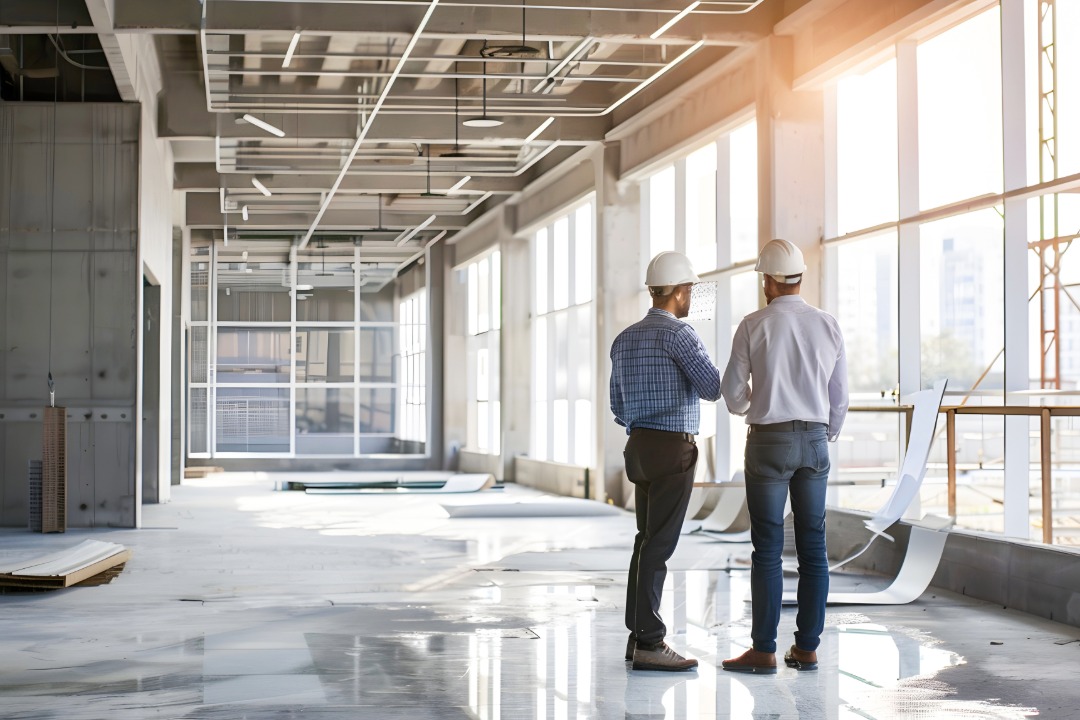
Most offices are designed by default. Someone picks a few desks from a catalogue. Someone else chooses a paint colour based on a quick Google search. The furniture arrives. It gets arranged wherever it fits. And everyone moves on.
Six months later, the complaints start. The open floor feels noisy. The conference room is too small. The storage is already full. The new hires have nowhere to sit. Sound familiar?
This is what happens when an office is assembled rather than designed. And this is exactly why hiring a professional office interior designer changes the outcome so dramatically. A trained designer does not just pick furniture. They solve problems before those problems cost you real money.
Here are nine concrete benefits of working with a professional for your next corporate office design project.
1. Your Workspace Starts Working for Your Business
Every business operates differently. A legal firm needs private cabins and acoustic control. A tech startup needs open collaboration zones with flexible seating. A financial services company needs secure server rooms and client-facing meeting spaces.
A professional interior designer studies how your team actually works before drawing a single line. They observe workflows. They ask about daily routines. They understand which departments need to sit together and which need separation.
The result is a workspace that supports your operations instead of fighting them. Employees do not waste time walking across the floor for tasks that should happen in adjacent zones. Clients walk into a reception area that reflects your brand, not a generic hallway. This kind of strategic workspace design does not happen by accident. It happens because someone with experience planned it.
2. Space Planning That Saves Real Money
Office rent is one of the largest fixed costs for any business in India. In cities like Hyderabad, Bangalore, Mumbai, and Delhi, every square foot counts. Poor space planning wastes that expensive real estate.
A skilled designer knows how to extract maximum utility from every corner of your floor plate. They create layouts that reduce wasted corridors. They design multi-purpose zones that serve different needs throughout the day. A meeting room that doubles as a training space. A breakout zone that converts to a team huddle area.
Smart space planning can reduce your total area requirement by 10 to 15 percent. That is a direct saving on rent, maintenance, and utility bills. It compounds every single month. No amount of pretty furniture delivers that kind of return.
3. Your Brand Identity Gets Built Into the Space
Your office is not just a place to work. It is also a communication tool. When a client walks in, the space tells a story. When a candidate comes for an interview, the environment speaks before anyone says a word.
A professional office interior designer translates your brand values into physical elements. Colours, materials, textures, lighting, and spatial flow all work together to create a cohesive impression. A fintech company might lean towards clean lines and minimal surfaces. A creative agency might use bold textures and warm tones.
This is not decoration. It is strategic commercial interior design. Your office should feel like an extension of your brand, not a rented box with your logo stuck on the wall.
4. Material Selection Backed by Real Manufacturing Knowledge
Choosing the right materials for an office is not the same as choosing them for a home. Office furniture takes a beating. Dozens of people use the same chairs, desks, and cabinets every single day. Surfaces get scratched. Hardware wears out. Cheap materials fail within the first year.
A professional designer understands the difference between residential-grade and commercial-grade products. They know which laminates resist abrasion in high-traffic areas. They know which edge banding holds up over time. They know why soft-close hinges matter in a shared workspace.
And when your designer works with a company that has its own factory setup, the advantage doubles. In-house manufacturing means materials are tested at the source. Custom dimensions are standard practice. Quality control happens on the production floor, not after delivery. This is the difference between a design partner and a furniture trader.
5. Compliance and Safety Are Handled From Day One
Every commercial office in India must comply with fire safety codes, electrical load regulations, NBCC guidelines, and accessibility standards. Ignoring these is not just risky. It can shut your project down mid-way or lead to penalties after occupancy.
A professional office interior design company builds compliance into the design from the start. Fire exit widths. Emergency lighting placement. Electrical circuit distribution. Wheelchair accessibility. These are not afterthoughts. They are baked into the floor plan before a single piece of furniture is ordered.
Most business owners do not have the bandwidth to track these requirements on their own. A designer with commercial experience handles them as part of the standard process.
6. Ergonomic Design Reduces Health Costs
Back pain. Neck strain. Eye fatigue. Headaches. These are not minor inconveniences. They are productivity killers that show up in sick leave data and employee turnover rates.
A professional interior designer builds ergonomics into the office at a structural level. Desk heights are calculated based on user profiles. Monitor arms are specified at the right angles. Task chairs are selected for lumbar support, not just appearance. Natural light is directed toward workstations wherever possible.
The numbers are clear. Offices with proper ergonomic design report fewer musculoskeletal complaints and lower absenteeism. That is not a soft benefit. That is a measurable return on your office furniture investment.
7. Project Timelines Shrink With Professional Management
Without a designer, your office project turns into a coordination nightmare. You are chasing the carpenter for cabinet delivery. You are following up with the electrician on socket placement. You are arguing with the painter about the wrong shade of grey.
A professional designer manages the entire project timeline. They coordinate all vendors. They create detailed schedules with milestones. They handle procurement, quality checks, and installation sequencing.
This is especially true when you work with a modular office interiors provider that designs and manufactures under one roof. There is no back and forth between five different suppliers. One team owns the entire delivery. Projects that would take three months under a fragmented setup get done in six to eight weeks.
8. Scalable Solutions That Grow With Your Team
Startups grow. Departments expand. Teams restructure. Hybrid work models change how people use the office from one quarter to the next.
A designer who understands modular systems will plan for this from day one. Instead of fixed carpentry that cannot be moved, they specify modular workstations that can be reconfigured. Partitions that add or remove seats. Storage units that relocate without damage.
This kind of forward thinking saves you the cost of a full redesign two years down the line. Scalability is not a luxury. It is smart corporate office design. And it is something only a professional with real manufacturing knowledge can deliver properly. Firms with in-house manufacturing can build expansion-ready modules from day one. They design the original setup and the future add-ons as a single system.
9. The Long-Term Savings Outweigh the Investment
Many business owners see the designer’s fee as an extra cost. But the real cost lies in not hiring one.
Without professional guidance, businesses overspend on materials that do not last. They buy furniture that does not fit the space. They end up redoing layouts within two years because the original plan did not account for growth. They lose productive hours during drawn-out, poorly managed installations.
A professional interior designer prevents all of this. They optimise your budget. They specify durable materials that last five to ten years. They plan installations that minimise downtime. Over the life of your office, the savings far exceed the initial fee.
Holzbox, for example, combines design expertise with its own manufacturing facility to deliver workspace solutions where quality is controlled end to end. That kind of integrated service reduces waste, eliminates middleman markups, and ensures every rupee is spent on actual output.
Getting It Right the First Time
Your office is one of the most visible and expensive assets your business operates. Getting it right the first time saves money. It boosts morale. It impresses clients. And it removes the stress of managing a complex project on your own.
A professional office interior designer brings all of this to the table. Not as a luxury. But as a practical business decision that pays for itself many times over.
Too many businesses treat office design as a one-time purchase. They focus on price per square foot and forget about the years of daily use that follow. The desks that wobble after eight months. The partitions that cannot be moved when a new team joins. The layout that looked fine on paper but creates bottlenecks in practice.
A designer prevents these problems. A designer with manufacturing capability solves them permanently.
If you are planning a new office or upgrading an existing workspace, start with the right partner. The space you build today will shape your team’s performance for years to come.
Frequently Asked Questions
Is hiring a professional office interior designer worth the cost?
Yes. The fee pays for itself through smarter material choices, fewer mistakes, and a well-planned layout that avoids rework. Designers know where to invest and where to save. They prevent costly errors like ordering wrong-sized furniture or selecting finishes that wear out quickly. Over the lifespan of your office, the savings on avoided replacements and improved employee productivity far exceed the initial design fee.
How is an office interior designer different from a regular interior decorator?
A decorator focuses mainly on surface-level aesthetics. Paint colours. Soft furnishings. Art placement. An office interior designer goes much deeper. They handle space planning, ergonomic layouts, compliance with building codes, electrical and HVAC coordination, and project management. For a commercial workspace, you need someone who understands office operations, not just colour palettes.
Can a professional designer work within a tight budget?
Absolutely. Budget management is one of the core skills of a professional interior designer. They prioritise spending on elements that impact daily function and durability. They also have access to trade pricing on materials and furniture that you would not get as a retail buyer. A good designer stretches your budget further than you could on your own. They help you decide where to invest heavily and where to keep things lean. The conference room that clients see might get premium finishes. The back-office storage might use cost-effective but durable alternatives. That kind of strategic allocation only comes from experience.
How long does it take to design and set up a new office?
Timelines depend on the size and complexity of the project. A small office under 2,000 square feet can typically be completed in four to six weeks. Larger workspaces above 10,000 square feet may take eight to twelve weeks. Firms that design and manufacture in-house tend to deliver faster because they are not reliant on third-party production schedules.
What should I look for when choosing an office interior design firm in India?
Look for a firm with proven commercial project experience. Ask to see completed office portfolios. Check whether they manufacture in-house or outsource to vendors. Discuss their design process, material sourcing practices, and warranty terms upfront. Also evaluate whether they offer end-to-end services including space planning, manufacturing, and installation. A fully integrated firm gives you better quality control and more predictable delivery timelines.