
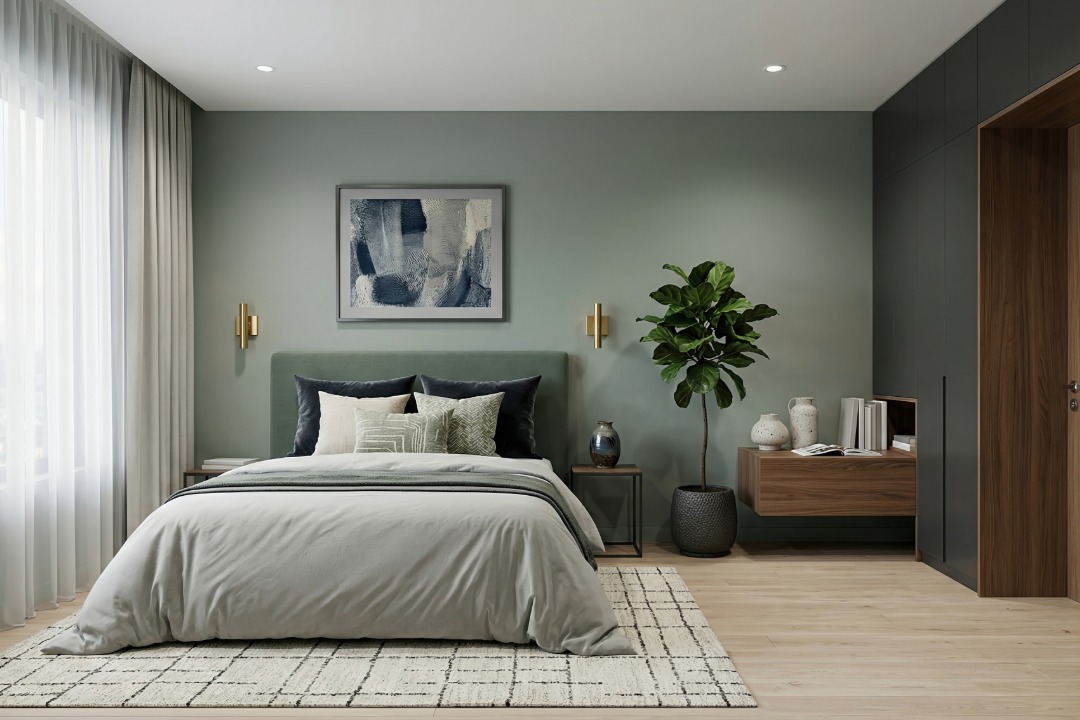
These two terms are used interchangeably by almost everyone. Homeowners say “I need an interior designer” when they actually need a space planner. Designers call themselves space planners when they are really decorators. Companies advertise “complete interior design” when they deliver only furniture and finishes without a measured layout.
This confusion costs homeowners real money. When space planning is skipped because someone assumed the interior designer would handle it, the furniture arrives and does not fit. When interior design is neglected because someone thought the space plan was the entire job, the home functions well but feels lifeless and uninviting.
Space planning and interior design are two distinct disciplines. They require different skills, produce different outputs, and happen at different stages of the project. Understanding the difference helps you hire the right professional, ask the right questions, and avoid the gaps that cause most project failures in Indian homes.
What Space Planning Actually Does
Space planning answers one question. Where does everything go?
It takes the measured dimensions of your rooms and determines the exact position, size, and orientation of every piece of furniture and every built-in unit. It maps how people move through the space. It defines the zones for sleeping, cooking, studying, and storage. It verifies that doors can open, drawers can extend, and two people can pass each other in the corridor.
The output of space planning is a scaled floor plan. Not a pretty picture. A technical document with exact measurements. This document tells the manufacturer what to build. It tells the electrician where to place outlets. It tells the plumber where to route connections.
Space planning is governed by dimensional rules, not aesthetic preferences. A kitchen aisle must be at least 42 inches wide. A wardrobe with hinged doors needs 20 to 24 inches of clearance. A primary walkway must be at least 3 feet across. These are not style choices. They are functional requirements.
A company that offers space optimisation and planning services produces this technical layout as a dedicated first step, before any material, colour, or finish is discussed.
What Interior Design Actually Does
Interior design answers a different question. How does everything look and feel?
It takes the positions defined by the space plan and adds the visual and sensory layer. Colour palettes. Material finishes. Lighting design. Texture combinations. Furniture style. Hardware aesthetic. Wall treatments. Soft furnishings.
Interior design transforms a functionally correct layout into a space that evokes a specific emotional response. Warm and inviting. Modern and minimal. Classic and elegant. Playful and energetic for a children’s room. Calm and focused for a study.
The output of interior design is a visual specification. Mood boards. Material samples. 3D renders showing exactly how each room will look. Finish schedules listing the exact laminate, paint, hardware, and fabric for every surface.
Interior design is governed by aesthetic principles. Colour theory. Proportion and scale. Visual balance. Contrast and harmony. These are creative decisions that require a trained eye, not just a tape measure.
The Seven Key Differences
1. Sequence
Space planning comes first. Interior design comes second. You cannot select a wardrobe finish until you know where the wardrobe goes. You cannot choose a kitchen countertop material until you know how long the counter is. The layout must be locked before the design layer is applied.
Reversing this sequence is one of the most common mistakes in Indian home interiors. A homeowner falls in love with a specific kitchen design in a showroom. They order it. It arrives. And it does not fit their actual kitchen dimensions because nobody measured the space before selecting the product.
2. Tools
Space planning uses laser measures, graph paper, CAD software, and scaled floor plans. The tools are technical. The precision is millimetre-level.
Interior design uses mood boards, material libraries, colour swatches, 3D rendering software, and physical samples. The tools are visual. The precision is perceptual.
3. Skills
Space planning requires spatial reasoning, dimensional analysis, circulation logic, and an understanding of construction constraints like column positions, beam drops, and plumbing routes.
Interior design requires colour sensitivity, material knowledge, trend awareness, an understanding of lighting behaviour, and the ability to translate a client’s personality into a cohesive visual language.
Some professionals excel at both. Many do not. A brilliant stylist may produce a stunning mood board but overlook the fact that the bed blocks the wardrobe door. A meticulous planner may produce a perfectly functional layout but choose finishes that clash visually.
4. Output
Space planning produces a functional layout. Furniture positions. Clearances. Zone allocations. Electrical and plumbing coordinates. This output feeds directly into manufacturing and construction.
Interior design produces a visual specification. Colours. Materials. Finishes. Textures. Lighting schemes. This output guides material procurement and final styling.
5. Stakeholders
The space plan is shared with the manufacturer, electrician, plumber, and civil contractor. They need exact positions and dimensions to execute their work.
The interior design specification is shared with the client for aesthetic approval, the material supplier for procurement, and the production team for finish application.
6. Flexibility
Space planning decisions are difficult to change after execution. Moving an electrical outlet means breaking a wall. Repositioning a kitchen sink means rerouting plumbing. Resizing a wardrobe means re-manufacturing the panels.
Interior design decisions are easier to modify. Changing a paint colour costs a few thousand rupees. Swapping a laminate shade on a shutter panel is possible during production. Replacing a handle style is a minor adjustment.
This difference in flexibility is why the space plan must be finalised first and verified thoroughly before production begins.
7. Cost of Error
A space planning error costs 10,000 to 50,000 rupees to fix depending on the scope. Relocating electrical points, rerouting plumbing, and remanufacturing modules are all expensive corrections.
An interior design error costs 2,000 to 10,000 rupees to fix. Repainting a wall, swapping a laminate, or changing a hardware finish are relatively minor corrections.
The asymmetry is clear. Space planning errors are expensive and disruptive. Interior design errors are manageable and localized. This is why planning must receive more time and attention than styling, even though styling feels more exciting.
Where They Overlap
Despite being distinct disciplines, space planning and interior design interact at several points.
Material selection is influenced by both. The space plan determines that a base cabinet sits near the kitchen sink. The interior design selects a laminate finish. But the space planner knows the cabinet needs BWR plywood for moisture resistance. The material must satisfy both the functional requirement and the aesthetic goal.
Lighting is planned spatially and designed aesthetically. The space plan determines where electrical points go. The interior designer selects the fixture style, colour temperature, and layering scheme.
Storage is allocated by the space plan and organised by the interior design. The plan determines the wardrobe width and depth. The design determines the internal layout, the shelf finish, and the hardware aesthetic.
These overlap points are where communication between the planner and the designer must be seamless. When both functions are handled by the same team, the overlap is managed internally. When they are handled by separate professionals, the homeowner must coordinate the handover.
Why Indian Homes Need Both
Indian apartments present unique challenges that require both strong space planning and strong interior design.
Compact floor plans demand precise space planning. A 600-square-foot 2BHK has no room for layout errors. Every misplaced unit wastes space the home cannot afford to lose. The modular kitchen work triangle must be tight. The wardrobe must use floor-to-ceiling height. The study zone must fit without consuming play area.
High aesthetic expectations demand professional interior design. Indian homeowners invest significant money and emotion in their home interiors. They want the kitchen to look as good as it functions. They want the bedroom to feel calm and personal. They want guests to notice the quality of the finishes and the coherence of the colour palette.
Climate conditions connect both disciplines. The space plan positions the wardrobe away from the external wall where monsoon condensation occurs. The interior designer selects BWR plywood and moisture-resistant laminate for that specific location. Both decisions work together to protect the furniture.
Multigenerational living creates zoning requirements that only space planning can solve and comfort requirements that only interior design can address. The grandparent needs a quiet corner near natural light. The children need a play zone with safe, rounded furniture. The couple needs a private retreat within the shared home. These needs are mapped by the planner and styled by the designer.
How a Manufacturer Bridges the Gap
The most efficient way to handle both space planning and interior design is to work with a company that does both under one roof. When the same team that measures, plans, and designs also manufactures and installs, the translation between disciplines is seamless.
Holzbox operates this way. The space planning team measures the site and creates the functional layout. The home interior design team applies the visual layer with materials, finishes, and 3D renders. The factory produces modules based on the combined specification. The installation team fits everything on site.
This integration eliminates the handover gaps that plague multi-vendor projects. The planner and the designer work from the same data. The factory receives a single, unified specification. The homeowner deals with one team instead of coordinating between a planner, a designer, a manufacturer, and an installer.
When space planning and interior design are unified under one company with in-house manufacturing, the result is a home where every modular furniture piece works perfectly and looks exactly as promised.
Frequently Asked Questions
Can one person do both space planning and interior design?
Some professionals are skilled at both. But the two disciplines require different abilities. Space planning demands spatial reasoning and dimensional precision. Interior design demands aesthetic sensitivity and material knowledge. In practice, the best results come from a team where a planner and a designer collaborate. Many modular interior companies have dedicated planning and design teams that work together on every project.
Which should I hire first, a space planner or an interior designer?
A space planner. The layout must be finalised before any aesthetic decisions are made. Furniture positions determine electrical outlet locations, plumbing connections, and circulation paths. These functional decisions must be locked before colours, materials, and finishes are selected. Starting with interior design before space planning leads to layouts that look good on screen but do not function in the actual room.
How much does space planning cost separately from interior design?
Many modular interior companies include space planning in their design consultation at no additional charge. As a standalone service from a freelance professional, space planning costs 5,000 to 25,000 rupees depending on the home size. This investment is negligible compared to the rework costs that poor planning causes. A single misplaced electrical outlet costs more to fix than a complete space plan for a 2BHK apartment.
What happens when space planning and interior design are handled by different companies?
The homeowner becomes the coordinator. They must ensure the planner’s layout matches the designer’s vision. They must verify that the manufacturer receives a unified specification. They must resolve conflicts when the designer wants a wider island counter but the planner says the aisle clearance does not allow it. This coordination adds complexity, time, and risk. Working with a single company that handles both disciplines under one roof eliminates these gaps.
Does every home project need formal space planning?
Yes. Even a single room renovation benefits from measured layout planning. The kitchen needs a verified work triangle. The bedroom needs confirmed wardrobe clearance. The living room needs validated seating distances. Skipping space planning on any project means accepting the risk of modules that do not fit, outlets in wrong positions, and circulation paths that feel cramped. The planning effort is small. The cost of skipping it is large.