
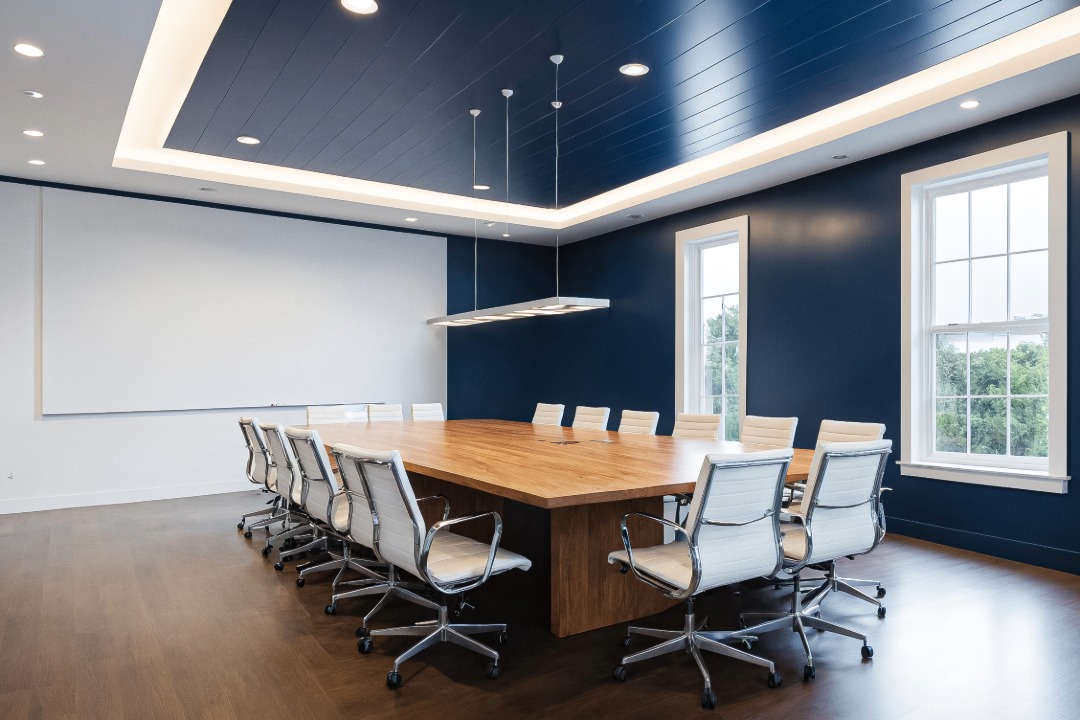
Your office says a lot about your business. It tells clients whether you pay attention to detail. It tells employees whether you care about their comfort. And it quietly shapes how productive, creative, and motivated your team feels every day.
That is why hiring the right office interior design company matters so much. A bad choice leads to wasted money, a space that looks outdated in two years, and furniture that falls apart under daily use. A good choice gives you a workspace that works harder than you expect it to.
But how do you tell the serious firms apart from the ones who just have a nice portfolio on Instagram? Here are ten things every business should evaluate before signing a contract with any corporate office design provider.
1. Look for Experience in Commercial Office Projects
Not every interior designer understands offices. Designing a living room is nothing like designing a 200-seat workspace. Offices need proper electrical planning. They need data cabling. They need fire safety compliance, acoustic control, and HVAC coordination. These are technical demands that residential designers rarely encounter.
Ask how many office projects the firm has completed. Ask for references from businesses in your industry. A firm that has designed workspaces for IT companies or co-working spaces will understand traffic flow and departmental zoning far better than someone whose experience stops at apartments.
Also check whether they know local building codes. Regulatory approvals can stall your project by weeks if your office interior design company is not familiar with the process.
2. Study Their Portfolio Carefully
A portfolio should do more than impress you. It should prove that the firm can handle your kind of project. When you review their past work, go deeper than polished photographs. Ask for before-and-after shots. Find out what exactly the firm delivered versus what was handled by outside contractors.
Look for range. Can they do a clean, minimal tech office and a warm, client-facing law firm? A firm that only has one look is a firm that copies itself instead of listening to you.
And pay attention to the small things. Is the cable management tidy? Are the storage units practical? Good workspace design shows up in the details.
3. Find Out If They Manufacture In-House
This is the single biggest differentiator most businesses overlook. Many office interior design companies operate as middlemen. They design on screen and then outsource the actual furniture production to third-party vendors. When something goes wrong, nobody takes responsibility. The designer blames the manufacturer. The manufacturer blames the specs.
A firm with its own factory is a different story. In-house manufacturing means your desks, cabinets, partitions, and workstations are built under one roof. Quality checks happen at the source. Custom dimensions are easy. Timelines are more predictable because production is not dependent on someone else’s schedule.
Ask this question directly in your first meeting. Do you manufacture or do you outsource? The answer will tell you how much control you will really have over the outcome.
4. Understand How They Run a Project
Process matters. A firm that cannot clearly explain its workflow in the first meeting is a firm that will struggle to manage your project later.
You should know exactly what happens at each stage. The best firms follow a structured path. It starts with a site visit and space audit. Then comes concept design and 3D visualisation. After that, material selection, approval, manufacturing, delivery, and installation.
Look for end-to-end project management. You should not be the one coordinating between separate architects, electricians, carpenters, and furniture vendors. That is the firm’s job. A well-defined office renovation process reduces surprises. It prevents cost overruns. And it ensures the finished space looks like what you agreed to.
5. Test Their Material Knowledge
Materials make or break an office. Cheap laminates peel within months. Bad hardware means drawers that jam and doors that sag. Low-quality upholstery stains fast and needs early replacement.
A good corporate office design firm will explain material options in plain language. They will tell you why commercial-grade laminates differ from residential ones. They will help you choose the right countertop for a busy reception area. They will walk you through the pros and cons of MDF versus particle board.
Sustainable material sourcing is also worth asking about. Low-VOC adhesives improve indoor air quality. FSC-certified boards support responsible forestry. These are real differentiators for businesses that care about employee wellness and environmental responsibility.
6. Prioritise Space Planning and Ergonomics
Buying good-looking furniture is the easy part. Placing it in a way that actually improves daily work is the hard part.
Space planning decides how people move through your office. It determines where collaborative zones sit relative to quiet focus areas. It controls how much natural light reaches workstations. Done right, it makes a 3,000-square-foot office feel spacious. Done wrong, it makes a 10,000-square-foot office feel cramped.
A skilled office furniture solutions provider will audit your space before designing anything. They will ask about team size, workflows, meeting frequency, and growth plans. They will also factor in ergonomics. Desk heights, monitor placement, chair support, and standing-desk options all affect health, posture, and long-term absenteeism. This is not a nice-to-have. It is a real cost-saver.
7. Get Clear on Timelines and Delivery
Every week your office project runs late costs you money. Rental expenses on temporary space. Lost productivity. Employee frustration. These add up fast.
Before hiring any firm, ask for a milestone-based project timeline. Not a vague estimate. Specific dates for design sign-off, manufacturing start, quality inspection, delivery, and installation.
A dependable modular office interiors provider will give you a realistic schedule. They will not promise four weeks just to win the deal and then deliver in ten. Also ask what happens when delays occur. Is there a penalty clause? How do they handle material shortages or permit holdups?
Firms with in-house manufacturing tend to deliver on time more consistently. They control production end to end. That removes the biggest source of unpredictable delays.
8. Insist on Transparent Pricing
The gap between quoted price and final invoice is one of the biggest frustrations in this industry. Many firms quote a low number to win the contract. Then the extras start. Site preparation charges. Electrical work. Hardware upgrades. Delivery fees. Before you know it, the bill is thirty percent higher than the original quote.
Protect yourself by asking for an itemised quotation. Every panel, partition, handle, hinge, and soft-close mechanism should be listed with its unit cost. Ask the firm to clearly state what is included and what is not.
A trustworthy commercial interior design company will welcome this level of detail. Transparent pricing builds trust. It also lets you make smarter trade-offs. Maybe you invest more in the client-facing conference room and keep back-office stations lean. You can only make that call when every number is visible.
9. Check Their After-Sales Support
Your relationship with the firm should not end on installation day. Furniture settles. Hardware needs minor adjustments. Small issues always surface in the first few weeks of use.
Ask about warranty terms before you sign. What does it cover? How long does it last? Is hardware covered separately from surface finishes? What is the typical response time for a service call?
The best firms build after-sales support into the project scope. They treat it as a standard part of the service. Holzbox, for instance, includes post-installation inspections and a structured warranty as part of their delivery process. That kind of commitment signals a firm that stands behind its work after the final bill is paid.
10. Make Sure They Can Scale and Customise
Your office needs today will not be the same two years from now. Teams grow. Departments restructure. Hybrid work models shift how space gets used.
The firm you hire should offer solutions that adapt. Modular office furniture is the smartest way to future-proof a workspace. Unlike fixed carpentry, modular units can be reconfigured and expanded without tearing things down. A four-person workstation pod can become a six-person cluster with the right add-on panels.
Ask whether the firm offers modular systems. Can they build custom sizes for non-standard rooms? Do they supply expansion kits for existing setups? A firm that thinks in flexible systems instead of one-off pieces gives your business room to grow without starting over.
The Bottom Line
Choosing an office interior design company is not just about aesthetics. It is a business decision that affects employee performance, client impressions, and long-term operational costs. The ten points above give you a clear framework for evaluating firms properly.
Visit their completed projects. Talk to past clients. Ask to see the factory floor. The right partner will not just decorate your office. They will build a workspace where your team does its best work.
Frequently Asked Questions
What is the difference between an office interior designer and an office interior design company?
An office interior designer is usually an individual professional focused on layout and aesthetics. An office interior design company offers a much broader scope. This typically includes space planning, 3D visualisation, material procurement, manufacturing, project management, and installation. Working with a full-service firm means every stage of the project is handled by one team. There is no miscommunication between separate vendors. No finger-pointing when something goes wrong. The result is a faster, smoother process with a final workspace that actually matches the approved design.
How much does it cost to hire an office interior design company in India?
Costs depend on city, office size, materials, and the scope of work. A basic setup typically starts from INR 800 to 1,200 per square foot. Premium fit-outs with modular furniture, acoustic treatments, and ergonomic workstations can go up to INR 2,500 to 4,000 per square foot. Always ask for an itemised quote. Confirm whether it includes civil work, electrical fittings, furniture, and installation. Watch out for quotes that seem unusually low. They often exclude essentials that show up as surprise charges later.
How long does a typical office interior project take?
Most office projects in India take four to twelve weeks. Smaller offices under 2,000 square feet can be done in four to six weeks. Larger corporate spaces above 10,000 square feet may take eight to twelve weeks. Firms with in-house manufacturing often deliver faster because they do not depend on third-party production schedules. Always ask for a milestone-based timeline. Clarify what happens if deadlines slip before you sign anything.
Should I hire a local firm or a national company?
Both have strengths. A local firm knows regional building codes, has nearby vendor networks, and can visit your site easily. A national firm often has stronger manufacturing infrastructure, wider material access, and better quality control systems. The real question is whether the firm can deliver consistent results at your specific location. Ask if they have done projects in your city before. Ask how their installation teams operate in your area. And ask how they handle service calls after the project is complete.
What should I ask in the first meeting with an office interior design company?
Start with their portfolio. Ask to see completed office projects. Then ask whether they manufacture in-house or outsource production. Request a clear walkthrough of their design process. Ask about material sourcing and whether they offer sustainable options. Discuss warranty terms, response times, and after-sales support. Be upfront about your budget and ask for an itemised quote. Finally, ask about timelines, your point of contact, and how they handle scope changes. These questions will give you a reliable picture of what working with the firm will actually look like.