
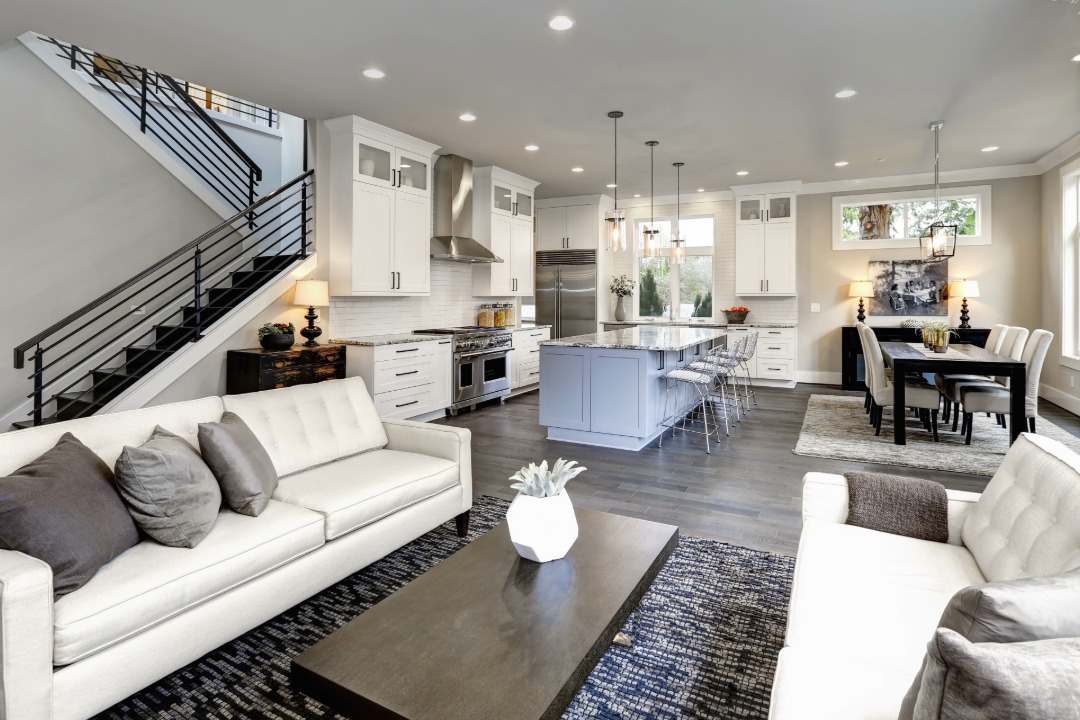
A tight budget does not mean you settle for a poorly designed home. It means you make smarter decisions about where every rupee goes. The difference between a budget home that looks cheap and one that looks intentional comes down to knowing what to invest in and what to skip.
Most budget interior design guides tell you to buy second-hand furniture, use peel-and-stick wallpaper, and arrange plants on the windowsill. Those tips are fine for decoration. But they do not address the structural decisions that actually determine whether your home looks and feels well-designed five years from now.
This guide focuses on the material and manufacturing decisions that stretch your budget without sacrificing quality where it matters. It is written from the perspective of a company that builds modular interiors in its own factory and sees firsthand where homeowners waste money and where they save it wisely.
Spend on Structure, Save on Surface
This is the single most important principle in budget home interior design. The structure is the carcass, the hardware, and the edge banding. The surface is the shutter finish, the handle style, and the decorative elements.
A wardrobe with a BWR plywood carcass and laminate shutters will outlast a wardrobe with particle board carcass and acrylic shutters every single time. The first one costs less. The second one looks more expensive on day one but fails within three years because the carcass swells and the hinges pull out of the weak board.
Put 60 percent of your furniture budget into the carcass material and hardware. Put 40 percent into the finish and accessories. This ratio gives you a home that performs for a decade while still looking clean and polished.
The finish can always be upgraded later. A laminate shutter can be replaced with PU or acrylic in five years when the budget allows. But a failed carcass means rebuilding the entire unit from scratch. Invest in what you cannot change easily.
Use Zone-Based Material Selection
Using one material grade for every surface in the home is either wasteful or risky. If you use BWR plywood everywhere, you overspend on areas that do not need moisture resistance. If you use particle board everywhere, you risk failure in areas that do.
The smart approach is to match the material to the zone. Use BWR plywood only where moisture is a real concern. The kitchen base cabinets near the sink. The wardrobe base panels that sit close to the floor where mopping moisture accumulates. The bathroom vanity unit.
Use HDHMR for wall-mounted kitchen cabinets, overhead wardrobe sections, and dry storage areas. It is lighter, smoother, and 15 to 20 percent cheaper than BWR plywood per square foot.
Use standard MDF for TV units, study tables, display shelves, and shoe cabinets. These pieces face minimal moisture and light daily use. MDF accepts laminate and paint beautifully and costs significantly less than plywood.
This zone-based approach can save 15 to 25 percent on your total material cost without reducing durability in any area that matters.
Choose Laminate Over Acrylic and PU
For a budget-conscious home, laminate is the most intelligent shutter finish. It costs 350 to 600 rupees per square foot compared to 700 to 1,200 for acrylic and 900 to 1,500 for PU coating.
The durability difference is minimal for everyday Indian use. Laminate handles oil splatter, turmeric stains, cleaning agents, and daily fingerprints without degrading. High-pressure laminates resist scratches better than acrylic, which shows every fingerprint and requires daily wiping.
The visual difference has narrowed dramatically. Modern laminates come in matte, textured, wood-grain, and solid colour finishes that closely replicate the look of more expensive materials. A well-chosen laminate in a neutral tone looks as refined as PU to most visitors.
On a full modular kitchen with 40 square feet of shutter surface, choosing laminate over acrylic saves 14,000 to 24,000 rupees. On two wardrobes totalling 60 square feet, the saving is 21,000 to 36,000 rupees. That recovered budget can fund better hardware, additional storage accessories, or an extra piece of furniture entirely.
Invest in Hardware Even on a Tight Budget
This seems counterintuitive. You are trying to save money. Why spend more on hinges and drawer runners?
Because hardware determines the daily experience of your home. Soft-close hinges prevent doors from slamming. Full-extension runners let you see the entire drawer. Quality hanging rods hold heavy clothes without bending. These interactions happen dozens of times every day.
Budget hardware fails within a year. Hinges loosen. Runners jam. Rods bend. Each repair costs time and money. Over five years, the accumulated repair cost of cheap hardware often exceeds the one-time cost of branded alternatives.
The price difference between basic and mid-range branded hardware from Hettich or Hafele is typically 5,000 to 12,000 rupees per wardrobe and 8,000 to 15,000 rupees per kitchen. That is a small premium for a decade of smooth, reliable operation versus years of frustration and replacement.
Buy Factory-Direct to Eliminate Dealer Margins
The same modular kitchen or wardrobe can cost 15 to 25 percent more when purchased through a dealer compared to buying directly from a manufacturer. The dealer adds a margin for the service they provide. But if the manufacturer offers design, production, and installation as a single package, the dealer margin is pure cost without added value.
A manufacturer with in-house production and in-house manufacturing capability prices the product based on raw material cost, production cost, and a direct margin. There is no intermediary layer. The homeowner pays for the kitchen, not for the kitchen plus the dealer’s rent, staff, and profit.
This factory-direct pricing advantage is one of the most effective ways to reduce your home interior design budget without compromising quality. The material is the same. The hardware is the same. The production process is the same. The only difference is the absence of a middleman.
Prioritise Rooms by Impact and Usage
Not every room needs the same level of investment. A smart budget allocates more to high-impact, high-use spaces and less to rooms that are used infrequently or seen less often.
The kitchen is the highest-priority room. It faces the most demanding conditions and is used multiple times daily. Invest in the right carcass material, good hardware, and proper edge banding here. Cutting corners in the kitchen creates problems faster than in any other room.
The master bedroom wardrobe is the second priority. It is the wardrobe storage system you interact with every morning and evening. Invest in a well-planned internal layout with quality hardware.
The living room TV unit, guest bedroom wardrobe, and study table can use lighter materials and simpler finishes. These modular furniture pieces face less daily stress and can be upgraded in future phases if the budget allows.
This phased approach also works across time. Furnish the kitchen and master bedroom first. Move in. Then add the living room and guest room furniture over the following months as cash flow permits. A company that offers space optimisation and planning services will design the full layout upfront but allow you to execute it in phases.
Skip Custom Sizes When Standard Sizes Fit
Custom-width modules cost more because they require individual setup on the CNC machine. If your wall width accommodates standard module sizes of 300, 450, 600, or 900 millimetres with minimal filler, use the standard sizes.
A small filler strip of 50 to 100 millimetres between the last module and the wall is barely noticeable and costs a fraction of what a custom-width module adds. For most Indian apartments, standard module widths cover 85 to 90 percent of the layout without requiring custom sizing.
Custom sizes are worth the extra cost only when the gap is too large to fill aesthetically or when the room has irregular dimensions that standard modules cannot accommodate. Ask your manufacturer to show you the layout with standard sizes first. Only switch to custom when the standard option genuinely does not work.
Use Open Shelving Strategically
Open shelves cost less than enclosed cabinets. They use fewer panels, no shutters, and no hardware. In the right locations, they serve the same function at a fraction of the cost.
A living room display unit with three open shelves and two enclosed base cabinets costs 30 to 40 percent less than a fully enclosed unit with shutters on every section. The open shelves display books, plants, and decorative items. The closed base hides clutter and everyday items.
In the kitchen, one section of open shelving for frequently used spice jars and cooking oils saves the cost of a full overhead cabinet while keeping daily essentials within arm’s reach.
The key is balance. A home with all open shelving looks unfinished. A home with all closed cabinets feels heavy. The right mix keeps the budget low and the home interior design aesthetic clean and intentional.
Avoid These Budget Traps
Cheap edge banding. It peels within a year near moisture. Always insist on PVC or ABS edge banding applied on an automated machine, even in budget projects.
Particle board carcass in kitchens or bathrooms. It absorbs moisture and fails within two to three years. The replacement cost exceeds the original saving.
Overspending on false ceilings. A simple peripheral false ceiling with cove lighting costs half of what a multi-layered design costs. The visual impact is 80 percent of the premium version at half the price.
Buying furniture from one vendor and installation from another. The coordination gaps lead to rework and delays. A single manufacturer that handles design, production, and professional installation delivers a cleaner result and fewer surprise costs.
Holzbox designs and manufactures modular interiors in its own factory. Factory-direct pricing, zone-based material recommendations, and phased execution support make quality home interiors accessible even on a controlled budget. The goal is not to spend less. It is to spend wisely.
Frequently Asked Questions
What is the minimum budget for complete home interiors in a 2BHK in India?
A basic but well-built 2BHK interior with modular kitchen, two wardrobes, a TV unit, and a shoe cabinet starts at 3.5 to 5 lakhs using HDHMR carcass, laminate finishes, and standard branded hardware. A mid-range setup with BWR plywood for wet zones and better accessories costs 5 to 8 lakhs. These ranges assume factory-direct pricing from a manufacturer. Dealer or multi-vendor setups cost 15 to 25 percent more for the same material specification.
Where should I spend the most on a tight budget?
The kitchen carcass and hardware. The kitchen faces the harshest conditions in any Indian home. Moisture, heat, oil, and daily heavy use all stress the materials. BWR plywood for the base cabinets and branded soft-close hardware for the shutters and drawers are non-negotiable even on a tight budget. Every other room can use lighter materials and simpler finishes. The kitchen cannot.
Is laminate really as good as acrylic or PU for daily use?
For durability in Indian cooking conditions, laminate often outperforms acrylic. High-pressure laminate resists scratches, oil stains, and heat better than acrylic, which shows fingerprints and scratches easily. PU coating offers a premium feel but costs twice as much and requires careful cleaning. Laminate delivers 90 percent of the visual result at 40 to 50 percent of the cost. For a budget-conscious home, it is the smartest shutter choice.
Can I do my home interiors in phases to spread the cost?
Yes. The most practical approach is to complete the kitchen and master bedroom wardrobe first. Move in and use the home while planning the next phase. Add the living room furniture, guest bedroom wardrobe, and study table over the following three to six months. A good manufacturer designs the full layout upfront so that phase-two modules integrate seamlessly with phase-one installations. This phased approach prevents budget overruns and lets you adjust priorities based on actual living experience.
How do I know if a quotation is genuinely budget-friendly or just using cheap materials?
Ask for an itemised breakdown. The quotation should list the carcass material and grade, the shutter material and finish, the hardware brand and type, the edge banding method, and the installation charges. Compare the material specifications against the price. A genuinely budget-friendly quotation uses smart material selection like zone-based plywood and HDHMR rather than uniform cheap boards. A quotation that is simply cheap uses particle board and unbranded hardware throughout and will cost more in repairs within three years.