
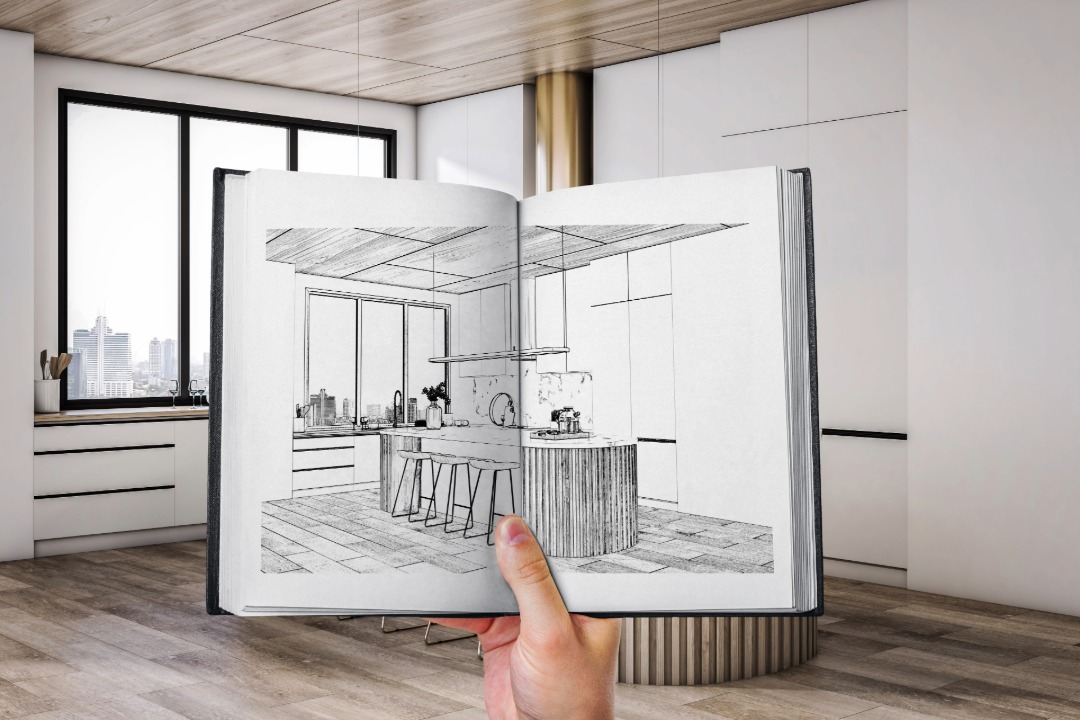
Space planning is not interior decoration. Decoration is about what things look like. Space planning is about where things go, how much room they need, and what happens when people move between them.
In a 600-square-foot Indian apartment, the difference between a well-planned layout and a poorly planned one is not cosmetic. It is physical. A badly placed wardrobe blocks the bedroom door from opening fully. A sofa positioned too close to the dining table forces people to squeeze past each other. A kitchen counter placed without clearance behind it means two people cannot work simultaneously.
These are not aesthetic failures. They are planning failures. And they happen because most homeowners start choosing furniture before mapping the space. This guide covers the dimensional rules, circulation standards, and room-by-room planning methods that make modern Indian homes feel larger, function better, and avoid the layout mistakes that no amount of decoration can fix.
Start With Circulation, Not Furniture
The biggest space planning mistake is placing furniture first and hoping the remaining gaps are enough to walk through. They usually are not.
Circulation is the path people take when moving through a room. The walk from the bedroom door to the wardrobe. The path from the dining table to the kitchen counter. The route from the main entrance to the living room seating.
Every primary circulation path needs a minimum width of 900 millimetres. That is roughly three feet. Anything narrower forces people to turn sideways when passing. Secondary paths between furniture pieces need at least 750 millimetres.
Draw your floor plan. Mark every door, window, and fixed element like columns and electrical panels. Then draw the circulation paths first. The paths determine where furniture can go. Not the other way around.
This approach seems restrictive at first. But it actually frees you from the most common layout regrets. When circulation is planned before furniture, every piece you place has guaranteed access. No blocked doors. No squeezed walkways. No furniture islands that divide the room into unusable fragments.
The Kitchen: Plan Around the Work Triangle
The kitchen work triangle connects the stove, sink, and refrigerator. The sum of the three sides should fall between 12 and 26 feet. Anything shorter creates a cramped cooking experience. Anything longer wastes energy on unnecessary walking.
For Indian cooking, the triangle must account for heavy use of all three points simultaneously. A pressure cooker on the stove needs quick access to the sink for releasing steam. The fridge is opened repeatedly for ingredients during a single cooking session. Spices and oils sit between the stove and the counter.
Counter clearance matters more than counter length. The space between the counter edge and the opposite wall or cabinet should be at least 42 inches. In a parallel kitchen, this means the total kitchen width must be at least 8 feet to accommodate counters on both sides with a comfortable aisle.
A modular kitchen designed with proper space planning integrates storage, prep surfaces, and appliance zones within these dimensional constraints. The CNC-cut modules fit the exact wall dimensions, eliminating the gaps and overhangs that waste space in carpenter-built kitchens.
The Living Room: Seating Distance Drives Everything
The most common living room planning error in Indian homes is pushing all furniture against the walls. This creates a large empty centre that nobody uses and a room that feels like a waiting room rather than a living space.
The optimal distance between the sofa and the TV is 1.5 to 2.5 times the screen diagonal. For a 55-inch TV, that is roughly 7 to 11 feet. Place the sofa at this distance and build the rest of the layout around it.
The coffee table should sit 14 to 18 inches from the sofa edge. Close enough to reach a cup without stretching. Far enough to stand up without bumping your knees.
Side tables should be within arm’s reach of the seating position. The table surface should be level with the sofa armrest for comfortable use.
If the living room doubles as a dining area, use visual zoning to separate the two functions. A change in rug placement. A different light fixture above the dining table. A low bookshelf as a partial divider. These cues define zones without consuming floor area with walls.
The Bedroom: Wardrobe Position Is the Key Decision
In most Indian bedrooms, the wardrobe is the second largest piece of furniture after the bed. Where it goes determines the remaining layout.
A standard single-door wardrobe is 24 inches deep. A sliding wardrobe can be 22 to 26 inches deep. The wardrobe wall must accommodate this depth plus any baseboard and wall irregularity.
If the wardrobe uses hinged doors, you need 20 to 24 inches of clearance in front for the doors to swing open. If the bed is positioned on the opposite wall, the total room width must be at least the bed width plus the wardrobe depth plus the door swing clearance plus a 36-inch walkway.
For a standard queen bed (60 inches wide) and a hinged-door wardrobe (24 inches deep with 20 inches of swing), the minimum room width is 60 plus 24 plus 20 plus 36, which equals 140 inches or roughly 11 feet 8 inches.
If your room is narrower than this, a sliding wardrobe eliminates the door swing requirement and saves 20 inches of floor space. That is the difference between a room that feels comfortable and one that feels cramped.
The Study Zone: Ergonomics in a Small Footprint
More Indian homes now include a dedicated study or work-from-home zone. In a compact apartment, this zone often sits inside the bedroom or the living room rather than in a separate room.
The desk surface should be at least 36 inches wide and 20 inches deep to accommodate a laptop, notebook, and a cup. The chair needs 24 to 30 inches of depth behind the desk for rolling and reclining. Add the desk depth and the chair depth together, and you need a minimum of 44 to 50 inches from the wall to the back of the occupied chair.
The desk height should be 28 to 30 inches for seated work. The monitor or laptop screen should sit at eye level. If using an external monitor, a monitor arm mount on the desk frees the surface beneath it and adds 3 to 4 square feet of usable workspace.
When integrating a study zone into a bedroom, position the desk perpendicular to the window. This provides natural side light on the working surface without creating glare on the screen. Avoid placing the desk facing the bed. The visual connection between the work surface and the sleeping surface makes it harder to mentally separate the two functions.
Vertical Space: The Dimension Most Homes Ignore
Indian apartments typically have 9 to 10 foot ceilings. Most furniture stops at 7 feet. That leaves 2 to 3 feet of unused vertical space across every wall in every room.
Floor-to-ceiling wardrobes recover this gap with loft storage. The loft holds suitcases, seasonal blankets, festival items, and rarely used kitchenware. This recovery adds 15 to 20 percent more storage capacity without increasing the wardrobe footprint.
Wall-mounted shelves above the study desk hold books and files that would otherwise occupy desk surface. Overhead kitchen cabinets that extend to the ceiling store serving dishes and crockery used only for gatherings.
A manufacturer with in-house production builds these floor-to-ceiling units to the exact ceiling height of your room. If the ceiling is 9 feet 3 inches, the unit is 9 feet 3 inches. There is no gap on top. No dust collection space. No wasted vertical area.
This vertical recovery is one of the most effective space optimisation strategies for modern Indian homes. It requires no additional floor space. It simply uses the height that is already available.
Open Plan vs Defined Rooms: Making the Right Choice
Open plan layouts remove walls between the kitchen, dining, and living areas. They make compact apartments feel larger and allow natural light to flow deeper into the home. They are popular in modern Indian 2BHK and 3BHK apartments.
But open plan is not always the right answer. Indian cooking generates oil, steam, and strong aromas that travel freely in an open layout. A kitchen open to the living room means the sofa absorbs cooking smells. Guests arriving during meal preparation walk into a wall of spice-laden air.
The practical compromise is a semi-open layout. A glass partition between the kitchen and dining area blocks smoke and oil while maintaining visual openness. A kitchen counter with a raised bar acts as a partial divider that separates cooking from dining without closing off the space.
Sliding doors offer another solution. Open them during the day for light and airflow. Close them during heavy cooking to contain the kitchen environment. A sliding door requires precise track installation and panel sizing. Factory-built modular furniture systems include these sliding partitions as integrated components, ensuring the track aligns perfectly with the counter and the wall.
Common Space Planning Mistakes in Indian Homes
Placing the dining table in the centre of the living room. This blocks circulation between the entrance and the seating area. Position the dining against a wall or adjacent to the kitchen counter to free the central floor area.
Using oversized furniture in small rooms. A three-seater sofa in a 100-square-foot living room leaves no room for anything else. Scale the furniture to the room. A two-seater sofa with a single accent chair provides similar seating capacity with better proportions.
Ignoring the door swing zone. Every hinged door needs a clear arc of 90 degrees to open fully. Furniture placed within this arc blocks the door and creates a daily frustration that never goes away.
Not planning for the home interior design as a whole before furnishing room by room. A wardrobe purchased for the master bedroom may block the corridor when delivered because nobody measured the hallway width. A TV unit ordered for the living room may not fit the wall because the electrical panel protrudes. Holzbox plans the complete layout across all rooms before production begins, ensuring every module fits the space it was designed for and every delivery path is clear.
Frequently Asked Questions
What is the minimum walkway width needed in a home?
Primary circulation paths need a minimum of 900 millimetres (roughly 3 feet). Secondary paths between furniture pieces need at least 750 millimetres. In the kitchen, the aisle between facing counters should be at least 42 inches. These clearances ensure comfortable movement for adults and prevent the cramped feeling that poorly planned homes create regardless of their total square footage.
How do I plan a living room layout for a small Indian apartment?
Start with the TV-to-sofa distance. Place the sofa at 1.5 to 2.5 times the TV screen diagonal. Position the coffee table 14 to 18 inches from the sofa. Use visual zoning with rugs, lighting, or a low shelf to separate the living and dining areas. Avoid pushing all furniture against the walls. A floating sofa with a console table behind it often creates better proportions than wall-hugging placement.
Should I choose an open plan or closed kitchen for an Indian home?
For light cooking and homes without heavy oil use, an open plan works well. For traditional Indian cooking with regular tempering, pressure cooking, and frying, a semi-open layout is more practical. A glass partition or a sliding door between the kitchen and dining area contains smoke and aroma while maintaining visual openness and light flow. This compromise gives you the spatial benefit of an open plan with the containment of a closed kitchen.
How do I maximise storage without making rooms feel cramped?
Use vertical space. Floor-to-ceiling wardrobes, loft cabinets, and wall-mounted shelves recover the 2 to 3 feet of unused wall height in every room. Use modular furniture with built-in storage like beds with pull-out drawers and study desks with integrated shelving. A manufacturer with in-house manufacturing builds these units to your exact dimensions, ensuring they fit precisely without leaving gaps or protruding into walkways.
When should space planning happen in the interior design process?
Before anything else. Space planning should be the very first step, completed before material selection, colour choices, or furniture shopping begins. The floor plan with furniture positions determines where electrical outlets go, where plumbing points are needed, and how much clearance each room has. Changing a furniture position after electrical rough-in is done means breaking walls to re-route wiring. Planning the layout first prevents this costly and disruptive rework.