
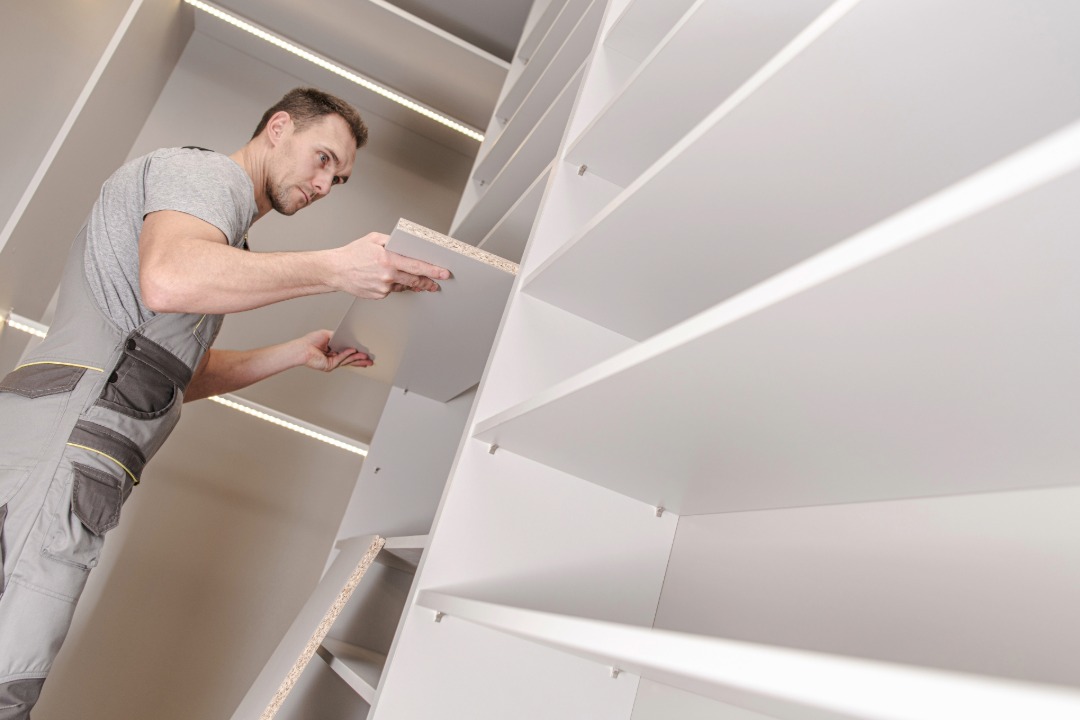
The shift from traditional to modular furniture is not a design trend. It is a manufacturing revolution. And like all manufacturing revolutions, it changes not just what you buy but how it is made, how fast it arrives, and how long it lasts.
Twenty years ago, every piece of furniture in an Indian home was built on site by a carpenter. The carpenter bought raw materials from a local dealer. Cut them by hand. Assembled them in your bedroom or kitchen over weeks. The quality depended entirely on that one person’s skill on that particular day.
Today, a modular kitchen or wardrobe is designed on screen, manufactured in a factory on CNC machines, tested before dispatch, and installed in your home within two to three days. The shift is not cosmetic. It is structural. And it is permanent. Here is why modular furniture is not just a better option for today. It is the only viable model for how homes will be furnished in the decades ahead.
The Production Advantage That Cannot Be Reversed
Once furniture manufacturing moves from on-site carpentry to factory production, the quality and efficiency gains are too large to reverse.
A CNC machine cuts a panel to within 0.1 millimetres of the specified dimension. A carpenter works to tolerances of 1 to 2 millimetres. Over a full kitchen or wardrobe, those small variations accumulate into visible misalignment, uneven gaps, and hardware that does not perform as designed.
Factory edge banding is applied under controlled temperature and pressure with industrial adhesive. The bond is airtight. Manual edge banding uses a handheld iron. The bond is inconsistent. In humid Indian cities, manually applied edges peel within a year near water sources.
Factory-tested hardware is calibrated to the actual panel thickness and weight. A soft-close hinge mounted at the wrong depth by even 2 millimetres will not close properly. In a factory, this calibration is automated. On site, it depends on the carpenter’s eye.
These are not marginal differences. They are fundamental quality gaps. And they explain why the global furniture industry has moved decisively toward factory production. India is following the same trajectory. The shift is already underway in metro cities. It will reach tier-two and tier-three cities within the next five years.
Compact Urban Living Demands Modular Solutions
Indian apartments are not getting bigger. The average 2BHK in Hyderabad, Bangalore, Mumbai, and Delhi offers 550 to 900 square feet. Land costs keep rising. Floor areas stay the same.
In a compact home, every centimetre of wasted space reduces liveability. A carpenter-built wardrobe that wastes 30 percent of its internal volume through poor shelf planning is not just inefficient. It is unaffordable in a space where storage determines daily comfort.
Modular furniture is engineered to recover space that traditional methods waste. Floor-to-ceiling wardrobes use the full wall height including the loft zone. Corner carousels in modular kitchens recover dead corner space. Pull-out trays bring the full depth of every shelf to your fingertips. Adjustable shelves adapt to your changing storage needs.
These solutions work only when the internal dimensions match the accessory specifications exactly. A pull-out tray that is 2 millimetres too wide jams. A carousel that does not match the cabinet radius catches. This is why compact living and factory precision are inseparable. You cannot have one without the other.
The Lifestyle Flexibility That Traditional Furniture Cannot Offer
Modern Indian families do not live in one home for thirty years anymore. Professionals in metro cities move apartments every five to seven years. Families grow and reconfigure. A couple becomes a family. Children grow into teenagers. A spare room becomes a home office. The dining area becomes a study zone.
Traditional furniture is built into the wall. It cannot move. When you relocate, the wardrobe stays behind. When the family structure changes, the fixed bedroom layout does not adapt.
Modular furniture is built as independent boxes. Each module can be disassembled, transported, and reinstalled. If you move apartments, your kitchen and wardrobe travel with you. The modules may need minor adjustments for the new room dimensions. But the carcass, hardware, and finishes remain usable for another decade.
This relocatability alone saves two to four lakhs over a fifteen-year period for a family that moves once. That saving makes modular furniture not just a comfort upgrade but a financial decision.
Within the same home, modular systems support reconfiguration. A children’s wardrobe with adjustable shelves adapts as the child grows from five to fifteen. A home office workstation can be expanded with additional modules when a second person starts working from home. A living room media unit can be reconfigured when the TV size changes.
Traditional furniture requires demolition and rebuilding for any of these changes. Modular furniture requires only repositioning and adding or removing modules.
Speed of Delivery That Modern Life Requires
A carpenter-built interior takes 60 to 90 days for a 2BHK apartment. Each room is built sequentially. The kitchen takes three weeks. Then the master bedroom. Then the second bedroom. Then the living room. The homeowner waits months, paying rent on a temporary apartment while the new home is being completed.
A factory-built modular interior takes 25 to 40 days in production for all rooms simultaneously. The kitchen, wardrobes, TV unit, and study desk are manufactured in parallel on the same production floor. On-site installation takes three to five days.
Total project time from design approval to move-in is eight to ten weeks. That is half the timeline of traditional carpentry. For a family paying 20,000 to 40,000 rupees per month in temporary rent, this compression saves one to two months of rent. That is 40,000 to 80,000 rupees of tangible savings beyond the furniture itself.
This speed advantage exists because factory production is not limited by the sequential nature of on-site work. A factory runs multiple production lines simultaneously. It does not wait for one room to finish before starting the next. This parallelism is structurally impossible with traditional carpentry.
Sustainability That Goes Beyond Marketing
The environmental case for modular furniture is stronger than most homeowners realise.
Factory production generates less waste than on-site carpentry. CNC nesting software arranges panel cuts to maximise the usable area from each board. Waste ratios in a well-run factory are 8 to 12 percent. On-site carpentry wastes 15 to 25 percent of raw material because cuts are planned manually and offcuts are discarded.
Material sourcing in a factory is verifiable. A manufacturer that controls its own material supply chain buys from certified mills. Every board is tested for emission levels before it enters production. Low-VOC finishes and water-based adhesives reduce indoor air pollution in the finished home.
Durability is the most overlooked sustainability factor. A modular kitchen that lasts 12 to 15 years replaces one carpenter kitchen that lasts 5 to 7 years and then a second one built to replace it. Over a 15-year period, the modular kitchen consumes half the raw material because it does not need to be rebuilt.
The longer furniture lasts, the fewer resources it consumes over its lifecycle. Factory precision creates durability. Durability creates sustainability. This chain is why modular furniture is not just the modern choice. It is the responsible one.
Quality Assurance That Scales
When a carpenter builds your kitchen, you are relying on one person’s skill, one person’s material sourcing judgment, and one person’s quality standard. If that person is excellent, you get an excellent kitchen. If they have a bad week, you get a kitchen with problems that surface months later.
Factory production removes this variability. Every panel passes through the same CNC machine. Every edge goes through the same banding line. Every hinge is mounted at the same calibrated depth. The quality of module number one is identical to module number fifty.
This consistency is what makes modular furniture scalable. A manufacturer can furnish ten apartments in parallel with the same quality standard. A carpenter cannot. They are limited by their own hands and their own day.
For developers furnishing entire residential complexes, for hospitality companies outfitting hotel rooms, and for corporate offices equipping fifty workstations, modular production is the only model that delivers consistent quality at volume. The residential homeowner benefits from the same production system that serves these larger clients.
The Technology Integration That Is Already Here
Modern modular furniture is not just wood and laminate. It is increasingly integrated with technology that traditional furniture cannot support.
Wireless charging pads embedded in bedside tables and study desks. Motion-sensor LED lighting inside wardrobes and kitchen cabinets. Push-to-open mechanisms that replace visible handles. Soft-close hardware on every door and drawer. Cable management channels built into desk surfaces.
These integrations require precise manufacturing. A wireless charging pad needs a specific recess depth in the panel. An LED channel needs an exact groove width. A push-to-open mechanism needs calibrated spring tension matched to the door weight.
None of these integrations work reliably when installed manually on site. They work when engineered into the module during factory production. As smart home adoption grows across Indian cities, the furniture must be factory-ready for technology. Modular production makes this possible. On-site carpentry does not.
The Manufacturing Infrastructure That Makes It Permanent
Holzbox represents the kind of manufacturing infrastructure that makes the modular shift permanent. A dedicated factory with CNC cutting lines, automated edge banding, hardware calibration stations, and quality inspection checkpoints.
This infrastructure does not exist to serve a trend. It exists to serve a structural shift in how Indian homes are furnished. Once the factory is built and the production processes are refined, the cost per unit decreases. The quality per unit increases. The speed per project improves.
This is why modular is not a phase. The manufacturing investment is too large and the quality advantages too clear for the industry to revert to on-site carpentry. The future has already been built. The factories are running. The modules are shipping. Modern home interior design is now inseparable from factory production. Space optimisation at the millimetre level is now standard practice. The only question for homeowners is when they will make the switch, not whether they should.
Frequently Asked Questions
Is modular furniture really better than carpenter-made furniture?
For most Indian homes, yes. Modular furniture offers tighter dimensional tolerances, factory-sealed edges, tested hardware, written warranties, and faster installation. Carpenter furniture costs less upfront but requires more repairs, has shorter hardware life, and cannot be relocated. The total cost of ownership over ten years typically favours modular because it avoids the replacement and repair expenses that accumulate with on-site construction.
How long does modular furniture last?
A well-built modular unit with BWR plywood carcass, factory-sealed edges, and branded hardware lasts 12 to 15 years with minimal maintenance. The carcass and edge banding determine structural longevity. The hardware determines functional longevity. Carpenter furniture with basic materials typically needs replacement within 5 to 8 years. The durability difference makes modular a better long-term value despite the higher upfront cost.
Can modular furniture be customised for non-standard room dimensions?
Yes. A manufacturer with in-house manufacturing builds modules to any width, depth, and height. If your wall is 2,350 millimetres wide instead of a standard 2,400, the factory cuts the panel to 2,350. This custom sizing is standard practice in CNC production. Companies selling only fixed catalogue sizes cannot offer this flexibility. Always confirm whether your manufacturer builds custom or catalogue-only modules.
Is modular furniture suitable for Indian cooking and climate conditions?
Absolutely. Factory-built modular kitchens use BWR plywood for wet-zone cabinets that resist moisture from Indian cooking. High-pressure laminate shutters handle oil, turmeric, and cleaning agents without degrading. Branded hardware is rated for the high cycle counts that daily Indian cooking demands. Factory-sealed edges prevent the moisture ingress that causes swelling in humid coastal cities. These specifications are designed specifically for Indian conditions.
Why is modular furniture more expensive upfront than carpenter furniture?
The price includes factory-grade materials, CNC precision cutting, automated edge banding, branded hardware, quality inspection, and professional installation. Carpenter furniture excludes most of these quality layers. The upfront premium reflects a higher standard of manufacturing that delivers longer life, better daily performance, and a written warranty. When measured on a cost-per-year basis over the furniture’s lifespan, modular is often the more affordable option.