
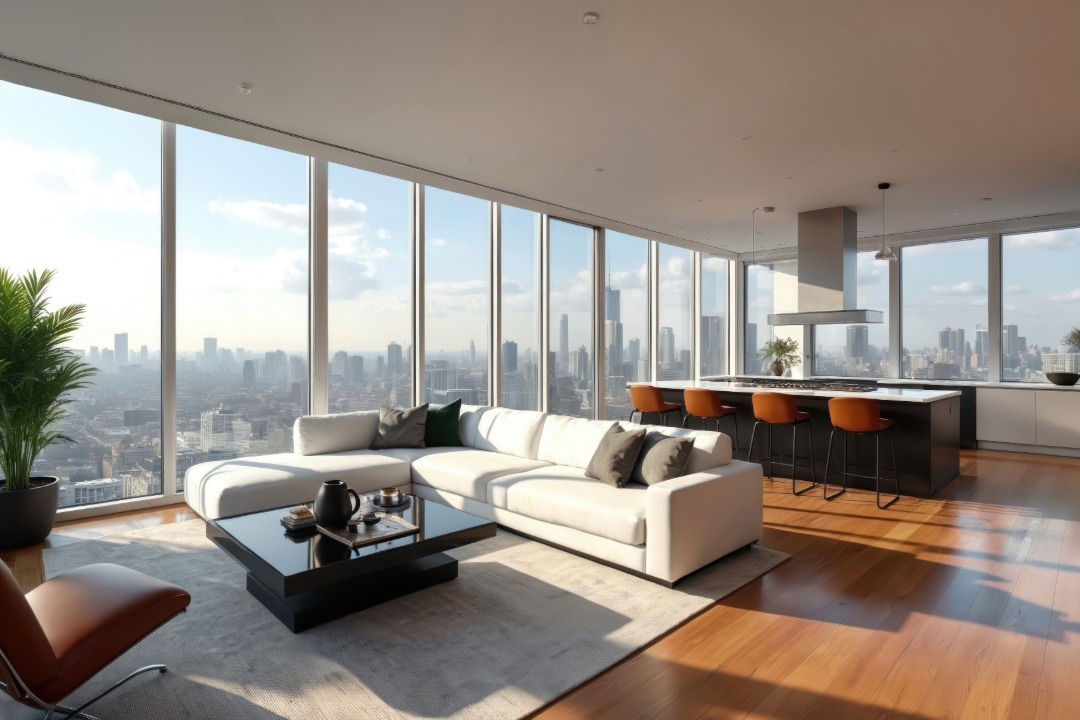
Every interior project begins with excitement. New finishes. Fresh colours. Better furniture. But without space planning, that excitement turns into a series of expensive corrections. The kitchen counter is six inches too close to the fridge. The wardrobe doors hit the bed frame. The study desk blocks the window. The electrical outlet is behind the TV unit where nobody can reach it.
These are not design taste failures. They are space planning failures. And they happen in homes across India every single day because homeowners and designers rush past the planning phase to get to the exciting parts.
Space planning is not a formality. It is the single most consequential step in any interior design project. It determines whether your home works for the next decade or frustrates you every morning. This guide explains why space planning matters through its measurable impact on seven dimensions that affect your daily life, your budget, and your home’s long-term value.
1. Space Planning Prevents Costly Rework
The most immediate benefit of space planning is cost avoidance. A well-planned layout eliminates the mistakes that cost the most to fix after installation.
Moving an electrical outlet after the wall is plastered and painted costs 2,000 to 5,000 rupees per point. That includes breaking the wall, re-routing the wire, re-plastering, and repainting. A typical 2BHK has 40 to 60 electrical points. If even five are in the wrong position because nobody planned the furniture layout before wiring, the rework cost is 10,000 to 25,000 rupees. Plus the delay. Plus the mess.
Modifying a plumbing connection after tiling is even more expensive. A kitchen sink that needs to move 12 inches to the left after the countertop is installed requires breaking the floor tile, rerouting the drain, re-tiling, and re-sealing. That correction alone can cost 15,000 to 30,000 rupees.
A space plan completed before the electrical and plumbing rough-in eliminates these costs entirely. The furniture positions are known. The outlet locations follow. The plumbing points align. Zero rework. Zero wasted money. Zero delays.
This is why companies that provide space optimisation and planning services as a dedicated first step report significantly fewer on-site corrections than companies that start with material selection or aesthetic design.
2. Space Planning Recovers Hidden Square Footage
Indian urban apartments are not growing. A 2BHK in Hyderabad, Bangalore, or Mumbai still offers 550 to 900 square feet. The land cost keeps rising. The floor area stays the same. Every square foot must earn its keep.
Research suggests that effective space planning can improve space utilisation by up to 30 percent. That means a 600-square-foot apartment with good planning functions like an 780-square-foot apartment with poor planning. The physical area is the same. The usable area is dramatically different.
The gains come from specific planning decisions. A floor-to-ceiling wardrobe recovers the 2 to 3 feet of dead space above a standard almirah. A corner carousel in the modular kitchen recovers 6 to 8 square feet of dead corner space. A wall-mounted study desk eliminates the 10-square-foot footprint of a standalone table.
None of these gains happen by accident. They happen because the space plan identified the wasted areas and designed specific solutions for each one.
3. Space Planning Improves Daily Time Efficiency
A well-planned home saves time in ways you stop noticing after the first month. But the savings are real and they compound every day.
A kitchen with a proper work triangle saves 5 to 10 minutes per meal compared to a poorly arranged kitchen where the cook walks back and forth between distant points. Over three meals a day and 365 days a year, that is 30 to 60 hours of recovered time annually.
A wardrobe with a well-planned internal layout saves 5 to 10 minutes every morning. When shirts hang in one section, trousers in another, and accessories sit in dedicated drawers, the morning routine is a sequence of reaches, not a search-and-rescue operation.
A living room with clear circulation paths saves the micro-seconds of navigation that accumulate into a general feeling of ease versus a general feeling of cramped frustration.
These time savings are invisible on any single day. But over a year, they represent dozens of hours that the occupants get back. And the emotional difference between a home that flows and one that obstructs is significant for mental health and daily satisfaction.
4. Space Planning Increases Property Value
A home with a well-planned layout commands a higher resale price than an identical unit with a poorly planned interior. Real estate industry data from Indian urban markets suggests that homes with optimised modular interiors recover 60 to 80 percent of the interior investment during resale.
Buyers evaluate a home within the first two minutes of a visit. If the rooms feel spacious, the storage looks organised, and the kitchen functions logically, the home feels premium. If the rooms feel cramped, the wardrobe blocks the window, and the kitchen forces awkward movement patterns, the home feels compromised regardless of the material quality.
The space plan is what creates the feeling of spaciousness and flow. It is the invisible architecture behind the visible design. And it directly influences what a buyer is willing to pay.
For homeowners who plan to sell or rent within five to ten years, space planning is not just a comfort decision. It is a financial decision that affects the return on their home interior design investment.
5. Space Planning Supports Mental Wellbeing
The connection between physical environment and mental state is well documented. Cluttered, cramped, and poorly organised spaces increase stress and reduce cognitive performance. Open, well-organised, and logically arranged spaces reduce anxiety and improve focus.
Space planning creates the physical conditions for mental comfort. Clear sightlines from the entrance to the living area create a sense of openness. Defined zones for work, rest, and play reduce the mental confusion of multi-purpose rooms. Adequate storage prevents the visual clutter that accumulates on every surface when there is nowhere to put things away.
In Indian homes where three generations may share the same apartment, space planning also addresses privacy and personal territory. A children’s study zone separated from the adult living area by a bookshelf divider gives each group their own space without adding a wall. A grandparent’s corner with a comfortable chair and good lighting near the window provides a personal retreat within the shared home.
These spatial decisions directly affect how the occupants feel every day. A home that respects each person’s need for personal space while maintaining family connection is a home that supports mental wellbeing. Space planning is the discipline that makes this balance possible.
6. Space Planning Enables Precision Manufacturing
This is the benefit that most design guides overlook. And it is the one that determines whether the beautiful plan on screen becomes a beautiful reality on site.
A modular kitchen, wardrobe, or TV unit is manufactured in a factory based on exact dimensions. The CNC machine does not guess. It cuts panels to the millimetre specified in the production data. If the data is wrong, the panel is wrong. If the panel is wrong, the module does not fit.
The space plan provides the verified dimensions that the factory needs. Wall widths measured on site. Ceiling heights confirmed. Column positions mapped. Plumbing points located. Electrical panels identified.
A manufacturer with in-house production translates the space plan directly into CNC cutting instructions. The same data that shows the kitchen layout on a 3D render drives the panel cutting on the factory floor. There is no interpretation gap. No manual re-measurement. No approximation.
Holzbox operates this way. The space plan produced during the design consultation becomes the production blueprint. Every module is cut, edged, and assembled based on verified site dimensions. This integration between planning and manufacturing is what ensures that every piece fits perfectly on installation day.
When the space plan is inaccurate or absent, even the best factory produces modules that do not fit. The problem is not in the manufacturing. It is in the data that feeds it. Space planning provides the accurate data that precision manufacturing demands.
7. Space Planning Future-Proofs the Home
A home designed for today’s needs will not serve tomorrow’s needs unless the space plan accounts for change. A couple’s apartment becomes a family home. A work-from-home requirement appears. A parent moves in. Children grow into teenagers who need privacy.
A good space plan builds adaptability into the layout. Adjustable wardrobe shelves that can be repositioned as clothing inventories change. A guest room that converts to a home office with a fold-down desk. A children’s room with modular furniture that can be reconfigured as the child grows from five to fifteen.
This adaptability depends on modular design principles. Modules that can be added, removed, or rearranged without dismantling the entire system. A manufacturer that keeps dimensional records of every project can produce additional modules years later that match the originals exactly.
Space planning identifies the areas where flexibility is needed and designs the modular systems to support it. Without this foresight, every lifestyle change requires a renovation. With it, every change requires only a reconfiguration.
Why Most Indian Homes Skip Space Planning
Despite its importance, most Indian homeowners skip formal space planning. The reasons are predictable.
They want to see results quickly. A space plan takes one to two weeks to complete. Material selection and 3D renders feel more productive because they show visible progress.
They assume the designer will handle it. Many designers focus on aesthetics first and treat space planning as a loose sketch rather than a precise technical document.
They do not realise the cost of skipping it. The rework expenses, the daily inconveniences, and the resale value impact are all invisible until they materialise. By then, the interior is installed and the corrections are expensive.
The solution is to work with a company that treats space planning as a dedicated, non-negotiable first step. Not a rough sketch. A measured, scaled, verified plan that becomes the foundation for every home interior design decision that follows.
Frequently Asked Questions
How much does space planning cost as a separate service in India?
Many modular interior companies include space planning in their design consultation at no additional charge. Standalone space planning from a freelance designer costs 5,000 to 25,000 rupees depending on the home size and scope. The cost is negligible compared to the rework expenses it prevents. A single misplaced electrical outlet costs more to fix than a complete space plan for a 2BHK apartment.
Can space planning make a small apartment feel bigger?
Yes. Effective space planning improves space utilisation by up to 30 percent. A 600-square-foot apartment with optimised furniture placement, vertical storage recovery, and clear circulation paths functions and feels like a much larger home. The physical area does not change. The usable area increases significantly because dead zones are eliminated and every square foot serves a defined purpose.
What happens if I skip space planning and go straight to design?
You risk electrical outlets behind furniture, plumbing points misaligned with fixtures, wardrobes that block doors, and kitchens with inefficient work triangles. Each of these mistakes costs thousands of rupees to fix after installation. More importantly, the daily inconvenience persists for as long as you live in the home. Space planning prevents all of these issues at a fraction of the correction cost.
How does space planning connect to modular furniture manufacturing?
The space plan provides the exact dimensions that CNC machines use to cut panels. It specifies module widths, internal layouts, hardware positions, and assembly sequences. Without a verified plan, the manufacturer works from assumptions. With one, they work from measured site data. A company with in-house manufacturing integrates the space plan directly into the production process, ensuring every module fits the space it was designed for.
When is the right time to start space planning for a new home?
As early as possible. Ideally, space planning should begin the day you receive possession of the flat. If you are buying under construction, start even earlier by working with the builder’s floor plan. The plan must be finalised before the electrical and plumbing rough-in so that every outlet, switch, and connection point is positioned based on the confirmed furniture layout. Starting space planning after civil work is complete limits your options and increases the risk of rework.