Walk into any well planned retail store and the products almost seem to arrange themselves. Bestsellers land at eye level, categories flow logically from one aisle to the next, and the eye never tires of where to look. That effortless feeling is not accidental. It is the direct result of two small but powerful decisions made long before the shelves were stocked. What kind of fixture holds the product, and where does it sit inside the floor plate.
Two fixture types dominate modern retail: gondola shelving and wall mounted displays. Both do the same basic job of presenting merchandise. Neither is universally better. The right choice depends on what you sell, how customers move through your store, the ceiling height you are working with, and how often you want to reset your displays. Getting the mix wrong forces staff into daily workarounds and quietly caps how much a store can sell per square foot.
This guide breaks down gondola shelving vs wall mounted displays for retail, covers where each format wins, walks through the practical questions of load capacity, materials, and layout, and gives a straight answer to the question most store owners actually ask. Which one belongs in your store.
What is Gondola Shelving
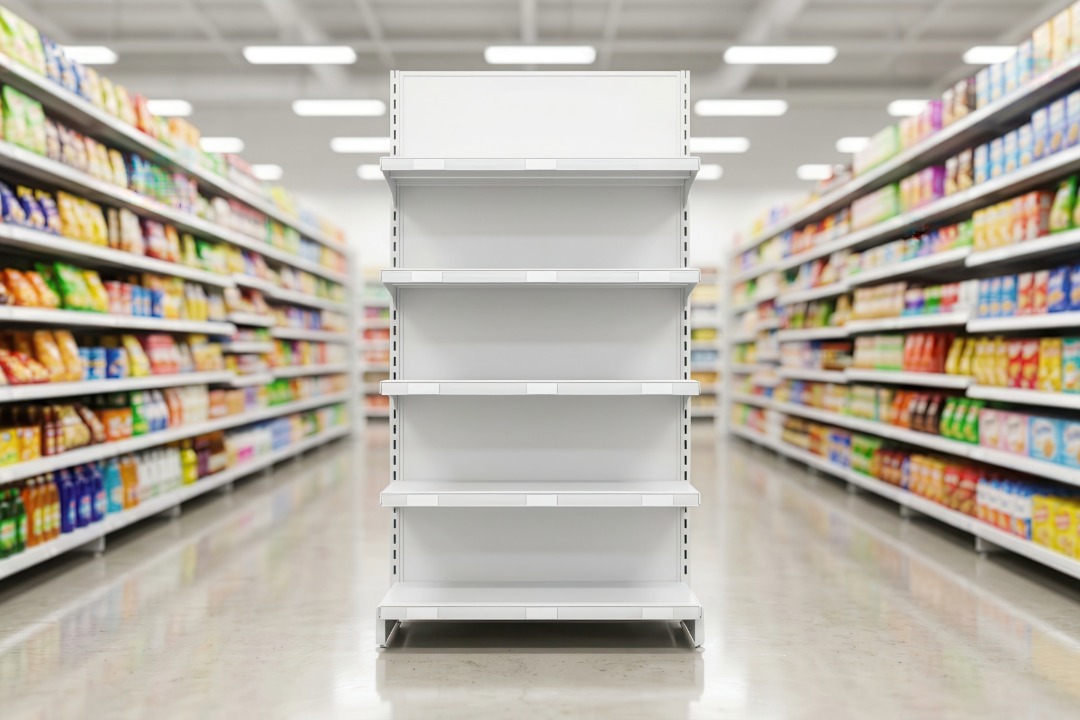
Gondola shelving is a free standing, double sided fixture that rises from the floor, usually to a height between 1500 and 2100 mm. Each unit has a central spine with adjustable brackets on both sides, letting the store hang shelves, hooks, or pegboards at any level. Individual units clip together end to end to form aisles.
The format was built for supermarkets and mass retail in the mid twentieth century and has been quietly refined ever since. Modern gondola shelving comes in powder coated steel for grocery, wood clad wraps for premium retail, and hybrid configurations that mix shelves with hooks, baskets, and category headers.
The two things that make gondola shelving so useful are density and flexibility. Density, because a single aisle of gondolas holds far more product per square foot than a wall alone ever could. Flexibility, because shelves adjust in minutes, end caps can be reset for promotions, and units can be added, removed, or reconfigured as the range changes.
What are Wall Mounted Displays
Wall mounted displays are exactly what the name suggests: fixtures that fix directly onto the perimeter walls of the store. They can be built as continuous slat wall panels with hooks and brackets, as recessed niches with integrated lighting, as floating shelves in a curated arrangement, or as a full wall unit with cabinets, shelves, and display bays combined into one architectural feature.
Because they take advantage of vertical wall space that would otherwise stay unused, wall mounted displays are the natural companion to any store with limited floor area. They also anchor the visual identity of the space. The perimeter wall is what a customer sees the moment they enter, and a well designed wall display sets the tone for everything that follows.
Unlike gondola shelving, wall mounted displays are usually less modular in day to day operation. Shelves may adjust, but the overall architecture tends to stay fixed for the life of the store, which is both a strength and a limitation depending on how often you refresh your merchandising.
Gondola Shelving vs Wall Mounted Displays: A Head to Head Look
The two formats differ across almost every practical dimension. Gondola shelving delivers higher product density per square foot because it uses the middle of the floor, not just the perimeter. Wall mounted displays deliver higher visual impact because they present a continuous, curated face to the customer without the visual break of aisle ends. Gondolas are more flexible day to day, allowing shelf heights, end caps, and category adjacencies to shift with the season. Wall mounted displays are more architectural, giving the store a strong, permanent identity but resisting frequent change.
On cost, gondola shelving generally works out lower per running foot because the units are repeated to a standard specification and installed quickly. Wall mounted displays cost more per running foot when built as custom joinery with integrated lighting, but that cost buys visual depth that no gondola can replicate. On maintenance, gondolas are easier to clean around and replace parts on. Wall units require careful protection during any store refit because damaging the wall means damaging the display.
The single biggest difference is what each format signals to the customer. Rows of gondola shelving say value, choice, and volume. A rich wall of curated displays says quality, story, and craft. Most stores need both signals, in the right ratio, at the right places on the floor.
When Gondola Shelving is the Right Choice
Gondola shelving is the right primary fixture for any store where product density and range breadth are the point. Supermarkets, pharmacies, home improvement stores, stationery retailers, packaged food outlets, general trade shops, and value focused apparel formats all lean heavily on gondolas because they need to present hundreds or thousands of SKUs without wasting an inch of floor.
Gondolas also make sense when the merchandising plan changes often. Seasonal promotions, festival end caps, monthly category resets, and quick vendor buy ins all work smoothly when the fixture itself can flex. A store that refreshes displays every two weeks will get more out of gondola shelving than out of a fixed wall unit that took a month to build.
Aisle width, sight line planning, and end cap placement all matter more than the individual shelves in a gondola layout. Considered space optimization and planning at the layout stage is what turns a room full of shelves into a store that flows.
When Wall Mounted Displays are the Right Choice
Wall mounted displays are the right primary fixture for stores where the product is the story and the range is deliberately edited. Premium apparel boutiques, eyewear stores, cosmetics counters, jewellery showrooms, home decor and lifestyle brands, single brand flagships, and any format that trades on brand experience relies on wall mounted displays to carry the identity of the space.
Wall mounted formats also win in stores with small floor plates. When you have 400 to 800 square feet, pushing merchandise onto the walls and keeping the centre of the floor calm makes the space feel larger and more considered than filling it with island fixtures. The customer moves through the store along the walls, and the centre becomes a comfortable circulation zone with maybe one hero table.
Because wall mounted displays are effectively permanent architecture, they benefit hugely from being manufactured in a factory to precise specifications rather than built by carpenters on site. Working with a purpose built modular cabinet manufacturer delivers the flush joinery, integrated lighting channels, and hidden hardware that separate a memorable wall unit from a merely functional one.
The Hybrid Approach: Using Both in the Same Store
Most successful retail stores do not choose one format over the other. They use both, in a deliberate ratio, to get the best of each. The perimeter walls carry brand led displays that hold hero product and communicate identity. The centre of the floor holds gondolas or lower fixtures that deliver depth of range and easy self serve browsing. Aisles between them stay wide enough for two shoppers to pass with baskets.
The ratio depends on the format. A supermarket may be eighty percent gondola and twenty percent wall. A specialty grocer might flip to sixty percent wall and forty percent gondola to lean into the premium feel. A cosmetics store often runs almost entirely on wall mounted displays with a few small round tables in the centre for testers. There is no universal split, only the split that matches how customers shop your category. Good retail showroom design is essentially the art of tuning that ratio to your specific product and footfall.
The other advantage of the hybrid approach is that both formats can share a single design language. Same wood tone, same metal finish, same lighting temperature. Achieving that consistency across free standing gondolas and fixed wall units is significantly easier when both come from one full service retail showroom design partner rather than being sourced from separate vendors.
Materials, Load Capacity, and Build Quality
Retail fixtures work harder than most other furniture in a commercial space. They hold weight all day, get restocked several times a week, take knocks from trolleys and baskets, and often live under warm lighting that dries out cheap finishes. Material selection is not a place to cut corners.
For gondola shelving, powder coated steel remains the reliable workhorse for high volume categories because of load capacity, ease of cleaning, and long life. Wood clad gondolas or gondolas with laminate faced side panels lift the perceived quality of the fixture and suit premium retail formats. Shelf load ratings should be checked against the heaviest product the shelf will ever carry, with a safety margin of at least thirty percent above expected load.
For wall mounted displays, the carcass is typically BWP grade plywood or HDHMR board for dimensional stability. Exterior finishes range from PU coated panels for a premium matte look, to wood veneer for warmth, to high pressure laminate for the highest wear resistance in busy stores. Integrated LED lighting in the shelf underside adds significant retail impact but must be planned into the manufacturing brief from the start, since retrofitting cabling into a finished unit rarely looks clean. A good modular cabinet manufacturer will build these lighting channels into the panel itself during factory production.
For stores that care about the story behind the materials, working with a manufacturer that offers responsible material sourcing across timber and finishes turns the fixtures themselves into part of the brand narrative.
Practical Layout Considerations Before You Order
A few dimensional and planning rules save real trouble later. Keep primary aisles between gondola runs at 1500 mm minimum, or wider if trolleys are part of your format. Keep secondary aisles at 1200 mm minimum for comfortable single file movement. Cap gondola height at 1800 mm for stores that want a sense of openness, and at 2100 mm for stores that prioritise density over sight lines across the floor.
For wall mounted displays, plan the vertical layout in three bands. The bottom band, floor to 600 mm, is for stock or lower interest product. The middle band, 600 to 1600 mm, is prime real estate and belongs to bestsellers and hero categories. The top band, 1600 mm and above, works for signage, category headers, or lit brand statements. Lighting for wall units should be planned before the units are manufactured, not added afterwards.
Finally, factor in professional installation and long term after sales support when picking your fixture partner. A broken shelf bracket or a failed LED driver during trading hours costs real revenue, and a supplier who can respond quickly is worth more than the small difference in initial quotation.
Frequently Asked Questions
What is the difference between gondola shelving and wall mounted displays?
Gondola shelving is free standing, double sided, and placed in the centre of the store to create aisles. It maximises product density and flexibility. Wall mounted displays fix to the perimeter walls, use vertical space efficiently, and carry the visual identity of the store. Gondolas are ideal for high SKU count categories and frequent merchandising changes. Wall mounted displays are ideal for curated ranges, premium formats, and stores with limited floor area. Most well designed stores combine both, using wall units for brand impact and gondolas for range depth.
Which retail fixtures are best for a small store under 500 square feet?
For stores under 500 square feet, wall mounted displays are usually the smarter primary choice. They push merchandise onto vertical space, keep the floor clear for circulation, and make the store feel larger and more premium than filling it with island fixtures. Add one or two low profile centre tables or a compact half height gondola only if the category needs extra display surface. Tall gondolas in a small store block sight lines from the entry and make the space feel cramped, which reduces browse time and average basket size.
How much load can a standard gondola shelf carry?
A standard powder coated steel gondola shelf typically carries between 40 and 80 kilograms per shelf, depending on shelf length and bracket type. Heavy duty industrial or hardware gondolas can carry significantly more, up to 150 kilograms per shelf with reinforced brackets. Wood clad or laminate faced gondolas used in premium retail usually carry lighter loads, in the range of 25 to 50 kilograms per shelf, since the priority is visual finish rather than raw capacity. Always check the manufacturer load rating and leave a safety margin of at least thirty percent above your expected product weight.
Can wall mounted displays and gondola shelving be manufactured to match?
Yes, and this is where a single manufacturing partner adds real value. When both formats come from the same factory, the wood tones, metal finishes, edge details, and lighting temperature can be matched precisely across the whole store. A full service modular furniture manufacturer with an in house factory can produce gondolas, wall units, cash counters, and back office joinery on the same production line, so nothing looks like it was sourced separately. Sourcing gondolas from a mass supplier and wall units from a joinery vendor almost always produces visible mismatches in finish, tone, and detailing, which quietly cheapen the store even when individual pieces are well made.
How long do retail fixtures last before they need replacement?
A well built gondola shelving unit typically lasts seven to ten years in daily retail use before the frame or brackets need attention. Shelves themselves may be replaced sooner if they get dented or scratched. Custom wall mounted displays built in a factory from HDHMR or BWP cores with PU or laminate finishes typically hold up for eight to twelve years before a refresh becomes worthwhile. Lighting fixtures inside displays usually need attention sooner, with LED drivers and strips replaced every four to six years. Regular cleaning, prompt part replacement, and avoiding overloading extend the working life of every retail fixture significantly.
Ready to Fit Out a Store That Actually Sells
The right retail fixtures are the ones that match how your customer actually shops, hold up under daily commercial use, and reinforce your brand every hour the store is open. Whether that means rows of well planned gondola shelving, a signature run of wall mounted displays, or a considered hybrid of both, the outcome depends on the quality of the manufacturing behind each unit. A full service modular furniture manufacturer with its own factory setup gives you tighter control over quality, consistency across fixture types, and predictable timelines from design to installed store.
Ready to plan a retail fit out that turns floor area into sales? Book a free consultation with our design team.