Lighting is the most underestimated element in a retail store. It does not appear on the product list. Customers never mention it in reviews. Store owners spend weeks choosing the right shelving and hours selecting the right paint colour. Then they pick whatever ceiling lights the electrician recommends and move on.
That decision costs them sales every single day. Research consistently shows that well-designed retail lighting can increase sales by 12 to 40 percent depending on the product category and store format. Lighting affects how long customers stay, which products they notice, how they perceive quality, and whether they feel comfortable enough to browse rather than rush through.
This guide explains how lighting drives retail store performance across six measurable dimensions. Not in abstract design terms. In practical, business-relevant terms that connect directly to sales, dwell time, and customer behaviour.
Lighting Controls What Customers See First
The human eye is drawn to the brightest point in any environment. This is not a preference. It is a neurological reflex. The visual cortex processes light intensity before colour, shape, or text.
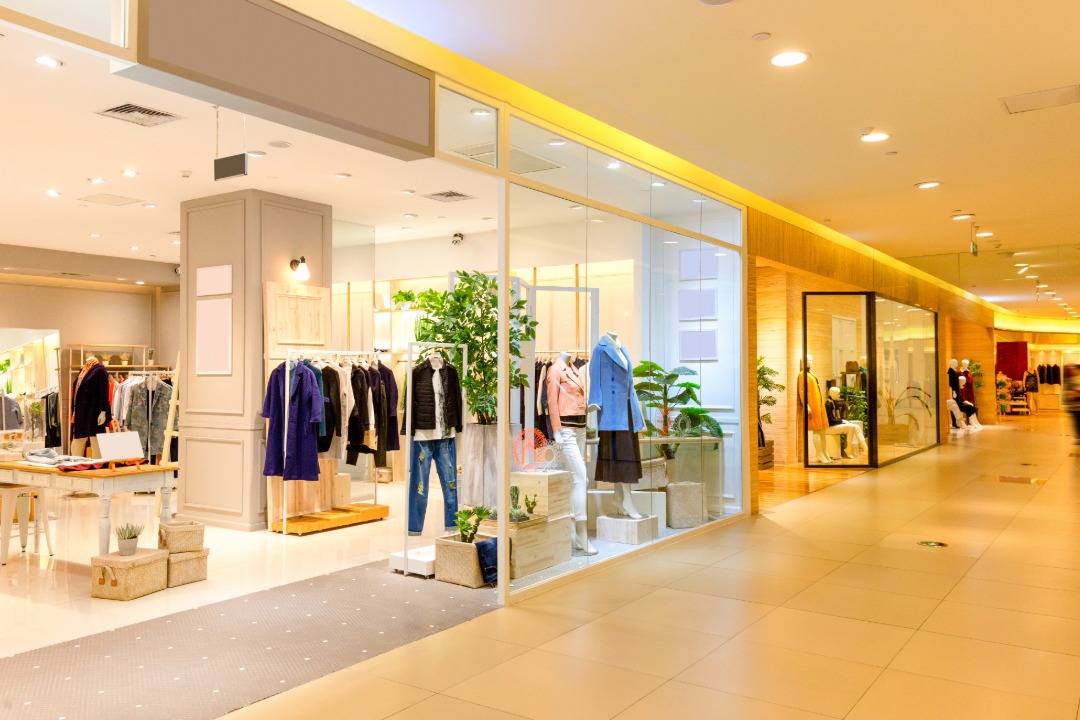
In a retail store, this reflex determines which products get noticed first. A product lit with a focused accent beam against a slightly dimmer background receives more visual attention than an identical product on a uniformly lit shelf. The customer does not consciously decide to look at it. Their eye goes there automatically.
This principle is the foundation of retail lighting strategy. You position accent lights on the products you most want to sell. Hero products. New arrivals. High-margin items. Seasonal features. The light does the selling before any staff member approaches.
The opposite is equally true. Products sitting in shadows or under flat, uniform lighting become invisible. They blend into the background. Customers walk past them without a second glance. In a store where visual merchandising drives purchase decisions, poor lighting renders even the best merchandise ineffective.
How Colour Temperature Shapes Customer Mood
Light colour is measured in Kelvin. Warm light at 2700 to 3000K creates a relaxed, intimate atmosphere. Neutral light at 3500 to 4000K feels balanced and alert. Cool light at 5000K and above feels clinical and energising.
Each temperature triggers a different emotional response that directly affects shopping behaviour.
Warm lighting encourages browsing. It makes customers feel comfortable, unhurried, and welcome. Apparel stores, jewellery boutiques, home decor showrooms, and furniture displays benefit from warm lighting because the purchase decision is emotional and benefits from longer dwell time.
Cool lighting promotes alertness and quick decisions. Electronics stores, pharmacies, and grocery sections use cooler temperatures because the customer is task-oriented. They want to find what they need, evaluate specifications, and move on.
Neutral lighting works for stores that sell a mix of product types or need a professional, versatile atmosphere. It flatters most product colours without adding warmth or coolness that could distort perception.
The mistake most Indian retailers make is using a single colour temperature throughout the entire store. The checkout zone, the display area, the fitting room, and the entrance all receive the same light. This one-size approach ignores the reality that different zones serve different purposes. A store designed with showroom interior design tips for maximum customer engagement uses varied colour temperatures across zones to match the intended customer behaviour in each area.
The Three-Layer Lighting System
Professional retail lighting uses three distinct layers. Each layer serves a different purpose. Together, they create the depth, hierarchy, and atmosphere that flat lighting cannot achieve.
The first layer is ambient lighting. This is the base layer that provides general visibility throughout the store. It should be bright enough for comfortable navigation but not so bright that it flattens the space. Recessed ceiling panels or evenly spaced downlights work well. The recommended level for ambient lighting in Indian retail spaces is 300 to 500 lux depending on the store type.
The second layer is accent lighting. This is the selling layer. Adjustable spotlights, track lights, and focused beams highlight specific products, displays, and feature walls. Accent lighting should be three to five times brighter than the ambient level on the target product. This contrast is what creates visual hierarchy and draws the eye.
The third layer is task lighting. This covers functional areas like the checkout counter, consultation desk, fitting room, and price tag reading zones. Task lighting needs to be bright, even, and glare-free so customers and staff can perform specific activities comfortably.
Most retail stores in India install only the first layer. They have ambient lighting and nothing else. The result is a flat, shadowless space where nothing stands out. Adding accent and task layers transforms the same store into a space where products glow, displays tell stories, and customers stay longer.
How Lighting Affects Product Perception
A product’s perceived quality changes based on the light that falls on it. The same cotton shirt looks premium under warm, focused lighting with good colour rendering. It looks ordinary under cool fluorescent tubes with poor colour accuracy.
Colour Rendering Index, or CRI, measures how accurately a light source reveals the true colours of objects. Natural sunlight has a CRI of 100. Good LED retail lighting should have a CRI of 90 or above. Budget LED panels often have a CRI below 80. At that level, reds look washed out, skin tones appear grey, and wood textures lose their warmth.
For product categories where colour drives purchase decisions, CRI is critical. Fashion retail, cosmetics, fresh produce, home furnishing, and fabric stores all suffer when the CRI drops below 85. Customers pick up a product, compare it to what they see on their phone screen, and put it back because the colour does not look right.
This is not a lighting brand problem. It is a lighting specification problem. The store owner needs to specify the CRI along with the wattage and colour temperature. Most do not. They accept whatever the electrician installs. The result is a store where products consistently underperform their potential.
Lighting and Fixture Integration
Here is where most retail lighting guides stop. They discuss layers, colour temperature, and CRI. But they do not address the physical relationship between the light source and the display fixture. This connection determines whether the lighting strategy actually works in practice.
A ceiling spotlight aimed at a display shelf from ten feet above creates a different effect than an LED strip integrated directly into the shelf. The ceiling spot illuminates the shelf surface but creates shadows under the shelf lip. Products on the top shelf receive direct light. Products on the lower shelves sit in graduated shadow. The customer perceives the top shelf products as higher quality simply because they are better lit.
Custom retail fixtures with integrated lighting solve this. LED strips built into the underside of each shelf illuminate the products below evenly. Internal cabinet lights activate when doors open. Backlit panels behind products create a halo effect that separates them from the background.
This integration requires precision during fixture manufacturing. The LED channel must be recessed into the shelf at the exact depth that hides the light source while directing the beam downward. The wiring must be concealed within the fixture carcass. The power connection must be accessible for maintenance without disassembling the unit.
A manufacturer with in-house production builds this integration into the fixture design from day one. The lighting is not an afterthought clamped onto a generic shelf. It is engineered into the structure. Holzbox manufactures custom retail fixtures with integrated lighting channels, concealed wiring paths, and service access points built into the factory production process.
When the fixture and the lighting work as a single system, the result is a display that looks professional, performs consistently, and requires almost no adjustment after installation. The same principles that govern home interior design lighting apply to retail spaces, but at a commercial scale where in-house manufacturing precision becomes even more critical.
Energy Efficiency and Operating Costs
Lighting accounts for 25 to 40 percent of a retail store’s electricity bill. In Indian cities where commercial electricity rates range from 8 to 14 rupees per unit, this cost adds up quickly. A store running old fluorescent or halogen systems can reduce its lighting energy consumption by 50 to 70 percent by switching to LED.
LED technology has matured to the point where there is no trade-off between efficiency and quality. Modern LED retail lights deliver high CRI, precise colour temperature, dimmable output, and directional focus. They last 50,000 hours compared to 10,000 hours for fluorescent tubes and 2,000 hours for halogen bulbs.
The payback period for a full LED retrofit in an Indian retail store is typically 12 to 18 months through electricity savings alone. After that, every month of reduced power consumption is direct profit.
Smart lighting controls add another layer of efficiency. Daylight sensors adjust artificial light levels based on natural light entering through windows and skylights. Occupancy sensors dim lights in zones with no customer activity. Programmable timers reduce intensity during non-peak hours.
These systems do not just save money. They extend the life of the LED fixtures. A light dimmed to 70 percent when the store is quiet lasts significantly longer than one running at full output for every operating hour.
Lighting Mistakes That Indian Retailers Make Most Often
The most common mistake is uniform lighting across the entire store. Every zone gets the same intensity, the same colour temperature, and the same fixture type. This creates a visually flat space where nothing stands out. Many of the retail store design mistakes that reduce sales trace back to this single lighting error.
The second mistake is using exposed bulbs or bare tube lights. These create glare that makes customers squint and feel uncomfortable. Any light source visible directly to the eye is a glare source. Recessed fixtures, shielded downlights, and diffused panels eliminate this problem.
The third mistake is ignoring the fitting room. Fitting rooms with harsh overhead lighting make customers look worse than they do at home. Colours appear distorted. Skin looks unflattering. The customer tries on a product they liked on the shelf and rejects it in the fitting room because the lighting made it look wrong. Warm, diffused side lighting at face height creates accurate, flattering illumination that supports purchase decisions.
The fourth mistake is neglecting the storefront. The store window is visible from the street. It is the first point of contact with potential customers. A brightly lit, dramatically spotlit window display draws foot traffic. A dim, uniformly lit window is invisible after dark. In Indian markets where evening shopping is significant, storefront lighting directly affects footfall.
Frequently Asked Questions
How much can good lighting increase retail sales?
Research across multiple retail formats suggests that well-designed lighting can increase sales by 12 to 40 percent. The variation depends on the product category and the baseline lighting quality. Stores selling visual products like fashion, jewellery, and home decor see the highest impact because the purchase decision is heavily influenced by how products look under light. Grocery and electronics stores see smaller but still meaningful gains, primarily through improved product visibility and customer comfort.
What is the best colour temperature for a retail store in India?
There is no single best temperature. A multi-zone approach works best. Use warm lighting at 2700 to 3000K for fashion, lifestyle, and home decor zones to create a relaxed browsing atmosphere. Use neutral lighting at 3500 to 4000K for general retail and product evaluation areas. Use cooler lighting at 4500 to 5000K for electronics, pharmacies, and task areas. The entrance and checkout zones benefit from warm to neutral temperatures that feel welcoming and professional. Mixing temperatures across zones creates depth and guides customer behaviour naturally.
What is CRI and why does it matter in retail?
CRI stands for Colour Rendering Index. It measures how accurately a light source reveals the true colours of objects, on a scale of 0 to 100. Natural sunlight scores 100. For retail, a CRI of 90 or above is recommended. Lights with a CRI below 80 distort colours. Reds look washed out. Skin tones appear grey. Wood finishes lose warmth. In stores where colour drives purchase decisions, low CRI lighting causes customers to reject products they would otherwise buy.
How does fixture design affect retail lighting performance?
The fixture determines where light falls, how it is distributed, and whether glare is controlled. A generic shelf with a ceiling spotlight above it creates uneven illumination with shadows on lower shelves. A custom fixture with integrated LED strips under each shelf lights every product evenly. Internal cabinet lights that activate on door opening reveal the full depth of the display. These lighting integrations must be engineered during fixture manufacturing, not added as afterthoughts. A manufacturer with in-house production builds lighting channels directly into the fixture structure.
How much does LED retail lighting cost in India?
A basic LED retrofit for a 500-square-foot retail store costs 50,000 to 1,50,000 rupees depending on the fixture quality and control system. A premium setup with track lighting, accent spots, integrated shelf lighting, and smart controls for a similar space costs 1,50,000 to 3,00,000 rupees. The payback period through electricity savings is typically 12 to 18 months. After that, the reduced energy cost directly improves monthly profitability.