
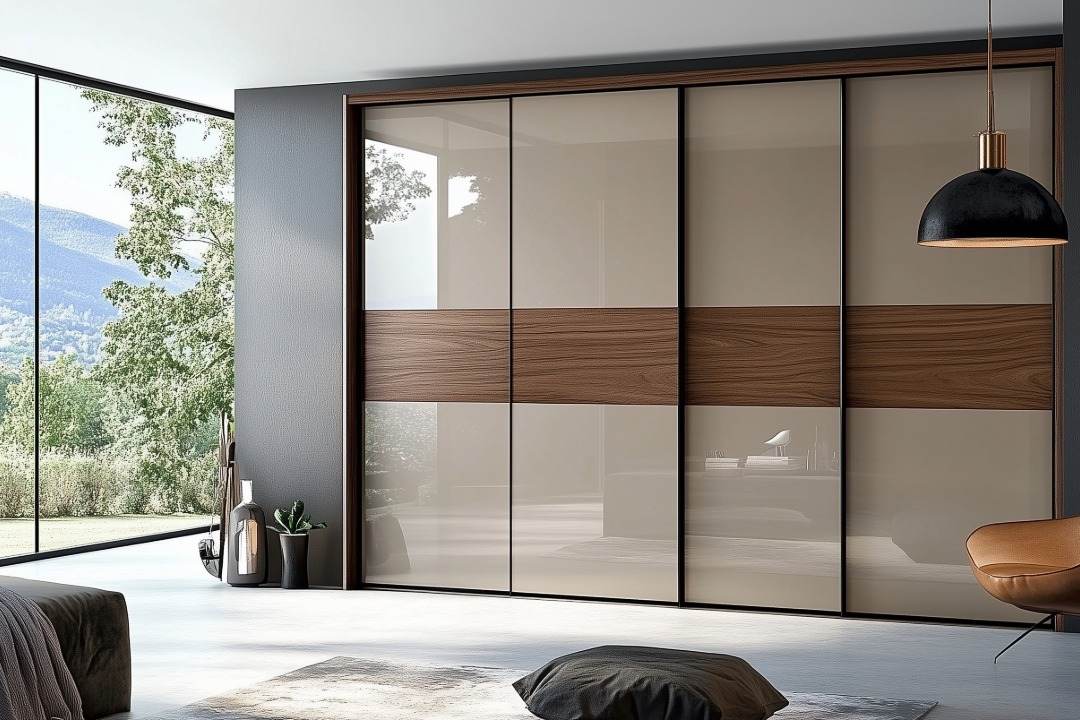
Your wardrobe door is the largest single surface in most bedrooms. It takes up more visual space than the headboard. More than the curtains. More than any wall art you might hang.
Yet most people spend weeks choosing a bed frame and less than ten minutes deciding on their wardrobe door design. The result is a door that looks fine on day one and forgettable by month six. Or worse, a finish that chips, a colour that clashes, or a panel that warps because nobody considered the room’s humidity.
The door is not just a cover. It is the face of your storage system. It sets the tone for the entire bedroom. Choosing it well means matching the finish to your room’s aesthetic, the material to your climate, and the hardware to your daily habits.
Here is a practical framework for making that choice right.
Start With Your Room, Not a Catalogue
The biggest mistake people make is browsing wardrobe door designs online and picking the one that looks best in someone else’s room. What works in a bright, 200-square-foot master bedroom with natural light will look completely different in a compact, north-facing 120-square-foot room in a Hyderabad apartment.
Start with your own space. How much natural light does the room get? What colour are your walls? Is the bed frame dark wood or light upholstery? Is the flooring warm-toned tiles or cool-toned marble?
Your wardrobe door needs to work with these fixed elements. A high-gloss white door in a room with warm wooden flooring creates a disconnected look. A dark walnut finish in a small room with limited light makes the space feel smaller. Context first. Catalogue second.
Understanding Door Finish Types
This is where most of the decision-making happens. The finish determines the look, the feel, the durability, and the maintenance of your wardrobe door. Here are the main options used in Indian homes today.
Laminate Finish. Laminates are thin sheets bonded to the door panel surface. They come in hundreds of colours, textures, and patterns. Matte laminates suit understated bedrooms. Textured laminates mimic natural wood grain without the cost. High-pressure laminates resist scratches and moisture better than their low-pressure counterparts. This is the most versatile and budget-friendly option for modular wardrobe doors.
Acrylic Finish. Acrylic panels deliver a high-gloss, mirror-like surface. They reflect light and make rooms appear larger. The finish is smooth and easy to clean. Acrylic works especially well in modern bedroom interior design where clean lines and reflective surfaces are the goal. The downside is that fingerprints show easily and deep scratches are harder to repair.
PU-Coated Finish. Polyurethane coatings are sprayed onto MDF panels and cured to a hard, even surface. PU finishes are available in matte, satin, and gloss variants. They offer excellent colour consistency and a premium hand-feel. PU is popular for custom wardrobe designs where the client wants a specific colour matched to their bedroom palette.
Veneer Finish. Veneer is a thin slice of natural wood bonded to the panel. It gives the wardrobe the look and warmth of solid wood at a fraction of the cost. Oak, walnut, and teak veneers are popular in Indian homes. Veneer suits traditional and transitional bedroom styles. It requires periodic polishing and should be kept away from direct moisture.
Membrane Finish. A PVC film is vacuum-pressed over an MDF panel, wrapping around grooves and contours. This makes membrane ideal for CNC-routed patterns and shaker-style profiles. Membrane doors are affordable but the PVC layer can lift in hot, humid Indian cities if the adhesive quality is poor.
Glass and Mirror Panels. Frosted glass, lacquered glass, and full-length mirrors all work as wardrobe door surfaces. Mirror doors double as dressing mirrors and visually expand small bedrooms. Glass panels need aluminium or steel framing for support.
Choosing Patterns and Surface Details
A flat, plain door is not the only option. Surface detailing adds character without adding bulk. Here are the most common pattern approaches.
Groove lines. Horizontal or vertical grooves cut into the panel create subtle texture. They break the monotony of a large flat surface without being visually heavy. Groove patterns suit contemporary wardrobe design and pair well with handleless push-to-open mechanisms.
CNC-routed patterns. A CNC machine carves designs into MDF panels. Geometric motifs, floral patterns, and abstract compositions are all possible. CNC doors are finished with PU coating or membrane. They suit both modern and traditional Indian bedroom styles.
Panelled designs. Raised or recessed panel sections within the door create a classic, furniture-like appearance. Shaker-style panels suit farmhouse and transitional aesthetics. Deeper recesses create a more traditional look. Panelled designs work best on hinged doors where the full surface is visible when closed.
Combination designs. Mixing two finishes on the same door adds visual interest. A wood-tone laminate on the lower half with a matte colour on the upper half creates contrast. These combinations require precise manufacturing to ensure clean joints and consistent alignment.
How Material Quality Affects What You See Five Years Later
Here is the part most design blogs skip. Two wardrobe doors can look identical on day one. One still looks new after five years. The other has chipped edges, peeling laminate, and sagging panels.
The difference is not the design. It is the manufacturing.
Panel thickness matters. An 18mm MDF panel holds up better than a 12mm one over time. Edge banding quality matters. Properly sealed edges prevent moisture from entering the panel core. If the edge banding is thin or poorly applied, the laminate lifts from the edges inward within two to three years.
Hardware calibration matters too. A door panel that is even slightly off-square will hang unevenly on its hinges. Over months, that misalignment stresses the hinge plates and causes sagging. On sliding doors, an imprecise panel dimension means the rollers wear unevenly and the door starts dragging.
A manufacturer with in-house production controls every one of these variables. Holzbox, for instance, manufactures wardrobe doors and carcasses under the same roof. The door dimensions match the frame perfectly. The finish is applied in a dust-free environment. The hardware is tested on the actual panel before shipping.
A trading company buying doors from one vendor and frames from another cannot guarantee that level of fit. Small mismatches accumulate. And they show up in how the wardrobe looks and functions after year two.
Matching the Door to the Room’s Purpose
Not every bedroom has the same wardrobe needs. The door design should reflect how the room is used.
Master bedroom. This is your private space. Invest in a finish that brings you joy every morning. Full-length mirror panels, premium veneers, or custom PU colours all work here. Handle design matters. Sleek aluminium profiles or integrated push-to-open mechanisms suit modern home interior design.
Kids’ room. Durability trumps aesthetics. Choose high-pressure laminates that resist scratches and are easy to wipe clean. Bright colours or playful patterns work well. Avoid glass panels entirely. Use soft-close hinges to protect small fingers.
Guest bedroom. A clean, neutral finish keeps the room versatile for different guests. Matte laminates in light tones work best. A single mirror panel adds function without dominating the design.
Compact urban bedroom. Light-coloured doors with a reflective finish make the room feel bigger. Sliding wardrobe doors with mirror or frosted glass panels free up floor space.
Handles, Hardware, and the Details That Matter
The handle is the part of the wardrobe you physically touch every day. Yet it is often chosen as an afterthought.
Recessed handles sit flush with the door surface. They create a clean, unbroken look and prevent clothing from catching on protruding hardware. This style suits sliding wardrobe doors and minimal bedroom aesthetics.
Profile handles run along the top or bottom edge of the door. They offer a comfortable grip without visible hardware on the face of the panel. Profile handles work well on floor-to-ceiling modular wardrobe configurations.
Knobs and bar handles are traditional options that add character. Brass knobs suit vintage styles. Matte black bar handles suit contemporary rooms.
Soft-close mechanisms are non-negotiable. They prevent slamming and protect both the door panel and the frame over years of daily use. Every quality wardrobe manufacturer includes soft-close hardware as standard.
Getting the Proportions Right
A wardrobe door that is too narrow looks fragmented. One that is too wide feels heavy and is harder to operate. Getting the proportions right makes the entire unit feel balanced.
For hinged doors, keep each shutter between 18 and 24 inches wide. Anything wider stresses the hinges and causes sagging. For sliding doors, two panels work for wardrobes up to six feet wide. Three panels suit wider units. The minimum recommended width for a sliding wardrobe is seven feet.
Floor-to-ceiling doors make the wardrobe feel like a wall feature rather than a piece of furniture. This works well in custom wardrobe designs for modern apartments.
Make the Decision Once and Make It Well
Your wardrobe door will be opened and closed thousands of times over its lifetime. Choose a finish that matches your room. Choose a material that suits your climate. Choose hardware that survives daily use. And choose a manufacturer who builds it with factory-level precision.
A well-chosen wardrobe door does not draw attention to itself. It simply fits. And it still looks right five years from now.
Frequently Asked Questions
Which wardrobe door finish is best for humid Indian cities?
High-pressure laminates and acrylic finishes handle humidity best. Both are non-porous and resist moisture absorption. Veneer and membrane finishes are more vulnerable in cities like Mumbai, Chennai, and Kochi where indoor humidity stays high during monsoon months. If you prefer the look of natural wood, use veneer only in air-conditioned bedrooms and ensure the edges are fully sealed. For kitchens and bathrooms, avoid MDF-based doors without waterproof edge banding.
How do I choose between a matte and glossy wardrobe door?
Matte finishes hide fingerprints and minor scratches better. They suit bedrooms with warm lighting and textured decor. Glossy finishes reflect light and make small rooms feel larger. They suit modern, minimal bedroom interior design. The trade-off is maintenance. Glossy surfaces show every smudge and require regular wiping. Matte surfaces are more forgiving in daily use. If your bedroom gets a lot of natural light, matte often looks more elegant. If it is a darker room, gloss helps brighten the space.
Can I mix different finishes on a multi-door wardrobe?
Yes. Mixing finishes is a popular approach in contemporary wardrobe design. For example, you can use a wood-tone laminate on the outer shutters and a mirror panel on the centre door. Or alternate between a matte colour and a textured finish for a dual-tone effect. The key is consistency in undertone. Mix warm finishes with warm finishes. Do not pair a cool grey with a warm walnut unless there is a deliberate design rationale. A skilled modular wardrobe manufacturer will present finish combinations as part of the design consultation.
What door design works best for a small bedroom?
Sliding doors with light-coloured or reflective finishes work best. A single mirror panel on one door visually doubles the room’s depth. Avoid dark colours and heavy textures that make the wardrobe dominate the space. Floor-to-ceiling panels without visible handles create a streamlined look that blends the wardrobe into the wall. In very compact rooms, consider frosted glass panels that let in visual depth without fully exposing the contents.
How do I ensure my wardrobe door lasts ten years or more?
Three factors determine longevity. First, the panel material. Use 18mm MDF for painted or membrane doors and BWR-grade plywood for veneer or laminate doors in humid areas. Second, the edge banding. All exposed edges must be sealed with PVC or ABS banding applied under heat and pressure. Third, the hardware. Invest in European soft-close hinges for swing doors and aluminium tracks with sealed ball-bearing rollers for sliding doors. Factory-built doors with in-house quality control consistently outperform on all three factors because every variable is tested before the door reaches your home. In-house manufacturing ensures the panel, edge banding, and hardware are tested as a complete system, not assembled from mismatched parts.