
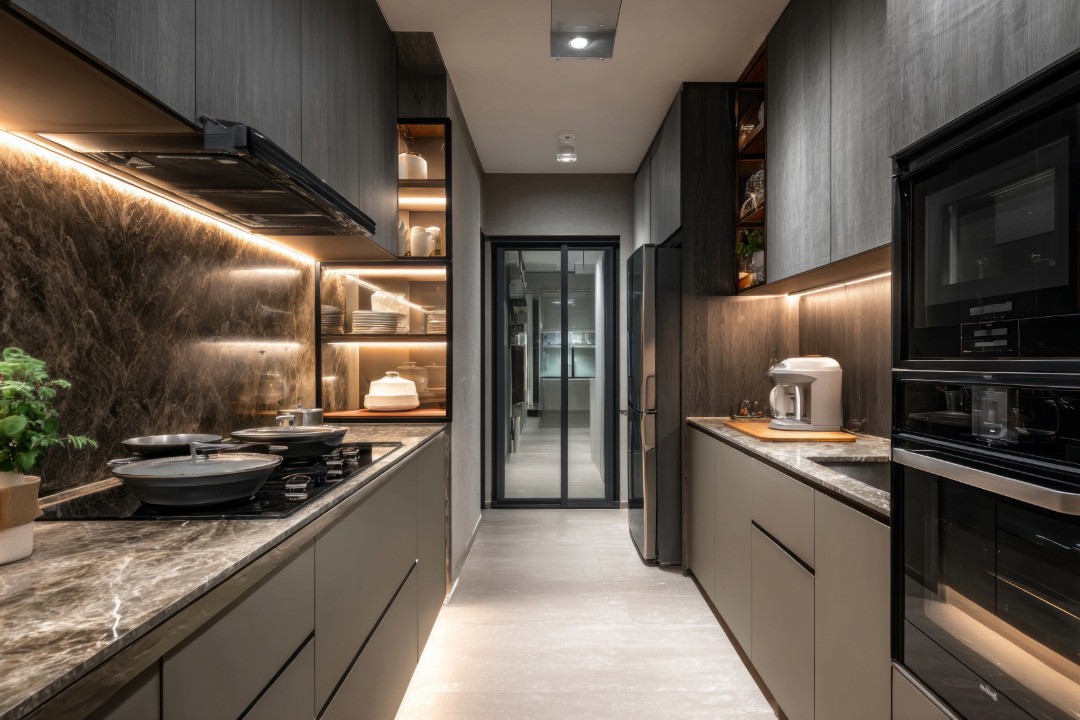
This question comes up in every Indian household that is building a new home or renovating an existing one. The hesitation is understandable. A modular kitchen costs more upfront than a carpenter-built alternative. The price gap can be 30 to 50 percent or even higher depending on the materials and hardware chosen.
So the question is fair. Is that premium justified? Does a modular kitchen deliver enough value over its lifetime to make the higher initial spend a smart decision?
The short answer is yes for most homeowners. But the long answer requires looking at costs, durability, daily convenience, maintenance, resale value, and what you actually pay over ten to fifteen years of ownership. This blog covers all of it.
The Upfront Cost Reality
A basic modular kitchen for a standard L-shaped layout in India starts at around 1.5 to 2.5 lakhs. A mid-range version with BWR plywood carcass, laminate shutters, branded hardware, and a granite countertop typically costs 3 to 5 lakhs. Premium kitchens with PU finishes, quartz countertops, and imported fittings can go beyond 6 to 8 lakhs.
A carpenter-built kitchen for the same layout starts at roughly 80,000 to 1.5 lakhs. That is a meaningful difference, especially for first-time homeowners on a tight budget.
But this comparison is incomplete without looking at what you get for each price point. The modular kitchen includes factory-cut panels, sealed edges, branded soft-close hardware, a structured warranty, and professional installation. The carpenter kitchen includes hand-cut boards, manually applied edge strips, locally sourced hardware, no formal warranty, and on-site construction that takes two to four weeks.
The upfront cost tells you what leaves your bank account today. The lifecycle cost tells you what the kitchen actually costs over its useful life.
Lifecycle Cost: The Number That Matters
A well-built modular kitchen with BWR plywood carcass and quality hardware lasts 12 to 15 years with minimal maintenance. Over that period, you may need to replace a hinge or two. Maybe tighten a drawer runner. Maybe touch up a laminate edge. These are minor costs.
A carpenter-built kitchen with basic hardware and manual edge banding typically shows wear within 3 to 5 years. Hinges loosen. Drawer runners jam. Laminate peels near the sink. The board swells in humid conditions. Each repair costs time and money. After 7 to 8 years, many homeowners end up replacing the entire kitchen.
Here is a simple calculation. A modular kitchen costing 4 lakhs that lasts 12 years costs roughly 33,000 per year. A carpenter kitchen costing 1.5 lakhs that lasts 6 years before needing replacement costs 25,000 per year in the first cycle. But when you add the cost of the second build plus the repairs during the first cycle, the total spend over 12 years often exceeds the modular kitchen investment.
Lifecycle cost, not sticker price, is the real measure of value.
Daily Convenience You Stop Noticing
The daily experience of using a modular kitchen is different from using a carpenter-made one. The difference is not dramatic on any single day. But it compounds over thousands of uses.
Soft-close hinges mean cabinet doors shut quietly. No slamming. No startling the baby during an early morning tea run. Full-extension drawer runners mean you see everything in the drawer without bending and reaching into dark corners. Pull-out shelves in base cabinets bring heavy vessels to you instead of you going to them.
Cutlery trays keep spoons and spatulas organised. Bottle pull-outs hold oils and sauces in a narrow, accessible column. Corner carousels recover dead space that a carpenter-built kitchen simply wastes.
None of these features are revolutionary on their own. But together they save five to ten minutes of frustration every single day. Over a year, that is 30 to 60 hours of recovered time. Over a decade, it is significant.
A good modular kitchen design eliminates the small daily annoyances that make cooking feel like a chore. That intangible value does not show up in a cost spreadsheet. But it shows up in how you feel about your kitchen every morning.
Maintenance and Repair Costs
Maintenance is where the modular kitchen advantage is most measurable.
Factory-applied edge banding seals every exposed panel surface. Moisture cannot enter the board core through the edges. This prevents the swelling and warping that plague carpenter kitchens in humid Indian cities.
CNC-cut panels fit together with sub-millimetre precision. Doors hang straight. Drawers glide without rubbing. Countertops sit flush against the wall. When everything fits correctly from day one, there is less stress on the joints and hardware. Fewer stress points mean fewer failures over time.
Branded hardware from companies like Hettich or Blum is rated for 50,000 to 100,000 cycles. A cabinet opened and closed five times a day will hit 50,000 cycles in roughly 27 years. That is well beyond the typical kitchen lifespan.
Carpenter-built kitchens use locally sourced hardware that is rarely cycle-rated. Hinges loosen within a year. Runners start jamming after six months of daily use. Each repair requires calling the same carpenter and hoping he is available. If he has moved on, you start over with someone unfamiliar with how the kitchen was built.
Over a 10-year period, a modular kitchen typically needs zero to two minor service visits. A carpenter kitchen may need five to eight, plus one partial or full rebuild. That gap represents real money and real inconvenience.
Impact on Property Resale Value
A well-designed modular kitchen adds measurable value when you sell your home. Real estate industry data from Indian urban markets suggests that homeowners recover 60 to 80 percent of their modular kitchen investment during resale.
Buyers view a factory-finished kitchen as a sign of quality. It signals that the homeowner invested in durable, well-planned interiors. It also means the buyer does not need to budget for an immediate kitchen renovation after moving in. That convenience translates into a higher offer price.
A carpenter-built kitchen that is five years old with visible wear does not add the same value. Buyers see it as something they will need to replace. That replacement cost gets mentally deducted from their offer.
For homeowners in cities like Hyderabad, Bangalore, Mumbai, Pune, and Delhi where property resale cycles are shorter, a modular kitchen is not just a comfort upgrade. It is a genuine home interior design investment that protects property value.
Relocatability: Taking Your Kitchen With You
This benefit is unique to modular kitchens and often overlooked. Because modular units are independent boxes assembled on site, they can be disassembled, packed, and reinstalled in a new home.
If you move apartments every five to seven years, as many professionals in Indian metros do, a modular kitchen travels with you. The modules may need minor adjustments to fit the new room dimensions. But the carcass, shutters, hardware, and most accessories remain usable.
A carpenter-built kitchen is fixed to the walls. Dismantling it destroys most of the cabinets. Laminate cracks. Joints break. Hardware bends. You leave the old kitchen behind and build a new one from scratch.
The ability to relocate your kitchen eliminates one full kitchen build cost over a 15-year period. For a family that moves once in that timeframe, this alone can save two to three lakhs.
The Manufacturing Quality Factor
Two modular kitchens at the same price can deliver very different value depending on how they are built. A kitchen assembled from components sourced from five different vendors lacks the integration of one built entirely in a single factory.
A modular kitchen manufacturer with in-house production controls every variable. The panel dimensions match the hardware specifications. The edge banding bonds properly because it is applied in a controlled environment. The shutter aligns with the carcass because both were cut on the same CNC machine.
Holzbox builds modular kitchens this way. Designing, manufacturing, and quality-testing under one roof ensures that every module performs as a system, not as a collection of loosely matched parts. This integrated approach is what delivers the durability and precision that justify the investment over a decade of daily use.
A kitchen is only as good as the weakest link in its production chain. When one company owns the entire chain, every link is strong.
When a Modular Kitchen May Not Be Worth It
Honesty matters. There are situations where the modular premium does not make financial sense.
If you are furnishing a rental property for tenants and plan to use the cheapest possible materials, a carpenter-built kitchen at 80,000 to one lakh may serve the purpose for three to four years. The tenants are unlikely to notice or care about soft-close hinges.
If your total home renovation budget is under two lakhs for the entire house, spending three to four lakhs on the kitchen alone creates an imbalance. In this case, a semi-modular approach using plywood carcass with basic fittings may offer a better compromise.
If you are planning to demolish and rebuild the kitchen space entirely within two to three years, investing in a full modular kitchen now is premature. Wait until the civil work is finalised.
For every other scenario, particularly for owner-occupied homes where the kitchen will be used daily for a decade or more, a factory-built modular kitchen delivers clear long-term value.
The Verdict
A modular kitchen is not cheap. But cheap is not the same as affordable. Affordable means getting real value for every rupee over the full life of the product.
When you account for the longer lifespan, lower maintenance, better daily experience, higher resale recovery, and relocatability, a modular kitchen from a quality manufacturer costs less per year of use than a carpenter-built alternative in most real-world scenarios.
The investment is worth it. But only when the kitchen is built right. Choose the right materials. Choose tested hardware. Choose a kitchen interior designer who understands Indian cooking. And choose a manufacturer who builds in their own factory.
That combination turns a one-time expense into a lasting asset.
Frequently Asked Questions
How long does a modular kitchen last in Indian conditions?
A well-built modular kitchen with BWR plywood carcass, factory-sealed edges, and branded hardware lasts 12 to 15 years with minimal maintenance. The key factors are material grade, edge banding quality, and hardware durability. Kitchens in high-humidity coastal cities last just as long when BWR plywood is used for wet-zone cabinets. Carpenter-built kitchens with basic materials typically need replacement within 5 to 8 years under the same conditions.
Does a modular kitchen increase home resale value?
Yes. Industry data from Indian urban markets shows that homeowners recover 60 to 80 percent of their modular kitchen investment during resale. Buyers view a factory-finished kitchen as a quality signal. It reduces their need for immediate renovation after moving in. The resale advantage is strongest when the kitchen uses mid-range to premium materials without excessive over-specification relative to the property value.
Is a modular kitchen better than a carpenter kitchen for Indian cooking?
For most households, yes. Modular kitchens are designed with the work triangle, dedicated storage zones, and heat-resistant countertops that handle daily Indian cooking demands. Factory-sealed edges resist moisture from steam and water splashes. Branded hardware withstands the high cycle counts that come with Indian cooking frequency. Carpenter kitchens can match some of these features if the homeowner provides branded hardware and high-grade plywood. But the precision of factory production and the warranty coverage remain difficult to replicate on site.
Can I get a good modular kitchen under 2 lakhs?
Yes, but with trade-offs. A compact straight or small L-shaped kitchen with HDHMR or MDF carcass, laminate shutters, standard hardware, and a granite countertop can fit within 1.5 to 2 lakhs. The key is to prioritise structure over aesthetics. Use the budget on the carcass and hardware first. Choose a simpler shutter finish. Skip non-essential accessories. A manufacturer with in-house manufacturing can often offer better pricing at this budget because factory-direct production eliminates dealer margins.
What should I check before investing in a modular kitchen?
Five things. First, verify the carcass material grade. BWR plywood for wet zones is the minimum standard. Second, confirm the hardware brand and cycle rating. Third, ask for an itemised quotation that separates every component. Fourth, check whether the company manufactures in their own factory or outsources production. Fifth, understand the warranty terms clearly. What is covered, for how long, and what is the response time for service calls. These five checks protect your investment and ensure the kitchen delivers the value it promises.