
Walk into any furniture showroom in India and you will hear this question within the first five minutes. MDF or plywood? The salesperson will have a preference. Your carpenter will have a different one. Your neighbour who recently furnished their home will have yet another opinion.
The truth is neither material is universally better. Each one has clear strengths and real weaknesses. The right choice depends on where the furniture will be placed, how heavily it will be used, and what kind of finish you want.
This guide breaks down both materials honestly. No brand bias. No sales pitch. Just practical information from a manufacturing perspective so you can make a decision that holds up for years.
What Exactly Is MDF?
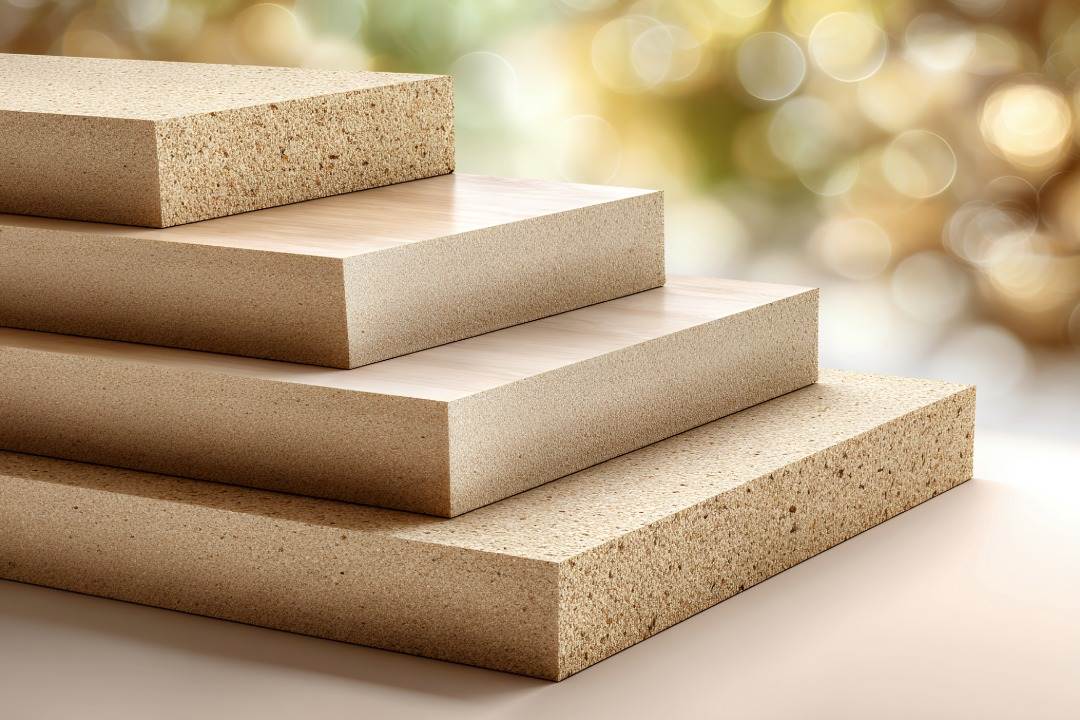
MDF stands for Medium Density Fibreboard. It is made by breaking down hardwood and softwood into fine fibres. These fibres are mixed with resin and wax, then pressed under high heat and pressure into flat, dense panels.
The result is a smooth, uniform board with no visible grain. There are no knots. No natural variations. The surface is consistent from edge to edge. This makes MDF ideal for painted finishes, CNC-routed patterns, and decorative detailing where precision matters.
MDF is widely used in modular kitchen shutters, TV unit panels, wall cladding, CNC jali designs, and budget furniture where appearance matters more than structural load. It is typically more affordable than plywood of comparable thickness.
What Exactly Is Plywood?
Plywood is made from thin layers of wood veneer stacked on top of each other. Each layer is placed with its grain running perpendicular to the one below it. This cross-grain construction is what gives plywood its strength.
The layers are bonded with adhesive under pressure. The more layers, the stronger the board. Plywood comes in several grades. MR grade (Moisture Resistant) handles normal indoor humidity. BWR grade (Boiling Water Resistant) is built for kitchens and bathrooms. Marine grade handles extreme moisture and is suitable for outdoor or near-water applications.
Plywood is the go-to material for wardrobe carcasses, kitchen cabinets, bed frames, dining tables, bookshelves, and any furniture that needs to bear weight or resist moisture over time. When people search for the best wood for furniture in India, plywood consistently ranks at the top for structural applications. Using plywood for wardrobes, beds, and kitchen base units is standard practice among experienced manufacturers.
Strength and Load-Bearing Capacity
This is where plywood wins outright. The cross-laminated layers distribute load evenly across the board. A plywood shelf can hold stacked books, dishes, and appliances without sagging. A plywood wardrobe frame can support years of heavy use without loosening at the joints.
MDF is dense but brittle under stress. It does not flex. It cracks. A long MDF shelf loaded with heavy items will bow over time. Hinges and screws also grip less firmly in MDF compared to plywood. Repeated opening and closing of cabinet doors made from MDF can loosen the hardware faster.
If your home furniture needs to carry weight or handle daily physical use, plywood is the safer material choice.
Moisture Resistance
Indian homes face unique moisture challenges. Monsoon humidity in coastal cities like Mumbai, Chennai, and Kochi can push indoor levels above 80 percent. Kitchens generate steam and water splashes daily. Bathrooms stay damp for hours after use.
Standard MDF absorbs moisture quickly through exposed edges. Once water enters, the fibres swell and the board warps. This damage is usually permanent. You cannot sand it back to shape. Even moisture-resistant MDF has limits and should not be used in areas with direct water exposure.
Plywood handles moisture far better. BWR-grade plywood resists swelling even in high-humidity zones. Marine-grade plywood can withstand prolonged water contact without delaminating. For modular kitchens, bathroom vanities, and balcony furniture in India, plywood is the practical choice.
Surface Finish and Aesthetics
Here is where MDF takes the lead. Its smooth, grain-free surface accepts paint beautifully. High-gloss lacquered finishes, matte pastels, PU-coated surfaces, and CNC-routed decorative patterns all look better on MDF than on plywood.
Plywood has a natural grain that shows through thin paint layers. Achieving a perfectly smooth painted finish on plywood requires additional preparation. Primer coats, sanding, and sometimes a layer of putty are needed before the final colour goes on.
If your furniture demands a flawless painted finish or intricate design detailing, MDF delivers a cleaner result. This is why MDF is popular for wardrobe shutters, wall-mounted units, decorative panels, and TV unit facades in contemporary Indian homes. Using MDF for kitchen shutter panels has also become standard in modern modular kitchens across cities like Hyderabad, Bangalore, and Delhi.
Machinability and Design Flexibility
MDF is easier to cut, shape, and route than plywood. CNC machines move through MDF cleanly without splintering. Complex patterns, curves, and jali designs come out sharp and precise.
Plywood is harder to machine for detailed work. The layered structure can splinter at the edges when cut into intricate shapes. Curved cuts sometimes separate the layers if not handled carefully.
For furniture with decorative elements like temple back panels, feature wall cladding, or ornate cabinet doors, MDF is the preferred material. For structural frames, carcasses, and load-bearing components, plywood remains the better option.
Cost Comparison
MDF is generally 20 to 40 percent more affordable than plywood of the same thickness. A standard 18mm MDF board costs less than an equivalent BWR-grade plywood panel. This price gap makes MDF attractive for budget-conscious projects, rental properties, and large-scale installations where surface area is high.
However, the upfront price is not the whole story. MDF furniture in moisture-prone areas may need replacement within three to five years. Plywood furniture in the same location can last ten to fifteen years. The long-term cost per year of use often favours plywood for critical applications.
Smart home interior design balances both materials. Use plywood where strength and moisture resistance matter. Use MDF where aesthetics and budget efficiency are the priority. This combined approach gives you the best value.
Where to Use MDF in Your Home
MDF works best in dry, climate-controlled environments where the furniture does not bear heavy loads. Ideal applications include wardrobe shutter panels with lacquered or laminate finishes, TV unit facades and entertainment centres, CNC-routed room dividers and jali screens, decorative wall panelling and headboard panels, study table surfaces with laminate overlay, and shoe rack shelving in covered entryways.
In each of these applications, the furniture sits in a dry zone. It does not carry excessive weight. And the finish quality matters as much as the structure. MDF delivers well in these conditions.
Where to Use Plywood in Your Home
Plywood is the right material anywhere strength, screw-holding ability, or moisture resistance is needed. Use it for modular kitchen carcasses and base units, wardrobe internal frameworks and shelves, bed frames and headboard structures, dining tables and study desk frames, bathroom vanities and under-sink cabinets, and bookshelf frames that carry real weight.
In all these applications, the furniture must handle physical stress, moisture, or both. Plywood performs reliably over years of daily use in Indian households.
The Manufacturer’s Perspective
Here is something most comparison guides skip. The quality of both MDF and plywood varies enormously depending on the source. Cheap MDF crumbles at the edges. Low-grade plywood delaminates within months. The material only performs as well as the manufacturing behind it.
When your furniture comes from a company that operates its own factory, material selection is not a gamble. The production team tests boards before they enter the line. Edge banding is applied properly to seal moisture-vulnerable surfaces. Hardware is matched to the material density so screws hold firm for years.
This is the advantage of working with a manufacturer rather than a trading company. A trader sources boards from whoever offers the lowest price. A manufacturer like Holzbox selects materials based on performance data from its own production floor. That distinction shows up in how the furniture performs three, five, and ten years after installation.
The Smart Approach: Use Both
The best-furnished Indian homes do not pick one material and use it everywhere. They use both strategically.
Plywood for the kitchen carcass. MDF for the kitchen shutter. Plywood for wardrobes and their internal framework. MDF for the wardrobe door with a CNC pattern. Plywood for the bookshelf structure. MDF for the decorative back panel.
This approach gives you the structural reliability of plywood where it matters and the aesthetic precision of MDF where it shows. It also optimises your budget by using the more expensive material only where it is truly needed.
A good modular furniture manufacturer will guide you through this decision for every component of every unit. That is the kind of material intelligence that separates factory-built furniture from carpenter-assembled pieces. Understanding which material works where is half the battle when choosing the best wood for furniture in your home.
Frequently Asked Questions
Is MDF safe to use in Indian kitchens?
Standard MDF is not recommended for kitchen carcasses or any surface that may come in contact with water or steam. The material absorbs moisture quickly and swells permanently. However, MDF works well for kitchen shutter panels when paired with a moisture-resistant laminate or PU coating and when the carcass itself is made from BWR-grade plywood. The key is to use MDF only for components that stay dry and seal all exposed edges properly during manufacturing.
Which is better for wardrobes in India, MDF or plywood?
The best approach is to combine both. Use plywood for the wardrobe carcass, shelves, and internal framework. These parts carry weight and need screw-holding strength. Use MDF for the shutter panels, especially if you want a painted, lacquered, or CNC-detailed finish. This combination gives you a wardrobe that is structurally strong, visually refined, and cost-effective.
Does MDF furniture last as long as plywood furniture?
In dry, controlled environments, well-made MDF furniture can last five to eight years with careful use. Plywood furniture in the same conditions can last ten to fifteen years or longer. The lifespan gap widens in humid or moisture-prone areas where MDF degrades faster. The quality of manufacturing also matters. Factory-built furniture with proper edge banding and sealed surfaces lasts significantly longer than loosely assembled pieces.
Can I use MDF for bathroom furniture?
It is not advisable. Bathrooms have high humidity, direct water contact, and poor ventilation in many Indian homes. Standard MDF will swell and deteriorate quickly in these conditions. Even moisture-resistant MDF is not designed for sustained wet environments. Use BWR-grade or marine-grade plywood for bathroom vanities, mirror cabinets, and storage units. Always ensure the plywood is properly sealed with waterproof laminate or epoxy for maximum durability.
How do I check whether my furniture uses good quality MDF or plywood?
Look at the edges. Quality MDF has a uniform, fine-grained cross-section with no visible voids or air pockets. Quality plywood shows evenly spaced layers with no gaps between veneers. Press a nail into an off-cut and see if the material splits or holds firm. Also ask your furniture provider for the board grade. Reputable manufacturers specify whether they use MR, BWR, or marine-grade plywood and standard or moisture-resistant MDF. A company with in-house manufacturing will be transparent about material grades because quality control happens on their own production floor.