
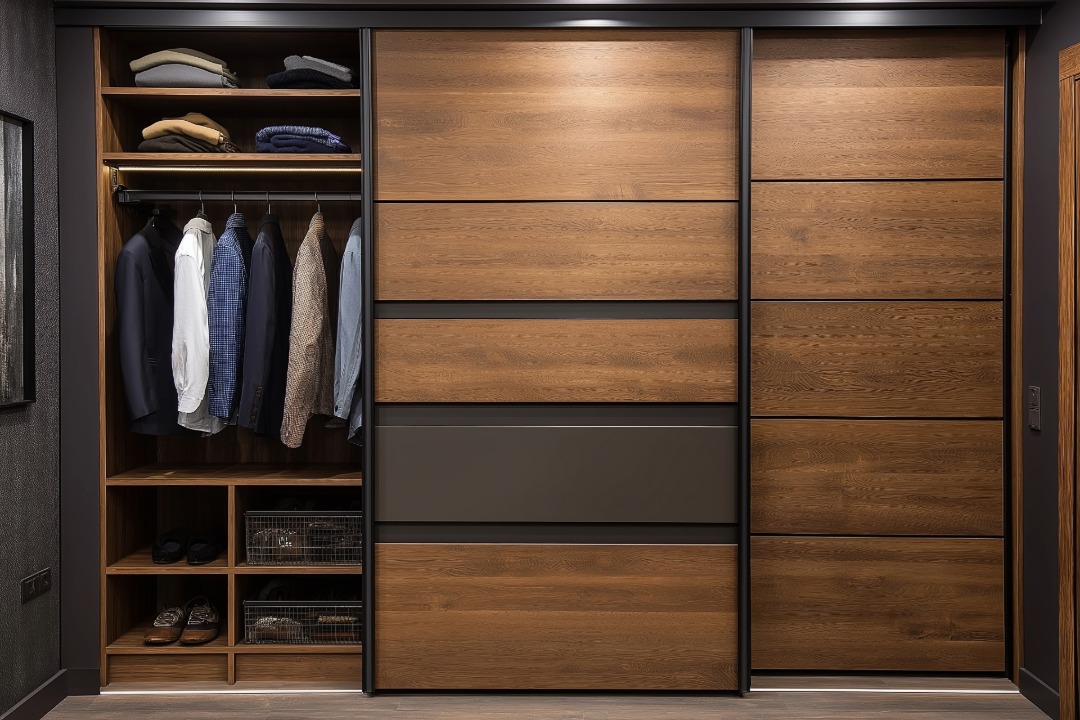
The wardrobe is the most used piece of furniture in your bedroom after the bed. You open it every morning. You close it every night. You dig through it when you are running late. You reorganise it every few months when it starts overflowing.
And yet, most people spend more time choosing their bed frame than deciding how their wardrobe should be built. The choice between a modular wardrobe and a traditional carpenter-made wardrobe deserves more thought than it usually gets. Because the build method affects everything. How long it lasts. How well it uses space. How easy it is to maintain. Whether you can take it with you when you move.
This guide compares both options honestly. Not to push one over the other. But to help you match the right build type to your room, your lifestyle, and your budget.
What Is a Modular Wardrobe?
A modular wardrobe is manufactured in a factory using pre-engineered components. Panels are cut on CNC machines. Edge banding is applied with automated equipment. Internal fittings like shelves, drawers, hanging rods, and accessories are sized to match the module dimensions precisely.
The wardrobe arrives at your home as a set of independent boxes. Each box is a module. An installation team assembles the modules on site, levels them, secures them to the wall, and fits the doors. The entire process takes one to two days.
Modular wardrobes are available with sliding doors, hinged doors, or a combination of both. They can be floor-standing or wall-mounted. They can span a full wall or fit into an alcove. The internal layout is customisable during the design phase.
What Is a Traditional Wardrobe?
A traditional wardrobe is built on site by a carpenter. The carpenter buys plywood, laminate, hardware, and edge strips from local suppliers. All cutting, assembling, and finishing happens inside your bedroom over a period of one to three weeks.
Traditional wardrobes are permanently fixed to the wall. The carpenter builds the carcass directly against the masonry and attaches the shelves and hanging rods within that structure. The design is flexible because the carpenter can adapt to any wall shape, ceiling height, or corner angle during construction.
This method has been the default in Indian homes for decades. It is familiar. It is widely available. And for many homeowners, it remains the first instinct when furnishing a new bedroom.
Precision and Build Quality
This is the most significant difference between the two methods.
A factory-built modular wardrobe is cut to sub-millimetre accuracy. Every panel is identical in dimension. Doors align perfectly. Drawers fit flush. Internal shelves sit level without shimming. Edge banding is applied under controlled temperature and pressure, creating a strong moisture seal on every exposed surface.
A carpenter works with hand tools or basic power equipment. Even a skilled carpenter operates at tolerances of 1 to 2 millimetres. Over the width of a six-foot wardrobe, these small variations accumulate. Doors may not close evenly. Drawers may rub against the frame. Edges may start peeling within a year near areas that collect moisture.
The precision gap is most visible in hardware performance. A soft-close hinge installed at the exact factory-specified depth operates smoothly for years. The same hinge installed 2 millimetres off begins to stress the mounting screws. Within a year, it loosens. The door sags.
Storage Efficiency and Internal Layout
Modular wardrobes come with purpose-designed internal fittings. Adjustable shelves. Full-extension drawers on ball-bearing runners. Trouser pull-outs. Tie and belt racks. Saree rods. Shoe shelves. Laundry hamper modules. Every component is sized to fit the module width and depth exactly.
Traditional wardrobes offer fixed internal layouts. The carpenter builds shelves at set heights. Drawers use basic channel runners. There are no pull-out accessories unless the homeowner buys them separately and the carpenter fits them manually. The internal configuration rarely changes after the wardrobe is built.
For Indian households that store sarees, suits, heavy blankets, and seasonal clothing alongside everyday wear, the modular approach works better. A dedicated long-hang section for sarees and kurtas. A separate short-hang zone for shirts and blouses. A shelf stack for folded items. Pull-out trays for jewellery and accessories. This level of organisation is standard in a well-planned modular wardrobe design.
A carpenter can build some of these features. But the fit and finish of factory-made internal fittings is consistently better because every component is manufactured to the same dimensional standard.
Customisation Flexibility
Traditional wardrobes win on dimensional flexibility. A carpenter can build to any size, any shape, and any wall configuration. Irregular corners, sloped ceilings, exposed beams, and non-standard room heights are handled on the spot.
Modular wardrobes are built in standard module widths. If your wall does not divide evenly into standard sizes, filler panels are used to cover the gaps. The result is functional but not as seamless as a wall-to-wall carpentry build.
However, a modular wardrobe manufacturer with in-house production can build custom-width modules. They adjust the panel dimensions to match your exact wall width. They produce non-standard drawer widths and shelf depths when needed. This flexibility is not available from companies that sell only pre-made catalogue modules.
On finish and aesthetic customisation, modular wardrobes offer a wider range. Laminate, acrylic, PU-coated, membrane, veneer, mirror, and glass panel options are all available from the factory. A carpenter is limited to the laminates and veneers available at the local supplier.
Installation Time and Disruption
A modular wardrobe installs in one to two days. The modules arrive pre-built. The team positions them, secures them, mounts the doors, and adjusts the fittings. There is minimal dust and no cutting on site.
A traditional wardrobe takes one to three weeks. The carpenter cuts plywood in your bedroom. Sawdust covers the floor, the bed, and everything else in the room. The sound of power tools fills the house for days. You need to supervise progress, manage material deliveries, and coordinate with the carpenter’s schedule.
For families living in the home during the project, the disruption gap is significant. A modular installation is a minor inconvenience. A traditional build turns your bedroom into a workshop.
Hardware and Functional Performance
Modular wardrobes use branded hardware. Soft-close hinges from Hettich or Blum. Full-extension drawer runners. Heavy-duty hanging rods. Smooth-glide sliding mechanisms with anti-jump clips. This hardware is rated for tens of thousands of cycles and tested on the actual panels before shipping.
Traditional wardrobes use locally sourced hardware. Basic butt hinges without soft-close. Roller-type drawer channels that jam after a few months. Lightweight hanging rods that bend under the weight of heavy winter clothes. The hardware works initially but degrades faster under daily use.
The hardware is the part of the wardrobe you interact with physically every single day. It determines whether the experience feels smooth or frustrating. This single factor often justifies the premium of a modular wardrobe over its traditional counterpart.
Durability and Maintenance
A well-built modular wardrobe with BWR plywood carcass and factory-sealed edges lasts 12 to 15 years. The sealed edges prevent moisture ingress. The precision fit reduces stress on joints. The branded hardware maintains its operation throughout the wardrobe’s life.
A traditional wardrobe built with good plywood can also last long. But manually applied edge banding peels sooner. Basic hardware loosens faster. And the overall fit quality depends entirely on the carpenter’s skill level on that particular project.
Maintenance tells the same story. A modular wardrobe needs almost no maintenance. A traditional wardrobe may need hinge tightening, edge re-gluing, and channel replacement within the first five years.
Cost Comparison
Traditional wardrobes cost less upfront. A basic carpenter-built wardrobe costs 30 to 50 percent less than a comparable modular unit.
A mid-range modular wardrobe for a standard bedroom wall costs between 40,000 and 1.5 lakh rupees depending on size, material, and finish. A traditional wardrobe for the same wall costs 25,000 to 80,000 rupees.
But the total cost of ownership over ten years favours modular. Fewer repairs. No hardware replacements. Better finish retention. And if you relocate, the modular wardrobe travels with you. The traditional one stays behind.
Relocatability
This is a decisive factor for many Indian homeowners. Professionals in cities like Hyderabad, Bangalore, Mumbai, and Delhi move apartments every five to seven years. Families in transferable government or corporate jobs move even more frequently.
A modular wardrobe can be disassembled, packed, and reinstalled in a new home. The modules may need minor adjustments for the new room dimensions. But the carcass, internal fittings, doors, and hardware remain fully reusable.
A traditional wardrobe is fixed to the wall. Dismantling it destroys the carcass. Laminate cracks. Joints break. The wardrobe you spent months planning and building is left behind when you move.
For anyone who may relocate within the next decade, the ability to carry your wardrobe with you is a significant financial and practical advantage.
The Manufacturing Quality Factor
Two modular wardrobes at the same price can perform very differently depending on how they are built. A wardrobe assembled from parts sourced from multiple vendors lacks the integration of one built entirely in a single factory.
Holzbox manufactures modular wardrobes in its own production facility. Panels, edge banding, internal fittings, and door components are all produced, tested, and quality-checked under one roof. This means every module fits precisely. Every drawer glides smoothly. Every door hangs straight from the first day.
A company that outsources production to separate fabricators for panels, shutters, and hardware cannot guarantee this level of consistency. The components may work individually but perform poorly as a system because they were never tested together.
Which One Should You Choose?
Choose a traditional wardrobe if your room has highly irregular walls that standard modules cannot fit, your budget is very tight, and you have access to a highly skilled carpenter whose previous work you have seen and verified.
Choose a modular wardrobe if you value factory precision and consistent finish quality, you want branded hardware with reliable performance, you may relocate within the next decade, your bedroom interior design calls for a clean, modern aesthetic, and you want a warranty backed by the manufacturer.
For most urban Indian homes in 2026, a factory-built modular wardrobe offers better long-term value. The upfront premium pays for itself through lower maintenance, better daily function, and the ability to relocate the unit when you move.
Frequently Asked Questions
How long does a modular wardrobe last compared to a traditional one?
A modular wardrobe with BWR plywood carcass and branded hardware lasts 12 to 15 years with minimal maintenance. A traditional wardrobe with similar plywood but basic hardware typically shows wear within 4 to 6 years. The lifespan difference comes from factory-sealed edges that prevent moisture damage and precision-installed hardware that maintains alignment over thousands of daily use cycles.
Is a modular wardrobe more expensive than a traditional wardrobe?
Yes, the upfront cost is 30 to 50 percent higher. A mid-range modular wardrobe costs 40,000 to 1.5 lakh rupees depending on size and finish. A comparable traditional wardrobe costs 25,000 to 80,000 rupees. However, the total cost over ten years often favours modular because it avoids repair expenses, hardware replacements, and the cost of building a new wardrobe if you relocate.
Can a modular wardrobe fit any room shape?
Standard modular wardrobes use fixed-width modules. They fit most regular rooms well. For irregular walls, angled corners, or non-standard ceiling heights, you need a manufacturer that builds custom-width modules. A company with in-house manufacturing can adjust panel sizes to match your exact dimensions. Companies selling only catalogue-size modules cannot offer this flexibility.
Is it possible to move a modular wardrobe to a new home?
Yes. Modular wardrobes are designed as independent boxes that can be disassembled, transported, and reinstalled. The carcass, doors, drawers, and most accessories remain reusable. Minor adjustments may be needed for the new room. Traditional wardrobes are fixed to walls and typically get damaged during removal, making relocation impractical.
What should I look for when buying a modular wardrobe in India?
Check the carcass material. BWR plywood is the best option for home interior design in humid conditions. Confirm the hardware brand and soft-close rating. Ask whether the company manufactures in their own factory or outsources production. Review the internal layout and ensure it matches your actual storage needs. Finally, understand the warranty terms and after-sales support policy before placing the order.