
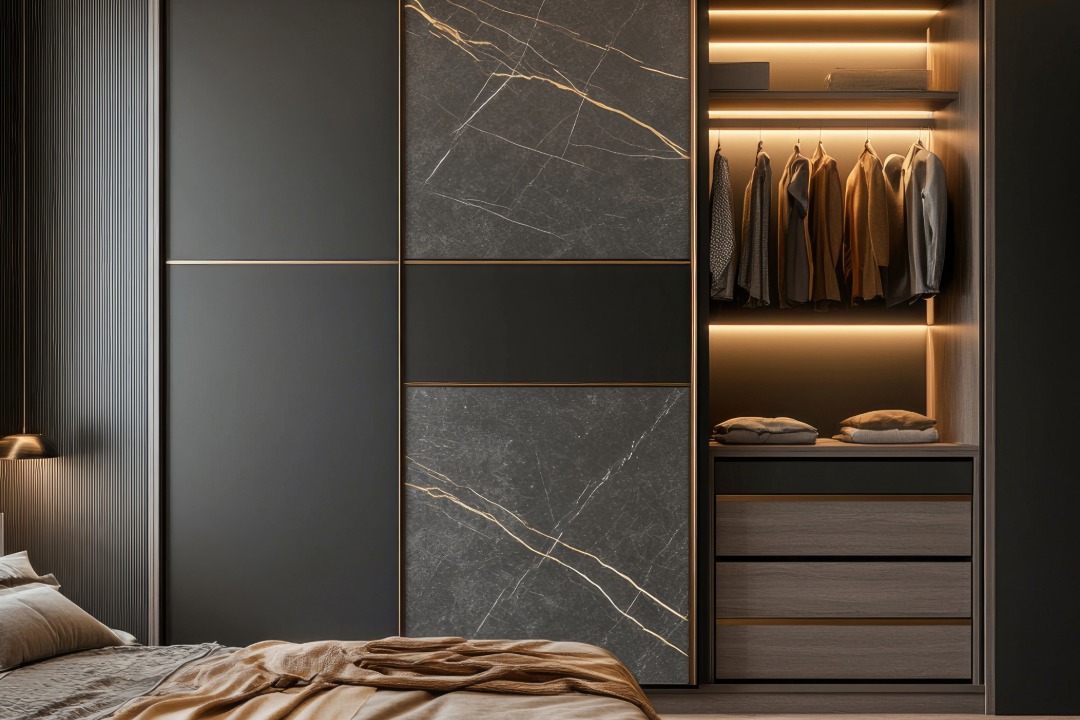
The sliding versus hinged wardrobe debate has been settled a thousand times online. And yet, the wrong wardrobe door still gets installed in Indian bedrooms every day. Not because the information is unavailable. But because most guides compare these two options in isolation without connecting the choice to the way people actually live.
Your wardrobe door is not a design statement. It is something you touch, pull, push, or slide at least four times a day. Over a decade, that is roughly 15,000 interactions. The right choice depends on who uses the wardrobe, how the room is laid out, what climate you live in, and how each mechanism ages over time.
This guide approaches the decision differently. Not as a list of pros and cons. But as a set of real scenarios that help you match the right door type to your actual daily life.
When a Sliding Wardrobe Is the Clear Winner
Compact Urban Bedrooms
If your bedroom is under 120 square feet and the bed sits within two feet of the wardrobe wall, hinged doors are physically impractical. They need 18 to 24 inches of clearance to swing open. In a tight room, an open hinged door blocks the walkway, hits the bed frame, or prevents the bedroom door from opening fully.
A sliding wardrobe eliminates this problem entirely. The panels glide within the wardrobe footprint. You can place furniture right up to the wardrobe face without losing access. For studio apartments and compact 2BHK units in cities like Mumbai, Bangalore, and Hyderabad, sliding doors are not a preference. They are a necessity.
Shared Bedrooms for Couples
In a bedroom shared by two people, the wardrobe is accessed simultaneously during morning routines. Two hinged doors swinging open at the same time create a chaotic wall of panels in a narrow space. One person cannot pass while the other has a door open.
Sliding panels stay flat. One person can access one section while the other moves freely around the room. The visual calm of closed flat panels also keeps the room looking tidy even when one section is being used.
Rooms Where the Wardrobe Faces the Bed
Many Indian bedroom layouts place the wardrobe on the wall directly opposite the bed. When you lie in bed and look at the wardrobe, the surface is the dominant visual element. Sliding wardrobes create a clean, unbroken plane. Floor-to-ceiling sliding panels with a consistent finish act as a visual wall that complements the bedroom interior design.
Hinged wardrobes with visible handle hardware and panel breaks look busier. This is not a flaw in hinged doors. It is simply a different aesthetic. But in modern, minimal bedrooms, the sliding surface reads as calmer and more cohesive.
When a Hinged Wardrobe Is the Better Choice
Large Master Bedrooms
If your bedroom is 150 square feet or larger and the wardrobe wall has at least three feet of open space in front, hinged doors offer a significant functional advantage. When both doors swing open, the entire interior is visible at once. Every shelf, every hanger, every drawer is in your line of sight.
This full-view access speeds up your morning routine. You can compare outfits, find accessories, and reach deep shelves without moving a panel out of the way. For someone who dresses formally for work every day, this visibility saves real time.
Wardrobes for Elderly Family Members
Sliding mechanisms require a specific grip and lateral force. You push the panel sideways along the track. For elderly users with reduced grip strength or shoulder mobility, this motion can be uncomfortable.
Hinged doors use a natural pulling motion. The door swings outward with a single pull on the handle. Soft-close hinges slow the closing action, preventing slamming. The movement is intuitive and requires less effort.
If the wardrobe is primarily used by someone over 60, hinged doors are the safer and more comfortable choice.
Children’s Bedrooms
This might sound counterintuitive since sliding doors are often recommended for kids’ rooms because they do not swing into the room. But there is a practical issue. Children tend to leave wardrobe doors half-open. A sliding panel left halfway creates a gap that collects dust and allows clothes to fall into the track channel.
Hinged doors with magnetic catches close fully with a gentle push. Soft-close hinges prevent fingers from getting caught. The interior of the door can hold hooks for school bags, belts, and caps. These features make hinged doors more functional for a child’s daily routine.
Homes That Need Maximum Internal Storage
The inside face of a hinged door is usable storage space. Hooks for scarves. Pockets for belts. A mirror panel for dressing. A slim organiser for ties and jewellery. This behind-the-door storage is exclusive to hinged wardrobes.
Sliding doors cannot support this. The panels overlap each other when moved. Anything mounted on the inside would collide with the adjacent panel. If you need every possible square inch of storage in your wardrobe, hinged doors give you an extra surface that sliding doors cannot.
How Each Door Type Ages Over a Decade
Hinged Wardrobe Ageing
Good quality soft-close hinges from brands like Hettich or Blum are rated for 50,000 to 80,000 cycles. At four uses per day, they last 35 to 55 years in theory. In practice, a quality hinge maintains its performance for the entire life of the wardrobe without needing replacement.
If a hinge does loosen, the fix takes five minutes. A screwdriver tightens the mounting plate. A replacement hinge costs 200 to 500 rupees. Any local technician can handle it.
The door panels themselves do not degrade from the opening mechanism. The stress is entirely on the hinge. As long as the hinge holds, the door performs.
Sliding Wardrobe Ageing
Sliding mechanisms involve more moving parts. Aluminium top tracks. Bottom channels. Precision rollers or wheels. Anti-jump clips. Buffer stops. Each component plays a role in smooth operation.
Over time, the bottom channel collects dust, hair, and fabric lint. This debris grinds against the rollers and increases friction. The doors start to feel stiff. Cleaning the track every three to four months restores smooth operation. But if maintenance is skipped, the rollers wear unevenly and the panel starts to jump or jam.
After eight to ten years, the rollers in a standard-quality sliding system may need replacement. High-quality systems from premium manufacturers last longer. But the maintenance requirement is higher than hinged doors regardless of quality.
Climate Considerations for Indian Homes
Indian homes face humidity, dust, and temperature swings that affect both wardrobe types differently.
Hinged doors in humid coastal cities like Mumbai, Chennai, and Kochi can swell if the carcass material is not moisture-resistant. BWR plywood resists this. Standard MDF does not. A swollen door rubs against the frame and becomes difficult to close. The fix requires either planing the edge or replacing the panel.
Sliding doors in dusty cities like Delhi, Jaipur, and Ahmedabad face track contamination. Fine dust settles in the channel and accelerates roller wear. Homes near construction zones or on lower floors with open windows are especially affected.
Factory-sealed edge banding protects the panel core from humidity in both cases. A modular wardrobe manufacturer with in-house production applies edge banding under controlled conditions, ensuring a stronger seal than manual application.
Cost Comparison
Sliding wardrobes cost 15 to 25 percent more than hinged wardrobes of the same size and material. The additional cost comes from the track system, precision rollers, and the thicker panels needed to support the sliding mechanism.
For a standard 7-foot wide wardrobe, a hinged version in mid-range materials costs approximately 45,000 to 80,000 rupees. A sliding version of the same wardrobe costs 55,000 to 1 lakh.
The cost gap narrows at higher price points because the hardware and track systems become a smaller proportion of the total cost. In a premium wardrobe with PU-coated shutters and soft-close Blum fittings, the difference between sliding and hinged may be only 10 percent.
The Combination Approach
You do not have to choose one type exclusively. Many well-designed wardrobes use a combination of both.
The main wardrobe section uses sliding doors for a clean front profile. A side dresser unit uses a hinged door with an internal mirror. A top loft section uses a separate hinged or lift-up panel.
This combination gives you the space efficiency of sliding where it matters most and the full access of hinged where you need visibility. Holzbox builds wardrobes using this combination approach in its own factory, ensuring that both door systems align perfectly on the shared carcass frame.
A combination wardrobe requires precise manufacturing. The sliding track must sit at exactly the right height relative to the hinged section. The carcass depth must accommodate both mechanisms without visible misalignment. This is standard practice in factory production but nearly impossible to achieve with on-site carpentry.
Making the Final Decision
Start with your room. Measure the clearance in front of the wardrobe wall. If it is under two feet, choose sliding.
Then consider the users. If the wardrobe is for elderly family members or young children, hinged is more practical.
Then think about maintenance. If you are willing to clean tracks every few months, sliding performs well long-term. If you prefer zero-maintenance hardware, hinged is simpler.
Finally, consider your home interior design preferences. Sliding suits modern, minimal spaces. Hinged suits traditional and transitional styles. Both work in contemporary wardrobe design when the materials and finishes are chosen well.
The best wardrobe is not the one that wins an online debate. It is the one that fits your room, serves your family, and lasts a decade without causing daily friction.
Frequently Asked Questions
Which wardrobe door type lasts longer?
Both types last 12 to 15 years when built with quality materials and hardware. Hinged doors have a slight edge in longevity because their mechanism is simpler. A good hinge rarely needs replacement. Sliding systems require periodic track cleaning and may need roller replacement after 8 to 10 years. The carcass lifespan is identical for both since it depends on material grade and edge banding quality, not the door type.
Is a sliding wardrobe suitable for Indian homes with high humidity?
Yes, as long as the carcass uses BWR plywood and the edges are factory-sealed. Humidity affects the panel material, not the sliding mechanism itself. The sliding track should be aluminium or stainless steel to prevent rust. In coastal cities, avoid iron-based track components. A manufacturer with in-house manufacturing applies corrosion-resistant finishes that protect the hardware in humid environments.
Can I convert a hinged wardrobe to sliding later?
It is technically possible but rarely cost-effective. Sliding systems need a different carcass depth, typically 24 to 26 inches versus 20 to 22 inches for hinged. The track installation requires structural modifications to the top and bottom of the frame. In most cases, building a new wardrobe is more practical than converting an existing one.
Are sliding wardrobes safe for homes with children?
Generally yes. Sliding panels do not swing into the room, so there is no risk of a child walking into an open door. However, small fingers can get pinched between overlapping panels if the wardrobe lacks anti-pinch buffers. Ensure the sliding system includes soft-close stops and anti-jump clips. For very young children, hinged doors with soft-close hinges may be safer because they close fully and stay closed.
What should I prioritise when choosing between sliding and hinged?
Room clearance comes first. If the space is tight, sliding is the only practical option. Next, consider who uses the wardrobe daily. Elderly users and families with young children often prefer hinged. Then evaluate your maintenance willingness. Sliding needs track upkeep. Finally, align with your bedroom interior design style. Both types deliver excellent results when built by a factory that controls material quality, hardware calibration, and finish consistency.