
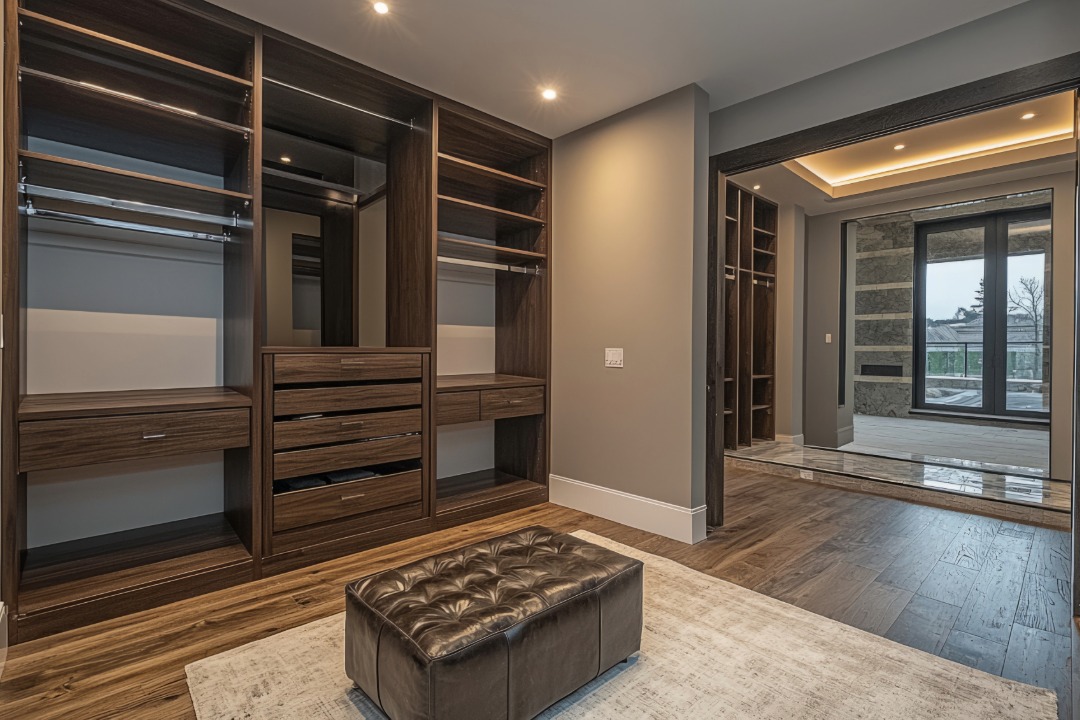
The wardrobe you choose should start with your room, not with a design catalogue. A walk-in closet that looks stunning in a 250-square-foot master bedroom makes no sense in a 100-square-foot compact room. A two-door hinged wardrobe that works perfectly in a large guest room feels cramped when the bed is two feet away.
Room size determines which wardrobe type fits, which door style works, and how the internal layout should be organised. Getting this right means a wardrobe that uses every available inch without making the room feel smaller. Getting it wrong means wasted space, blocked walkways, and morning frustration.
This guide matches specific wardrobe types to four room size categories that cover most Indian bedrooms. Each recommendation is based on practical space calculations, not design trends.
Compact Bedrooms: Under 100 Square Feet
These are the bedrooms found in studio apartments, 1BHK units, and small 2BHK flats across cities like Mumbai, Bangalore, Hyderabad, and Delhi. The bed takes up most of the floor area. The wardrobe wall is typically 5 to 7 feet wide. And the space between the bed and the wardrobe is often less than 2 feet.
Best Wardrobe Type: Sliding Door Wardrobe
In a room this small, hinged doors are not practical. They need 18 to 24 inches of clearance to swing open. When the bed is right in front, you cannot open a hinged door fully without hitting the bed frame.
A sliding wardrobe solves this completely. The doors glide sideways on tracks. They stay within the footprint of the wardrobe and need zero clearance in front. You can place the bed as close as 12 inches from the wardrobe and still access everything.
For rooms under 100 square feet, a two-door sliding wardrobe spanning 5 to 6 feet works best. Use light-coloured shutter finishes to keep the room feeling open. A single mirror panel on one door doubles as a dressing mirror and visually expands the space.
Internal Layout for Compact Rooms
Every inch inside the wardrobe counts. Use a combination of short-hang sections for shirts and blouses, one long-hang section for kurtas or dresses, a three-shelf stack for folded items, and one or two pull-out drawers for accessories.
Skip wide open shelves. They waste vertical space. Use adjustable shelves instead so you can reconfigure the heights as your storage needs change.
Add a loft section above the main wardrobe. This stores seasonal blankets, luggage, and rarely used items without consuming precious internal space.
Mid-Size Bedrooms: 100 to 150 Square Feet
This is the most common bedroom size in Indian 2BHK and 3BHK apartments. The wardrobe wall is typically 7 to 9 feet wide. There is enough room for a queen-size bed, two side tables, and a wardrobe with comfortable clearance in front.
Best Wardrobe Type: Hinged Door Wardrobe or Sliding Door Wardrobe
In this room size, both door types work. The choice depends on your personal preference and how the furniture is arranged.
If you have at least 2.5 feet of clearance between the wardrobe and the bed, hinged doors are an excellent option. They open fully, giving you a complete view of the interior. You can mount hooks on the inside of the doors for scarves, belts, and ties. The hardware is simpler and cheaper than sliding mechanisms.
If the clearance is tight or you prefer a cleaner visual line, a sliding wardrobe still works beautifully here. A three-door sliding unit spanning 7 to 8 feet provides ample storage with a modern aesthetic.
Internal Layout for Mid-Size Rooms
A wardrobe this wide can support dedicated zones. One section for hanging garments. One section for shelves and drawers. One section for accessories and smaller items.
Include a full-length hanging zone for formal wear and ethnic garments like sarees and sherwanis. Dedicate at least two pull-out drawers for undergarments and accessories. Add a trouser pull-out if space permits.
This is also the right size for integrating an internal mirror panel on the wardrobe door. It eliminates the need for a separate dressing mirror in the room and keeps the bedroom interior design clean and uncluttered.
Large Bedrooms: 150 to 250 Square Feet
These bedrooms are found in 3BHK and 4BHK apartments, independent floors, and villas. The wardrobe wall can span 8 to 12 feet. Floor space is generous enough to allow design features beyond basic storage.
Best Wardrobe Type: Full-Wall Hinged Wardrobe or Combination Unit
A full-wall hinged wardrobe spanning 10 to 12 feet creates a powerful visual feature. The wardrobe becomes part of the wall rather than a standalone piece of furniture. Floor-to-ceiling panels eliminate the dust gap above the wardrobe and give the room a built-in, seamless look.
In rooms this size, you can also incorporate combination units. A wardrobe with an integrated study nook. A wardrobe with an open display shelf on one end. A wardrobe with a built-in dresser section that includes a mirror, drawer, and countertop.
These combinations are where modular wardrobe design really shines. Each section is a separate module. The study nook, the display shelf, and the dresser can be added, removed, or repositioned without rebuilding the entire unit.
Internal Layout for Large Rooms
You have the luxury of deep zoning here. Separate your hanging garments by type. Shirts in one bay. Trousers in another. Ethnic wear in a full-height section. Winter jackets and heavy coats in a dedicated zone.
Add a pull-out jewellery tray. A tie and belt organiser. A dedicated shoe shelf at the base. A top loft for suitcases and seasonal storage.
With this much space, you can also add internal LED lighting. Motion-sensor strips activate when the door opens. They illuminate the entire interior so you can see colours accurately without relying on room lighting.
Extra-Large Bedrooms: Above 250 Square Feet
These bedrooms are typically found in villas, penthouses, and luxury apartments. The room is large enough to dedicate a section entirely to storage without affecting the sleeping area.
Best Wardrobe Type: Walk-In Wardrobe
A walk-in wardrobe is a separate dressing zone within the bedroom. It does not use doors at all. You walk into the wardrobe space, surrounded by shelves, hanging rods, and drawers on two or three sides.
Walk-in wardrobes need a minimum of 5 feet by 5 feet of dedicated floor area. That is 25 square feet just for the wardrobe zone. L-shaped and U-shaped configurations work best.
This setup separates your dressing routine from the sleeping area. You can dress, try on outfits, and organise accessories without disturbing anyone still in bed. It is the most organised and the most luxurious wardrobe format.
Internal Layout for Walk-In Wardrobes
Design the walk-in with zones that match your daily routine. Place everyday items at eye level and arm’s reach. Store seasonal and formal items higher up. Keep shoes at the base.
Include a small seating bench or ottoman inside the walk-in for putting on shoes or laying out outfits. Add a full-length mirror on the wall opposite the main hanging section.
Use open shelving for frequently accessed items. Use closed drawers for undergarments and accessories. The absence of shutter panels on most walk-in sections means everything is visible and accessible without opening a single door.
How Room Shape Affects Wardrobe Choice
Room size is important. But room shape matters almost as much.
A long, narrow bedroom benefits from a wardrobe on the shorter wall. This fills the width without making the room feel longer than it already is. Sliding doors are essential here because hinged doors would block the narrow walkway.
A square bedroom offers flexibility. The wardrobe can go on any wall. Hinged doors work well because the room’s proportions provide adequate clearance on all sides.
An L-shaped bedroom with an alcove or recess is ideal for a built-in wardrobe that fills the niche perfectly. This creates a flush wall surface and eliminates awkward gaps between the wardrobe and the wall.
A bedroom with windows on the wardrobe wall requires careful planning. The wardrobe should stop where the window starts. A bridge unit above the window connects the two wardrobe sections and adds loft storage.
These are design decisions that require exact measurements and custom module sizing. A modular wardrobe manufacturer with in-house production can build modules to any width and height. A company selling only standard catalogue sizes will leave gaps or force compromises.
The Factory Advantage for Every Room Size
Whether your room is 80 square feet or 300 square feet, the precision of the wardrobe matters. In a small room, a 5-millimetre gap between the wardrobe and the wall is visible because everything is close together. In a large room, a misaligned shutter on a full-wall unit breaks the seamless look.
Factory-built modular wardrobes are manufactured to sub-millimetre tolerances. CNC-cut panels ensure every module fits its designated space exactly. Edge banding is applied uniformly. Hardware is calibrated to the panel weight and thickness.
Holzbox manufactures modular wardrobes in its own factory. That means every unit, from a compact two-door slider for a studio apartment to a full-wall combination wardrobe for a villa, is designed, produced, and quality-checked under one roof. Custom widths, non-standard depths, and bridge modules are all standard practice when production happens in-house.
The right wardrobe for your room is not the one that looks best in a catalogue. It is the one that fits your exact dimensions, matches your storage needs, and is built with the precision that only factory production delivers.
Frequently Asked Questions
Which wardrobe type is best for a bedroom under 100 square feet?
A two-door sliding wardrobe is the best option. Sliding doors need zero clearance to open, which is essential when the bed sits close to the wardrobe wall. Use light-coloured finishes and a single mirror panel to make the room feel larger. Keep the internal layout tight with adjustable shelves, a short-hang section, and one or two pull-out drawers. Add a loft on top for seasonal storage.
Can I install a walk-in wardrobe in a 200-square-foot bedroom?
Yes, if you are willing to dedicate at least 25 to 30 square feet of the room to the walk-in zone. An L-shaped walk-in configuration with open shelving and hanging sections works well in rooms of this size. The remaining 170 square feet is sufficient for a queen-size bed, side tables, and comfortable movement. A professional home interior design consultation will help you determine the exact layout.
What is the ideal depth for a modular wardrobe?
The standard depth is 22 to 24 inches (55 to 60 cm). This allows standard hangers to sit without touching the back panel. In very compact rooms, you can reduce the depth to 20 inches, but confirm that hanger clearance is maintained. For walk-in wardrobes with double-sided hanging, each side needs its own 22-inch depth. A manufacturer with in-house manufacturing capability can build reduced-depth modules that catalogue-based companies cannot offer.
How do I choose between sliding and hinged doors for my bedroom?
Measure the clearance between the wardrobe wall and the nearest piece of furniture. If you have less than 2 feet, choose sliding doors. If you have 2.5 feet or more, hinged doors work well and offer the advantage of full interior visibility. In mid-size bedrooms where both options fit, the choice comes down to personal preference and bedroom interior design style. Sliding suits modern and minimal aesthetics. Hinged suits traditional and classic styles.
What should I look for in a modular wardrobe for Indian homes?
Five things. First, the carcass material. BWR plywood is the most reliable for Indian humidity. Second, the hardware brand. Soft-close hinges and full-extension runners from Hettich or Blum last over a decade. Third, the internal layout. It should match your actual clothing inventory, not a generic template. Fourth, custom sizing. Your manufacturer should build to your exact wall dimensions. Fifth, factory production. A company that manufactures in its own facility offers better precision, faster delivery, and stronger after-sales support than one that outsources.